No results. Is a plant missing? Tell uscontact@wikiplant.net
Bougainvillea
Bougainvillea glabra
Care level: Moderate
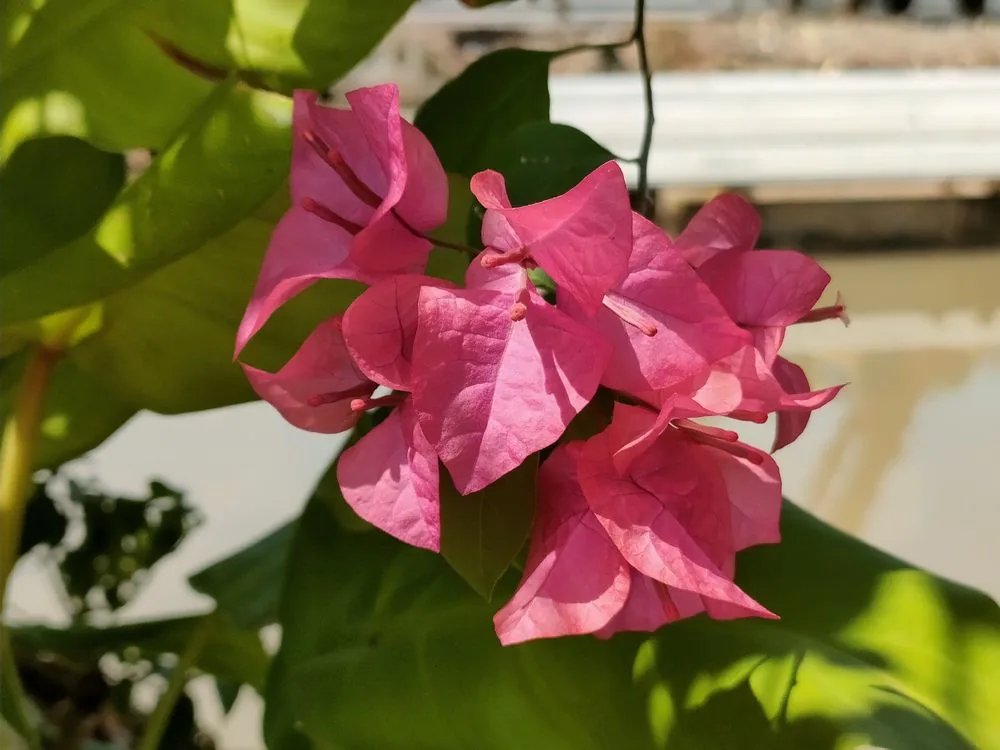
Bougainvillea is a vigorous, thorny climber from Brazil, grown for the sheets of magenta, purple, pink or white that cover it for months. It is the plant of Mediterranean walls, but it is not frost hardy, so in cooler climates it lives in a pot: outdoors in the sunniest spot in summer and in a conservatory or bright, cool room over winter. Given strong light, a firm prune in early spring and a cool, almost dry rest, it flowers heavily on the new shoots each year.
Bougainvillea glabra 'Sanderiana'Bougainvillea glabra 'Variegata'Bougainvillea x buttiana 'Mrs Butt'
Light
As much light as possible, with direct sun. Under glass, give light shade from the hottest midday sun in summer.
Water
Water freely while it is growing and let the top of the compost dry between waterings. Keep it almost dry in winter.
Humidity
Ordinary room or conservatory air is fine; good ventilation under glass keeps pests down.
Soil
A loam-based, free-draining potting compost in a pot with drainage holes.
Temperature
Not frost hardy. Keep it above about 5-10°C in winter.
Size
4-8m as a climber under glass; far smaller in a pot.
Growth speed
Fast
?Pet safety not confirmed
As a precaution, keep it out of reach of children and pets.
Did you know?
The colour is not the flower. Each cluster is three papery bracts, which are modified leaves, around three tiny cream tubes that are the real flowers. That is why the display lasts for months rather than days.
Care by Season
Spring
Prune before growth starts, then increase watering and begin feeding as shoots appear.
Summer
Move the pot to the sunniest spot outdoors once frost is past. Water freely, feed regularly and tie in new shoots.
Autumn
Reduce watering as growth slows and bring the pot in before the first frost.
Winter
Keep cool, bright and almost dry. Some or all of the leaves may drop.
Growing & Maintenance
Repotting
Repot in spring every two or three years into a slightly larger pot; it flowers better when the roots are a little confined. Handle the rootball gently, as the roots are brittle.
Fertilising
Feed every two weeks from spring to late summer. Use a high-potash fertiliser once buds form; too much nitrogen gives leaves at the expense of colour.
Pruning
In early spring shorten the side shoots to three or four buds from the main framework and remove weak growth.
Support
Tie the stems to wires, a trellis or a hoop. It leans and hooks with its thorns but does not twine.
Propagation
By semi-ripe cuttings in summer with bottom heat, or by layering a low shoot.
Pests & Diseases
Common problems
Plenty of leaves but no colour
Most likely cause: Too little sun, or too much nitrogen.
What to do: Move it to full sun and switch to a high-potash feed.
Leaves dropping in winter
Most likely cause: A cool, dim rest period.
What to do: Normal; keep it almost dry until spring.
Bracts and leaves falling suddenly in summer
Most likely cause: The compost dried out completely, or the plant was moved abruptly.
What to do: Water thoroughly and change its position gradually.
Yellow leaves and soft growth
Most likely cause: Waterlogged compost.
What to do: Let it dry out and check that the pot drains.
Long bare stems
Most likely cause: No pruning.
What to do: Shorten the side shoots hard in early spring.
Pests & Diseases
Red spider mite
Signs: Fine pale speckling on the leaves and thin webbing in warm, dry air under glass.
Treatment: Raise humidity, rinse the foliage and ventilate well. Check the undersides of the leaves and the crevices where the leaf stem meets the main stalk.
Mealybugs
Signs: White, woolly tufts in the leaf joints and along the stems.
Treatment: Dab them off with a cotton bud dipped in alcohol and repeat weekly. Check the undersides of the leaves and the crevices where the leaf stem meets the main stalk.
Aphids
Signs: Clusters of small insects on shoot tips and sticky leaves.
Treatment: Rinse them off or wipe them away by hand.
Whitefly
Signs: Clouds of tiny white insects that fly up when the plant is touched.
Treatment: Hang yellow sticky traps and rinse the undersides of the leaves.
FAQ
Why is my bougainvillea not flowering?
Almost always too little light. It needs the brightest place you have, with hours of direct sun. Too much nitrogen fertiliser and a warm, wet winter also give leaves instead of colour.
Can bougainvillea stay outside in winter?
Only where it does not freeze. Elsewhere bring the pot in before the first frost and keep it in a bright place at roughly 5-10°C or a little more.
Why is it dropping its leaves in winter?
That is normal in a cool, dim winter. Keep the compost almost dry until new growth starts in spring, then water more.
When should I prune it?
In early spring, before growth starts. Shorten the side shoots to a few buds from the main stems. Flowers form on the new growth that follows.
Does it need a support?
Yes. It does not twine or cling, so tie the long shoots to wires, a trellis or a hoop. Wear gloves, as the stems carry sharp thorns.
Are the bracts or the flowers the colourful part?
The bracts. The true flowers are the small cream tubes in the middle of each group of three bracts.