No results. Is a plant missing? Tell uscontact@wikiplant.net
Boxwood
Buxus sempervirens
Care level: Easy
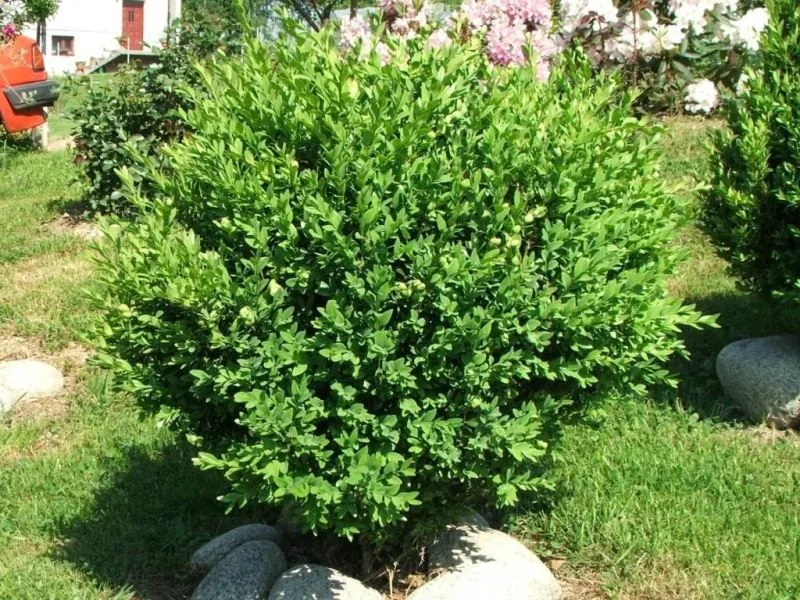
Boxwood is the small-leaved evergreen shrub behind most of Europe's clipped hedging, edging and topiary, prized for tolerating the kind of tight, repeated shearing that would ruin almost anything else. Left unclipped it slowly makes a dense shrub or small tree to several metres, but almost all garden boxwood is kept far smaller by regular trimming into balls, cones, low hedges or parterre edging. It is very slow-growing, which is exactly what makes a clipped shape hold for decades rather than needing constant remaking.
Full sun to partial, even full, shade. Few evergreens tolerate shade this well, though variegated forms colour better with some sun.
Water
Water new plants through their first year or two. Established boxwood in open ground is fairly drought-tolerant, though a pot-grown specimen needs regular watering in summer.
Humidity
Not a significant factor outdoors; good air movement through the shrub matters far more, since still, humid conditions favour box blight.
Soil
Tolerant of chalk, clay, loam and sand as long as it drains reasonably well. Waterlogged soil over winter is one of the few conditions it dislikes.
Size
Slowly reaches 4.5-6m if left alone. Clipping keeps it far smaller.
Eating it can cause vomiting and an upset stomach.
If your pet has eaten some, contact your vet.
Source: ASPCA
Signature feature
Box blight and the box tree caterpillar have both spread across Europe in the last two decades and have made boxwood a far riskier long-term choice than it once was. Good air movement, avoiding overhead watering, and checking new plants closely before buying reduce the risk considerably, but gardens in affected regions increasingly plant Ilex crenata or other look-alikes instead for new hedging.
Care by Season
Spring
New growth begins; avoid an early hard trim that would cut into soft, frost-tender shoots. A top-dressing of general fertiliser now supports the coming season's growth.
Summer
Main clipping season, typically around midsummer once the spring flush has hardened. Watch for early signs of box blight or caterpillar in warm, humid spells.
Autumn
An optional light tidy-up trim. Avoid heavy pruning this late, since soft regrowth has little time to harden before frost.
Winter
Fully hardy and evergreen through a European winter once established. Heavy, wet snow can splay open a clipped shape; brushing it off gently prevents branches snapping.
Growing & Maintenance
Planting
Plant in well-drained soil, no deeper than it sat in the pot. A few centimetres of mulch keeps the shallow roots cool and moist.
Fertilising
A top-dressing in spring, as new growth begins, is enough.
Pruning
Clip around midsummer, once the spring growth has hardened, with an optional light tidy in early autumn. Do not trim too early in spring or late in summer. Thinning the inside each year lets in light and air.
Pests & Diseases
Common problems
Brown patches, fast leaf drop and bare stems
Most likely cause: Box blight, a fungal disease that spreads in damp, still conditions.
What to do: Cut out and destroy the affected growth, clear fallen leaves and open the plant up to air.
Leaves eaten, with webbing inside the bush
Most likely cause: Box tree caterpillar.
What to do: Check plants regularly from late spring and remove the caterpillars as soon as you see them.
Orange or bronze leaves in winter
Most likely cause: Drying wind and full winter sun.
What to do: Shelter the plant and mulch the roots. Bronzed leaves are not dead.
Yellowing leaves and die-back on heavy soil
Most likely cause: Waterlogged soil over winter.
What to do: Improve the drainage or move the plant to a better-drained spot.
Branches splayed open after snow
Most likely cause: The weight of heavy, wet snow.
What to do: Brush snow off before it builds up.
Pests & Diseases
Box tree caterpillar
Signs: Fine webbing across the foliage, green caterpillars with black stripes and a black head, and leaves skeletonised down to the veins, usually starting inside the shrub.
Treatment: Check plants regularly from late spring and remove caterpillars and webbing by hand where practical. Biological sprays based on Bacillus thuringiensis are effective against young caterpillars if an infestation is confirmed early.
Box blight
Signs: Brown or orange patches on leaves, black streaking on stems, and rapid leaf drop leaving bare, dieback patches, worst in warm, humid, still conditions.
Treatment: Cut out and destroy (not compost) affected growth, disinfecting tools between cuts, and improve air flow by thinning dense growth. Avoid wetting the foliage when watering, since the fungus spreads in wet, still conditions.
Box sucker (psyllid)
Signs: Leaves at the shoot tips cupped like tiny cabbages, with white waxy flecks in spring
Treatment: The damage is mostly cosmetic. Routine clipping removes the affected tips.
FAQ
My boxwood has patches of brown, dying leaves and bare stems. Is this blight or caterpillar damage?
Look closely before treating either. Box blight shows as brown or orange leaf spots and black streaks on the stems, with leaves dropping fast and bare patches appearing almost overnight in warm, humid weather. The box tree caterpillar instead leaves visible webbing, green and black striped caterpillars, and leaves eaten down to the veins, working from the inside of the shrub outwards. The two need different responses, so correct identification matters more than speed here.
How often does a clipped box shape need trimming to stay neat?
Once or twice a year is usually enough: a main trim around midsummer, after the main flush of spring growth has hardened off, and optionally a light tidy in early autumn. Trimming too early in spring risks cutting into frost-tender new growth, and trimming in full summer heat can scorch the freshly cut edges, so timing matters more than frequency for a clean finish.
Is boxwood toxic to cats and dogs?
Yes, boxwood is toxic to cats and dogs. Eating the leaves upsets the stomach. Clear away clippings after trimming.
How fast does boxwood grow?
Slowly. Left unclipped it can eventually reach 4.5-6m, but that takes many years, which is exactly why it suits low hedges and topiary.
Can boxwood grow in shade?
Yes, it grows in anything from full sun to full shade. Few evergreens tolerate shade as well. Variegated forms colour best with more light.
Why is my boxwood turning orange in winter?
Cold wind and winter sun dry the leaves out and turn them bronze. Give the plant a sheltered position and mulch over the roots to limit it.