No results. Is a plant missing? Tell uscontact@wikiplant.net
Brake fern
Pteris cretica
Care level: Easy
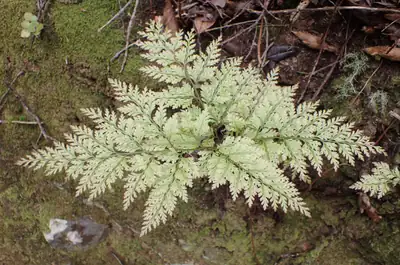
The brake fern, or Cretan brake, is a tufted evergreen fern with an unusual outline: each frond stands on a long, wiry stalk and divides into a few pairs of narrow, ribbon-like leaflets, so the plant looks more like a small bamboo or a hand of green streamers than a typical feathery fern. It grows to about 60cm. The most popular form, 'Albolineata', has a broad cream-white stripe down the centre of every leaflet. It is one of the more tolerant house ferns, coping with ordinary room air and with hard tap water, which few ferns accept.
Bright, indirect light or light shade. Avoid direct midday sun.
Water
Keep the compost evenly moist at all times. It tolerates tap water.
Humidity
Moderate humidity is enough. Mist or stand it on a tray of damp pebbles in heated rooms.
Soil
Peat-free houseplant compost with added perlite for drainage.
Temperature
Normal room temperature, ideally above about 12°C, away from cold draughts. It is not frost hardy.
Size
30-60cm tall and 30-60cm wide.
Growth speed
Medium
?Pet safety not confirmed
As a precaution, keep it out of reach of children and pets.
Common mistake
Never let the compost dry out completely. A brake fern that wilts from drought does not pick up again like a leafy houseplant: the fronds turn crisp and brown and stay that way. Cut the dead fronds off at the base, keep the compost evenly moist and new ones will grow from the crown.
Care by Season
Spring
New fronds unroll. Repot or divide if the pot is full and start feeding.
Summer
Water often and keep out of direct sun.
Autumn
Growth slows. Reduce feeding.
Winter
Keep at room temperature, away from radiators, and keep the compost just moist.
Growing & Maintenance
Repotting
Repot in spring every two years, or when roots fill the pot, into a pot one size larger. Keep the crown at the same level.
Fertilising
Feed monthly from spring to late summer with a balanced liquid fertiliser at half strength.
Pruning
Cut brown or damaged fronds off at the base.
Propagation
By division in spring, or by sowing the spores on damp compost under cover, which is slow.
Pests & Diseases
Common problems
Brown, crisp fronds
Most likely cause: The compost dried out.
What to do: Cut them off and water regularly.
Brown leaflet tips
Most likely cause: Dry, hot air.
What to do: Raise the humidity and move it away from radiators.
Pale, washed-out fronds
Most likely cause: Too much direct sun.
What to do: Move to bright, indirect light.
White stripe fades on new fronds
Most likely cause: Too little light for a variegated form.
What to do: Move to a brighter spot out of direct sun.
Yellowing fronds and a sour smell
Most likely cause: Waterlogged compost.
What to do: Let it drain, empty the saucer and repot if the roots have rotted.
Slow growth and small fronds
Most likely cause: A pot-bound plant or lack of feeding.
What to do: Repot in spring and feed monthly in the growing season.
Pests & Diseases
Scale insects
Signs: Small brown bumps on the stalks and undersides of the fronds, with sticky honeydew.
Treatment: Wipe them off with a cotton bud dipped in methylated spirit and check again weekly.
Mealybugs
Signs: White, woolly tufts at the base of the fronds.
Treatment: Dab them with methylated spirit and repeat weekly until they are gone. Check the undersides of the leaves and the crevices where the leaf stem meets the main stalk.
Sooty mould
Signs: A black, soot-like film on the fronds, growing on the honeydew left by scale insects.
Treatment: Wipe it off with a damp cloth and deal with the insects that cause it.
FAQ
How often should I water it?
Keep the compost evenly moist all year, watering as soon as the surface begins to dry. In a warm room that may be twice a week in summer. Do not leave the pot standing in water.
Why are the fronds turning brown and crisp?
The compost has dried out at some point, or the air is very dry and hot, for example above a radiator. Remove the brown fronds, water more regularly and move the plant away from heat sources.
Why are some fronds taller with thinner leaflets?
Those are the fertile fronds, which carry the spores. They stand more upright and their leaflets are narrower than those of the sterile fronds. Both kinds are normal.
What is the brown line along the leaflet edges?
Spore cases. On brake ferns they form a continuous line under the rolled edge of the leaflet, and they are a sign of a mature, healthy plant, not a pest or disease.
Can I use tap water?
Yes. Unlike most ferns, the brake fern grows naturally on limestone and tolerates hard water. Use water at room temperature.
How much light does it need?
Bright, indirect light or light shade. Variegated forms need good light to keep their white stripe distinct. Direct midday sun scorches the fronds.
How do I propagate it?
Divide the clump in spring, cutting through the crown with a clean knife so that each piece has roots and several fronds. Pot the pieces separately and keep them moist.