No results. Is a plant missing? Tell uscontact@wikiplant.net
Rabbit's foot fern
Davallia canariensis
Care level: Easy
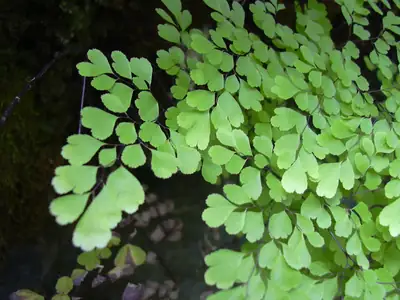
The rabbit's foot fern is grown as much for its rhizomes as for its leaves. Thick, creeping stems covered in soft, brown, fur-like scales crawl over the surface of the compost and down the sides of the pot like small paws. From them rise lacy, finely cut, triangular fronds. In nature it grows on rocks and tree trunks in the Canary Islands, Madeira, Spain, Portugal and Morocco, so it is used to drying out between showers and is more forgiving than most ferns. It looks best in a hanging basket or a wide, shallow pot where the rhizomes can spill over the edge.
Bright, indirect light or light shade. Avoid hot direct sun, which scorches the fronds.
Water
Water when the surface of the compost is dry and let the surplus drain. Water less while the plant is resting without fronds.
Humidity
Moderate to high humidity. Mist the rhizomes in dry, heated rooms.
Soil
An open, free-draining mix, such as peat-free compost with fine bark and perlite.
Temperature
A cool to normal room, frost free and ideally above about 10°C. It tolerates cooler rooms than most house ferns.
Size
20-50cm tall and 0.5-1m wide.
Growth speed
Medium
?Pet safety not confirmed
As a precaution, keep it out of reach of children and pets.
Common mistake
Never bury the furry rhizomes. They are stems that grow on the surface and take in moisture from the air; covered with compost, they rot. When you repot, set the plant so the rhizomes lie on top, and pin loose ones down with a bent wire if needed.
Care by Season
Spring
New fronds unroll. Repot or divide if the rhizomes have filled the pot, and start feeding.
Summer
Water regularly and keep out of strong sun. Some fronds may yellow and drop in heat and drought.
Autumn
Growth continues in mild rooms. Reduce feeding.
Winter
Keep cool to mild and bright, and water sparingly. Do not let the rhizomes shrivel.
Growing & Maintenance
Repotting
Repot in spring every two to three years into a wide, shallow pot or basket. Keep all the rhizomes on the surface.
Fertilising
Feed monthly from spring to late summer with a balanced liquid fertiliser at half strength.
Pruning
Cut yellow or brown fronds off at the base. Do not trim the rhizomes unless you want cuttings.
Propagation
Divide in spring, or cut off a length of rhizome with a frond or two and pin it onto the surface of damp compost until it roots.
Pests & Diseases
Common problems
Fronds yellow and fall
Most likely cause: Drought, cold, or a natural rest.
What to do: Keep just moist and wait for new growth.
Rhizomes soft and dark
Most likely cause: Buried in compost or kept too wet.
What to do: Lift the rhizomes onto the surface, cut away rotten parts and repot in an open mix.
Rhizomes shrivelled
Most likely cause: Dry air and dry compost.
What to do: Water thoroughly and mist the rhizomes.
Brown frond tips
Most likely cause: Dry air or hard water.
What to do: Raise the humidity and use rainwater.
Sparse, pale fronds
Most likely cause: Too little light.
What to do: Move to brighter, indirect light.
Scorched patches
Most likely cause: Direct midday sun.
What to do: Move out of strong sun.
Pests & Diseases
Scale insects
Signs: Small brown bumps on the frond stalks and along the midribs, with sticky honeydew.
Treatment: Wipe them off with a cotton bud dipped in methylated spirit. Do not confuse them with the regular rows of spore cases under the fronds.
Mealybugs
Signs: White, woolly tufts among the rhizome scales and at the frond bases.
Treatment: Dab them with methylated spirit and repeat weekly. Check the undersides of the leaves and the crevices where the leaf stem meets the main stalk.
Red spider mite
Signs: Fronds turn dull and finely speckled in warm, dry air, sometimes with fine webbing.
Treatment: Rinse the fronds with lukewarm water and raise the humidity. Check the undersides of the leaves and the crevices where the leaf stem meets the main stalk.
FAQ
Why has my fern dropped its fronds?
It can shed some or all of its fronds after a dry spell, a cold period or in its natural rest, which in the wild falls in the dry summer. As long as the rhizomes are firm and furry, keep the compost just moist and new fronds will grow.
How often should I water it?
Water when the top of the compost feels dry, more often in a hanging basket, which dries fast. The rhizomes store some water, so it copes with a missed watering better than it copes with wet, airless compost.
Should I mist the rhizomes?
Yes, it helps in a heated room. A light misting with soft water keeps the scales from shrivelling. In a bathroom or kitchen it usually needs no misting.
Can I cut off the rhizomes that hang over the pot?
You can, but they are the plant's main feature and do no harm. A cut piece with a frond or two can be pinned onto damp compost to make a new plant.
How do I repot it without burying the rhizomes?
Use a wide, shallow pot or basket. Fill it with an open, free-draining mix, sit the plant on top and work the mix around the roots only, leaving every rhizome on the surface.
Does it need much light?
Bright, indirect light suits it best. It tolerates some shade, but in a dark corner the fronds become sparse. Keep it out of hot midday sun.
Is it the same plant as Davallia fejeensis?
They are close relatives sold under the same common name. Davallia fejeensis, from Fiji, has even finer fronds and needs more warmth; care is otherwise the same.