No results. Is a plant missing? Tell uscontact@wikiplant.net
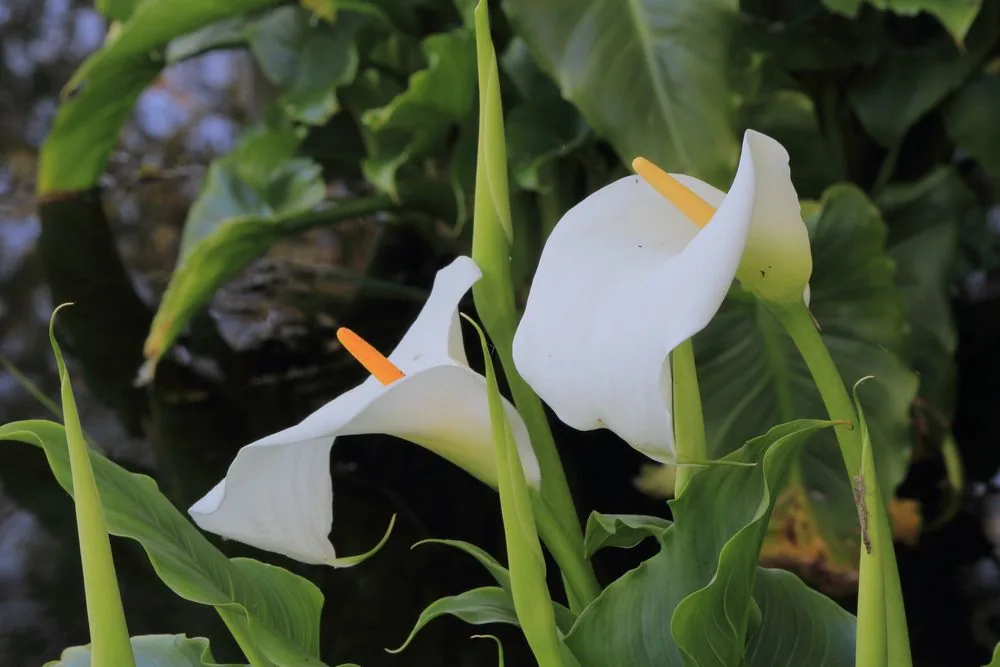
The calla lily is a clump-forming perennial from the marshes and stream banks of southern Africa. It is not a true lily but an arum: what looks like a single white petal is a spathe, a rolled leaf-like sheath wrapped around a yellow spike that carries the real, tiny flowers. The leaves are large, glossy, dark green and arrow-shaped, on long stalks. It is sold as a flowering pot plant for cool, bright rooms, and in mild regions it also grows outdoors in a damp border or at the edge of a pond.
I have this plantSign in to add this plant to your library
Toxic to cats and dogs if eaten.
Chewing it can irritate the mouth, causing drooling and trouble swallowing.
If your pet has eaten some, contact your vet.
Source: NC State Extension, Pet Poison Helpline
This is a marsh plant, and it wants far more water than most houseplants. While it is growing and flowering, keep the compost constantly moist; it will even grow with its pot standing in a little water. The coloured callas in pink, yellow and orange are different: they grow from tubers, rot if kept wet and need a dry winter rest.
Give it a cool, bright spot with some gentle direct sun, keep the compost moist at all times while it is in leaf, and feed every two weeks until the flowers fade. A warm, dim living room makes it leggy and short-lived.
Cut the spent flower stems off at the base and keep watering and feeding for a few weeks while the leaves build up the rhizome. Then water less for a couple of months to give it a rest, repot in early autumn and start watering freely again.
Yes, in mild areas. Plant it in spring in moist soil in sun or partial shade, with the rhizome about 10cm deep, and cover the crown with a thick, dry mulch in its first winters. Frost blackens the leaves, but an established clump reshoots. It also grows as a pond marginal in water up to 30cm deep.
After flowering, some yellowing is the start of the natural rest. During growth it usually means the compost dried out, the plant is short of food or the room is too warm and dark.
Too little light, no rest period or a crowded pot. Give it the brightest place you have, a drier rest in summer, and divide and repot it in fresh compost.
The white spathes turn green as they age, and new ones can come green in poor light or after heavy feeding with nitrogen. 'Green Goddess' is a variety that is green-tipped by nature.
Yes, when dividing or cutting it. The sap irritates the skin and eyes, and all parts are harmful if eaten.