No results. Is a plant missing? Tell uscontact@wikiplant.net
Century Plant
Agave americana
Care level: Very easy
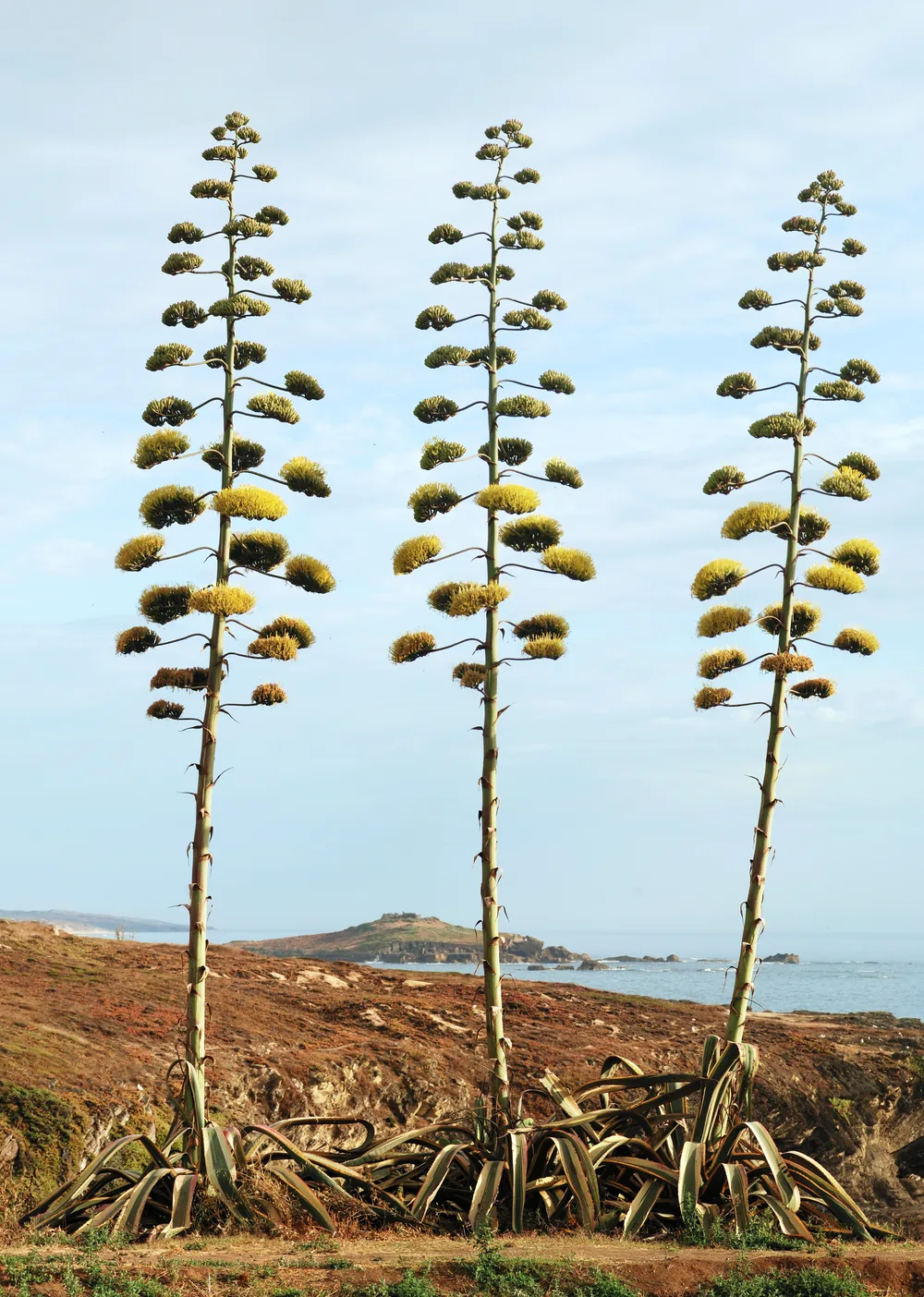
The Century Plant earns its name from an old belief that it blooms only once every hundred years, in reality it's closer to 10-30 years, but the legend captures something real: Agave americana is monocarpic, spending decades building up energy for a single towering flower stalk that can shoot up several meters before the rosette that produced it dies.
Agave americana 'Marginata'Agave americana 'Medio-picta Alba'Agave americana var. expansa
Light
Needs full sun to thrive; leggy, pale growth means it wants more direct light.
Water
Extremely drought-tolerant; water deeply and infrequently, letting soil dry completely, roughly every 3-4 weeks.
Humidity
Prefers dry air and good ventilation; excess humidity promotes rot.
Soil
Very fast-draining, sandy or gritty cactus mix.
Temperature
Protect it from frost: bring pots indoors below about 0°C.
Size
1.8-3m tall and wide when mature.
Growth speed
Slow
Best position
south-east / south / south-west-facing windowanywhere up to about 1 m from the window
east / west-facing windowright by the window
See every window directionHide window directions
Best position
right by the window
about 1 m
about 2 m
about 4 m
4 m or more
north
too dark○
too dark○
too dark○
too dark○
too dark○
north-east
too dark○
too dark○
too dark○
too dark○
too dark○
east
works well✓
too dark○
too dark○
too dark○
too dark○
south-east
works well✓
works well✓
too dark○
too dark○
too dark○
south
works well✓
works well✓
too dark○
too dark○
too dark○
south-west
works well✓
works well✓
too dark○
too dark○
too dark○
west
works well✓
too dark○
too dark○
too dark○
too dark○
north-west
too dark○
too dark○
too dark○
too dark○
too dark○
✓works well~just about○too dark☼too much direct sun
A rough guide based on window direction and typical daylight through the year. Window size, curtains and whatever stands outside matter just as much.
?Pet safety not confirmed
As a precaution, keep it out of reach of children and pets.
Did you know?
When a Century Plant finally flowers, it sends up a flower spike that can grow up to 15-30cm a day, reaching several meters tall within weeks, an astonishing final burst of growth before the mother rosette dies, leaving offsets (pups) around its base to carry on.
Care by Season
Spring
Increase watering slightly as the plant resumes active growth.
Summer
Keep in full sun outdoors if possible; water only when soil is bone dry.
Autumn
Cut back watering as growth slows with cooler temperatures.
Winter
Keep nearly dry and protect from frost; bring indoors below about 0°C.
Growing & Maintenance
Soil and pot
A very fast-draining, sandy or gritty cactus mix. A heavy, stable pot helps.
Pruning
Remove dried lower leaves as needed. Wear thick gloves and eye protection: the leaf tips are spined and the sap irritates skin.
Propagation
From the offsets that form around the base, or from seed.
Pests & Diseases
Common problems
Pale, stretched growth
Most likely cause: Too little direct sun.
What to do: Move it into full sun.
Soft, mushy base
Most likely cause: Root rot in wet soil.
What to do: Take it out of the wet compost, cut away the rotten roots and replant in dry, gritty mix.
Lower leaves drying out
Most likely cause: Normal ageing.
What to do: Cut them off close to the trunk, wearing gloves.
The plant dies after flowering
Most likely cause: Normal. It flowers once, after 10 to 25 years, and the main rosette then dies.
What to do: Keep the offsets at its base, which carry the plant on.
Soft, blackened leaves after a cold night
Most likely cause: Frost damage.
What to do: Move it somewhere frost-free and keep it nearly dry in winter.
Pests & Diseases
Agave snout weevil
Signs: Sudden collapse of the center of the rosette with a foul smell
Treatment: Remove and destroy severely infested plants; treat surrounding soil with systemic insecticide as prevention.
Scale insects
Signs: Small hard brown or gray bumps on leaf surfaces
Treatment: Scrape off and wipe with rubbing alcohol; apply horticultural oil for larger infestations.
Root rot
Signs: Mushy base and yellowing lower leaves from excess moisture
Treatment: Remove from wet soil, cut away rotten roots, and replant in dry, fast-draining mix.
FAQ
Will my indoor Century Plant ever flower?
It's unlikely indoors, flowering typically requires many years of strong, near-full sun exposure and a mature root system that container growing rarely provides, though outdoor specimens in warm climates do eventually bloom and then die.
My Century Plant is getting huge and its leaf tips are sharp, what can I do?
This species has genuinely dangerous spined leaf tips and toothed margins, so site it well away from foot traffic and pets, and consider snipping the very tip of each leaf with scissors to blunt the point without harming the plant.
How often should I water a Century Plant?
Roughly every 3-4 weeks, deeply, and only when the compost has dried out completely. Keep it nearly dry in winter.
How big does a Century Plant get?
A mature plant is 1.8-3m tall and wide. It grows slowly, but plan for the space, and for the sharp spines.
How long does a Century Plant take to flower?
Typically 10 to 25 years, not a century. It flowers once and the main plant then dies, leaving offsets behind.
How do I propagate a Century Plant?
By separating the offsets that grow around its base. It can also be raised from seed.