No results. Is a plant missing? Tell uscontact@wikiplant.net
Cherry Laurel
Prunus laurocerasus
Care level: Easy
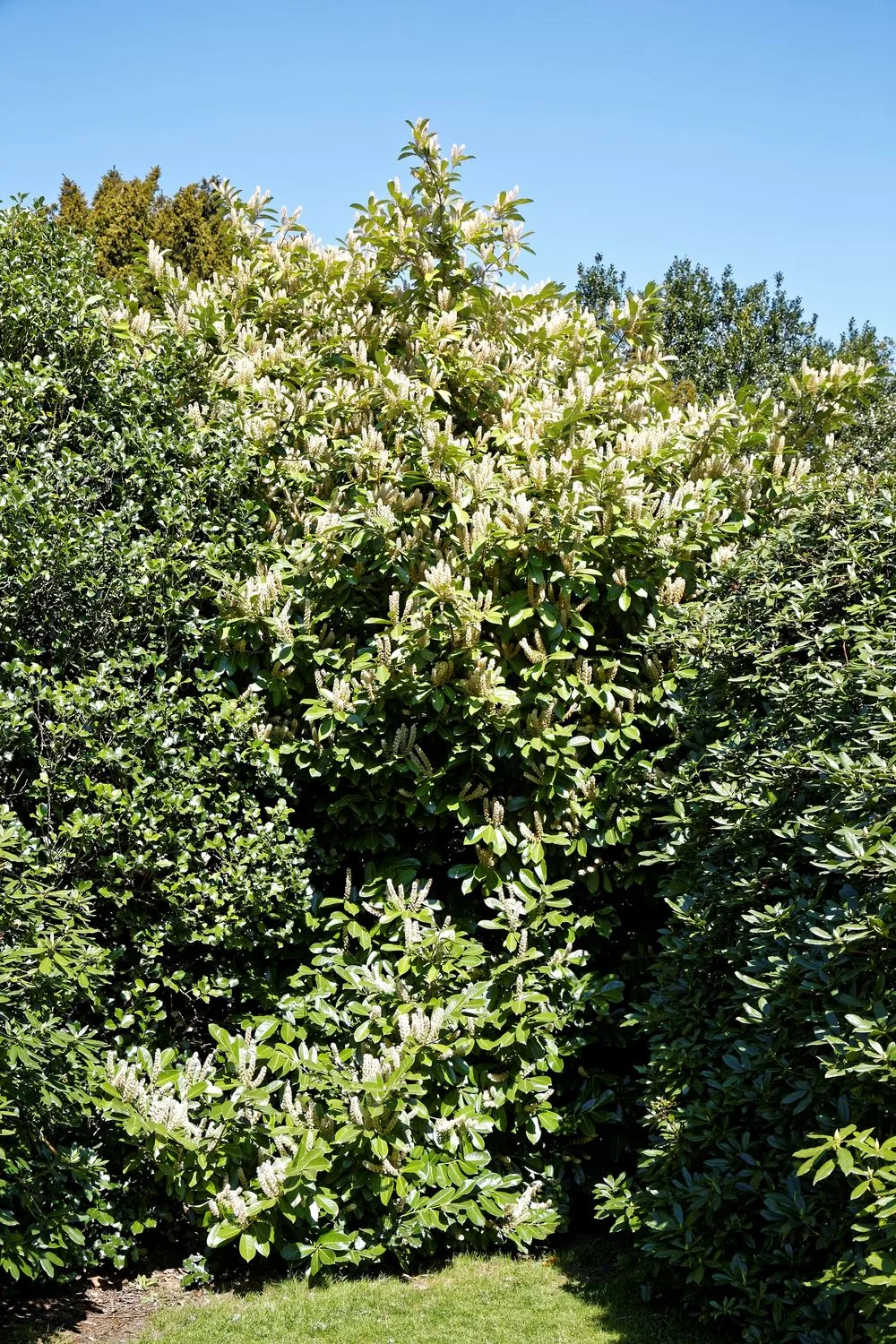
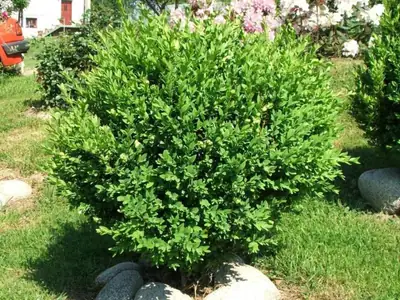
Cherry laurel is the large, glossy-leaved evergreen shrub behind a huge share of Europe's tall screening hedges, valued for growing fast, tolerating shade, and forming a dense, light-blocking wall of foliage within a few years. Despite the name it is not a true laurel (Laurus) at all but a member of the cherry and plum genus, Prunus, and its upright spikes of small white flowers in spring are followed by cherry-like fruit that turn from red to black. Left unclipped it becomes a substantial small tree; almost all garden cherry laurel is kept far smaller by regular trimming.
Full sun to full shade. Few evergreen hedging shrubs tolerate deep shade as well as cherry laurel, which is part of why it is chosen for difficult, shaded boundaries.
Water
Water new plants through their first year or two. Established plants in open ground are fairly drought-tolerant, though a long dry spell can cause leaf scorch.
Humidity
Not a significant factor outdoors; good air movement through the hedge matters more, since still, humid conditions favour leaf-spot disease.
Soil
Tolerant of most soils, including chalk, as long as drainage is reasonable. It yellows on very shallow chalky soils and dislikes permanently waterlogged ground.
Leaves, stems and seeds contain cyanide compounds; wilting leaves are the most dangerous.
If your pet has eaten some, contact your vet.
Source: ASPCA
Signature feature
Crushed or cut cherry laurel leaves release a smell often described as like marzipan or bitter almonds, which is the plant's cyanogenic compounds breaking down on contact with air; this is the same chemistry, in far lower concentration, behind the scent of real almonds and apricot kernels. It is a useful identification clue rather than something to deliberately test by eating, since it confirms the plant is the toxic one it is.
Care by Season
Spring
New growth begins; avoid a hard trim into the softest new growth if frost is still likely.
Summer
Main clipping season for formal hedges, typically late spring to early summer, after flowering and before the main flush of new growth hardens.
Autumn
Growth slows. A tidy-up trim is safe now, and this is also a reasonable time to plant new hedging while the soil is still warm.
Winter
Reliably hardy through a normal European winter once established; a particularly hard, prolonged frost in an exposed site can scorch leaf edges, which usually grows out in spring.
Growing & Maintenance
Planting
Autumn is a good time to plant hedging. It takes most soils with reasonable drainage. Water new plants through their first year or two.
Fertilising
Rarely needed. It dislikes heavy feeding.
Pruning
Clip formal hedges in late spring to early summer, after flowering. It tolerates hard pruning.
Pests & Diseases
Common problems
Brown blotches that fall out and leave holes
Most likely cause: Shot-hole disease, a leaf-spot fungus common in damp weather.
What to do: Rake up and dispose of fallen leaves and thin the hedge for better airflow.
White, powdery coating on young leaves
Most likely cause: Powdery mildew.
What to do: Trim off the affected shoots and do not overfeed.
Yellow leaves
Most likely cause: Very shallow chalky soil, or ground that stays waterlogged.
What to do: Improve the drainage and mulch with organic matter.
Notches eaten out of the leaf edges
Most likely cause: Adult vine weevils. Their grubs eat the roots.
What to do: Apply biological nematodes to the soil.
Brown, scorched leaves after winter
Most likely cause: A hard, prolonged frost.
What to do: Wait until spring and trim out the damaged growth.
Pests & Diseases
Shot-hole disease / leaf spot
Signs: Angular brown or purple-brown spots on leaves, sometimes falling out to leave ragged holes, worst in wet weather on dense, poorly ventilated hedges.
Treatment: Rake up and dispose of fallen leaves rather than leaving them to overwinter spores, avoid overhead watering, and thin an overly dense hedge to improve airflow. Established hedges usually tolerate it without needing chemical treatment.
Vine weevil
Signs: Adult weevils notch the edges of leaves at night, while grubs feeding on roots underground can cause sudden wilting in container-grown plants.
Treatment: Biological nematode drenches applied to the soil in late summer target the grubs. Sticky barrier bands or torchlight checks after dark can catch adult weevils on valued specimens.
Powdery mildew
Signs: A white, powdery coating on young leaves, which may pucker
Treatment: Trim off the affected shoots and avoid heavy feeding, which pushes soft growth.
FAQ
My cherry laurel hedge has large, irregular brown blotches on the leaves. What is this?
Almost certainly shot-hole disease or a related leaf-spot fungus, extremely common on cherry laurel in damp climates: angular brown or yellow-brown spots that sometimes drop out, leaving holes, giving the leaf a shot-gunned look. It is disfiguring rather than usually fatal to an established hedge. Raking up and disposing of fallen leaves, avoiding wetting the foliage when watering, and improving air circulation by thinning an overly dense hedge all help, though a badly affected plant may carry some spotting every year regardless.
Is it true that cherry laurel clippings shouldn't go straight into a compost bin?
Leaving a thick layer of fresh clippings tightly packed in an enclosed bin is worth avoiding, since the cyanogenic compounds in wilting foliage are released as the leaves break down, and a dense, poorly ventilated mass can build up enough to be a genuine irritant hazard to the person turning the compost, and a risk to animals that might get into it. Spreading clippings out to dry first, mixing them thinly with other garden waste, or using a municipal green-waste collection instead of a small enclosed bin avoids the issue.
Is Cherry Laurel toxic to cats and dogs?
Yes, Cherry Laurel is toxic to cats and dogs. The leaves and seeds release cyanide when chewed, so keep pets away from clippings and fallen fruit.
How fast does Cherry Laurel grow?
Fast. Left unclipped it reaches 3-6m tall and 2.4-3m wide, which is why it is so widely used for hedging.
When should I prune a Cherry Laurel hedge?
In late spring to early summer, after flowering. It tolerates hard pruning, so an overgrown hedge can be cut back hard.
How hardy is Cherry Laurel?
It is hardy to about -15°C once established. A particularly hard, prolonged frost can scorch the leaves, but the plant recovers.