No results. Is a plant missing? Tell uscontact@wikiplant.net
Clivia
Clivia miniata
Care level: Easy
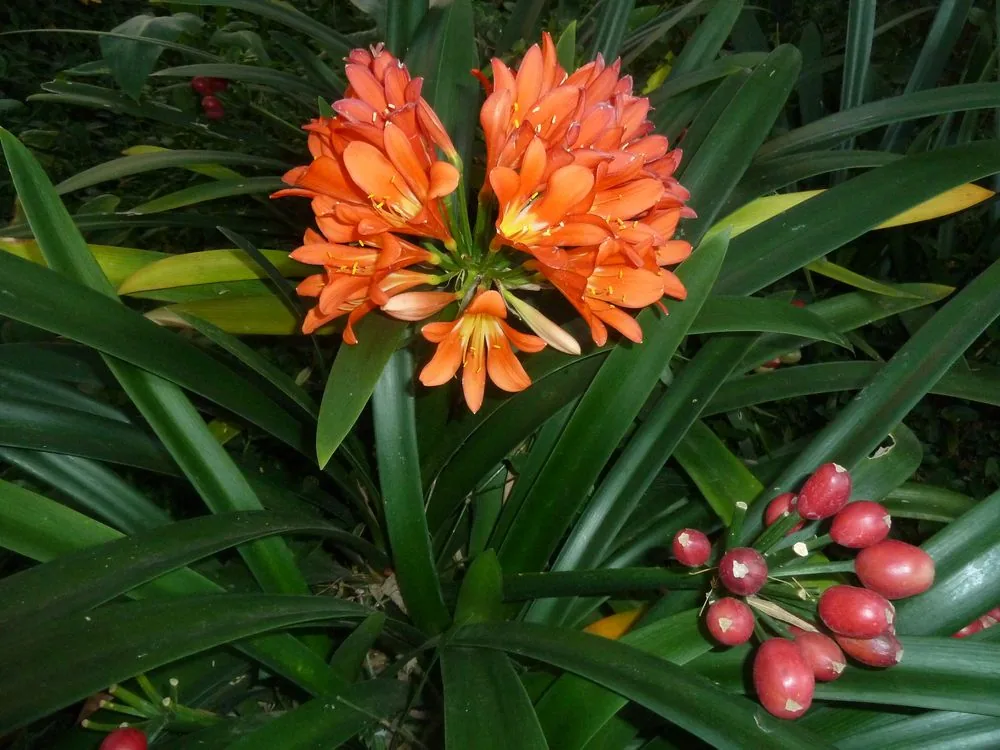
Clivia is an evergreen perennial from the forests of southern Africa that forms a clump of dark, glossy, strap-shaped leaves up to 60cm long, arranged in a neat fan. In late winter and spring a thick stem rises from the centre carrying a rounded cluster of a dozen or more orange-red, yellow-throated trumpet flowers, sometimes followed by red berries. It is slow, long-lived and tolerant of shade, and it flowers best when it is left alone in a pot that seems too small.
Clivia miniata var. citrinaClivia miniata 'Striata'Clivia nobilis
Light
Bright, filtered light, shaded from hot sun. It tolerates more shade than most flowering houseplants.
Water
Water freely in summer and keep it barely moist in winter.
Humidity
Average room humidity is enough.
Soil
Peat-free, loam-based potting compost with added leaf mould and grit.
Temperature
Normal room temperature in summer; a cool rest at around 10°C in winter. Not frost hardy.
Size
45-60cm tall and 60-90cm wide.
Growth speed
Slow
!Toxic to pets
Toxic to cats and dogs if eaten.
Can cause vomiting and diarrhoea, and more rarely affects heart rhythm.
If your pet has eaten some, contact your vet.
Source: NC State Extension, Pet Poison Helpline
Beginner tip
A clivia needs a cool, dry rest in winter to flower. For about two months from late autumn, keep it in a bright, cool room at around 10°C and water it barely at all. Plants kept warm and watered all winter grow leaves but often skip flowering.
Care by Season
Spring
Flowering time. Once the flower stem is well up, water normally again and start feeding.
Summer
Water freely and feed weekly. It can stand outdoors in shade.
Autumn
Bring it in before frost. Reduce watering and stop feeding as the rest period begins.
Winter
Keep it cool, bright and almost dry for about two months, until a flower stem appears.
Growing & Maintenance
Soil and pot
Use a peat-free, loam-based compost with added leaf mould and grit, in a heavy pot that will not tip over.
Repotting
Repot only when the roots push the plant out of its pot, just after flowering. It flowers best pot-bound.
Fertilising
Feed weekly with a balanced liquid fertiliser while it is in growth, until the flower buds form.
Propagation
By dividing offsets after flowering, in late winter or early spring, or by seed sown as soon as it is ripe.
Pests & Diseases
Common problems
No flowers
Most likely cause: No cool winter rest, or a recent repotting.
What to do: Rest it at around 10°C with very little water for two months and leave it pot-bound.
A short flower stem hidden in the leaves
Most likely cause: A rest that was too short or too warm.
What to do: Lengthen the cool rest next winter and resume watering only when the stem is 15cm tall.
Bleached or brown patches on the leaves
Most likely cause: Direct sun.
What to do: Move it to bright shade.
Yellow leaves from the base
Most likely cause: Overwatering, above all in winter.
What to do: Let the compost dry and water sparingly.
Brown leaf tips
Most likely cause: Irregular watering.
What to do: Water evenly in summer; trim the tips for looks if you wish.
Pests & Diseases
Mealybugs
Signs: White, cottony tufts deep between the leaf bases.
Treatment: Wipe them out with a cotton bud dipped in rubbing alcohol, reaching down between the leaves, and repeat weekly. Check the undersides of the leaves and the crevices where the leaf stem meets the main stalk.
Root rot
Signs: Leaves yellow from the base and the plant rocks loosely in its pot, in compost that stays wet.
Treatment: Remove it from the pot, cut away soft roots, let it dry for a day and repot in fresh, gritty compost.
Scale insects
Signs: Small brown, shell-like bumps on the leaves, with sticky honeydew.
Treatment: Wipe them off with a damp cloth and check again after two weeks.
FAQ
Why is my clivia not flowering?
The usual reasons are no cool winter rest, a recent repotting or a plant that is still too young. Give it two months at around 10°C with very little water in winter, leave it pot-bound, and be patient: seedlings take several years to reach flowering size.
Is clivia toxic to cats and dogs?
Yes. All parts contain lycorine and related alkaloids. Eating them causes vomiting, drooling and diarrhoea, and a large amount can lead to low blood pressure, tremors and heart rhythm problems. The sap can also irritate skin.
How often should I water a clivia?
Water freely in summer, letting the surface dry between waterings, and keep it barely moist in winter. Its thick, fleshy roots store water and rot if they sit wet.
Should I repot my clivia?
Rarely. It resents root disturbance and flowers best when the roots fill the pot. Repot only when the roots are pushing the plant out of its pot, just after flowering.
Why does the flower stem stay short, with flowers stuck among the leaves?
The stem failed to lengthen, usually because the winter rest was too short or too warm, or because watering resumed too early. Wait until the stem is about 15cm tall before watering normally again.
Can a clivia go outside in summer?
Yes, in a shady, sheltered spot. Direct sun scorches the leaves. Bring it in before the first frost.