No results. Is a plant missing? Tell uscontact@wikiplant.net
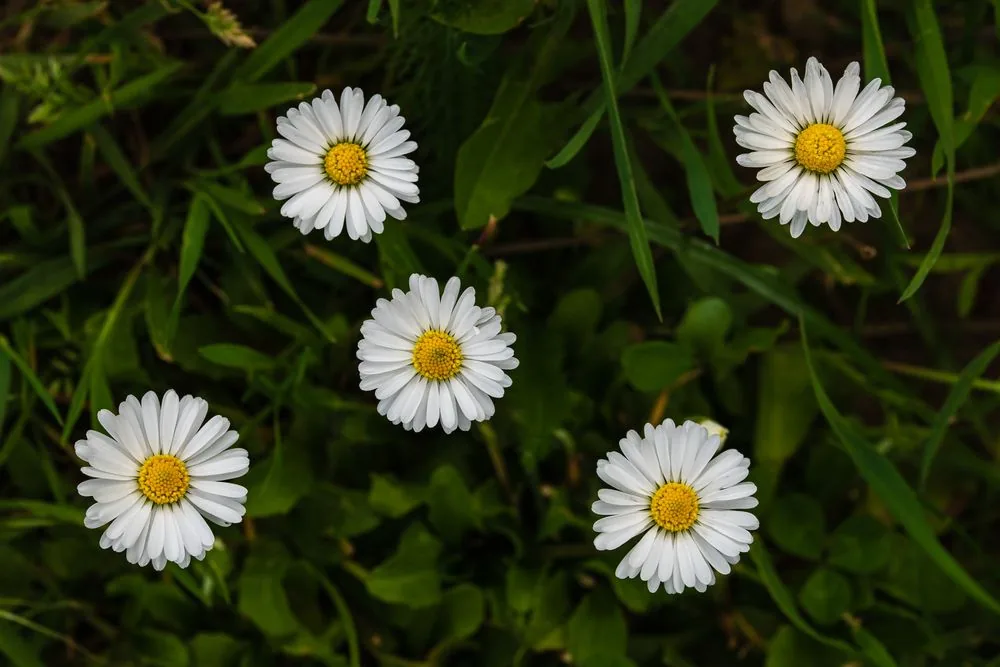
Common daisy
Bellis perennis
Care level: Very easy
The common daisy is the small white flower of lawns and short turf across Europe: a flat rosette of spoon-shaped leaves, close to the ground, sending up single flowers with a yellow centre and white rays often tipped with pink. It is an evergreen perennial that flowers for most of the year, with its peak in spring and early summer, and it survives mowing because the rosette sits below the blades. Gardeners also grow its cultivated forms, with large, fully double flowers in white, pink and red, as spring bedding alongside tulips and forget-me-nots.
As a precaution, keep it out of reach of children and pets.
Did you know?
The flowers close at dusk and in dull, wet weather and open again in the morning light. That habit is the origin of the English name, a worn-down form of 'day's eye'.
Care by Season
Spring
Main flowering. Deadhead bedding plants and water in dry spells.
Summer
Remove or divide plants that have finished. Sow seed in early summer for next year.
Autumn
Plant young plants in their flowering positions, with spring bulbs.
Winter
The rosettes stay green. A few flowers appear in mild weather.
Growing & Maintenance
Planting
Plant in autumn or early spring, 10-15cm apart, in sun or partial shade, and water in.
Fertilising
None needed in garden soil. In pots, give a balanced liquid feed every few weeks in spring.
Pruning
Deadhead to prolong flowering and prevent self-seeding.
Propagation
By seed sown in early summer, or by dividing the clumps after flowering.
Pests & Diseases
Common problems
Plants collapse in summer
Most likely cause: Heat and dry soil.
What to do: Water, give light shade or replace bedding plants after flowering.
Flowering stops early
Most likely cause: Seed heads left on the plants.
What to do: Deadhead regularly.
Single seedlings spreading into the lawn
Most likely cause: Self-seeding.
What to do: Remove the flowers before they set seed.
Flowers stay closed
Most likely cause: Dull weather or evening.
What to do: Normal. They open again in bright light.
Yellow leaves with orange spots underneath
Most likely cause: Rust.
What to do: Remove affected plants.
Daisies taking over the lawn
Most likely cause: Thin, compacted turf mown very short.
What to do: Raise the mowing height, feed and aerate the lawn.
Pests & Diseases
Rust
Signs: Orange or brown pustules on the undersides of the leaves, which yellow and die back.
Treatment: Remove affected leaves or plants and avoid overcrowding. Do not replant daisies in the same spot straight away.
Slugs and snails
Signs: Seedlings and young leaves eaten, with slime trails.
Treatment: Hand-pick after dark and protect seed trays.
Aphids
Signs: Clusters of small insects on the flower stems and under the leaves.
Treatment: Rub them off or rinse with water.
FAQ
How do I remove daisies from a lawn?
Lift individual rosettes with a daisy grubber or an old knife, taking the short roots with them, and reseed the gaps. Daisies thrive in thin, closely mown, compacted turf, so mowing a little higher and feeding and aerating the lawn makes it harder for them to return. Many gardeners simply leave them.
Are the double bedding daisies the same plant?
Yes. They are selected varieties of the same species with many more rays and larger flowers. They are usually grown as biennials and removed after flowering.
When do I sow or plant bedding daisies?
Sow in early summer in trays or a seedbed, grow the young plants on and set them in their flowering positions in autumn. They flower from early spring to early summer the following year. Garden centres also sell them in bud in autumn and spring.
Do they come back every year?
The wild daisy is a long-lived perennial. The double varieties are perennial too but tire in summer heat, so most people replace them. You can also divide the clumps after flowering and replant the pieces in a cool, lightly shaded spot.
Can I grow daisies in a pot?
Yes. The double varieties are good in pots and window boxes with spring bulbs. Use multipurpose compost and keep it moist.
Why are my bedding daisies full of plain, single seedlings?
The double varieties set seed, and their seedlings often revert towards the wild form. Deadhead regularly to stop them seeding into borders and lawns.
Are daisies useful to insects?
The single wild flowers offer pollen and nectar to small bees, hoverflies and other insects over a very long season. Fully double varieties offer much less.