No results. Is a plant missing? Tell uscontact@wikiplant.net
Creeping Fig
Ficus pumila
Care level: Easy
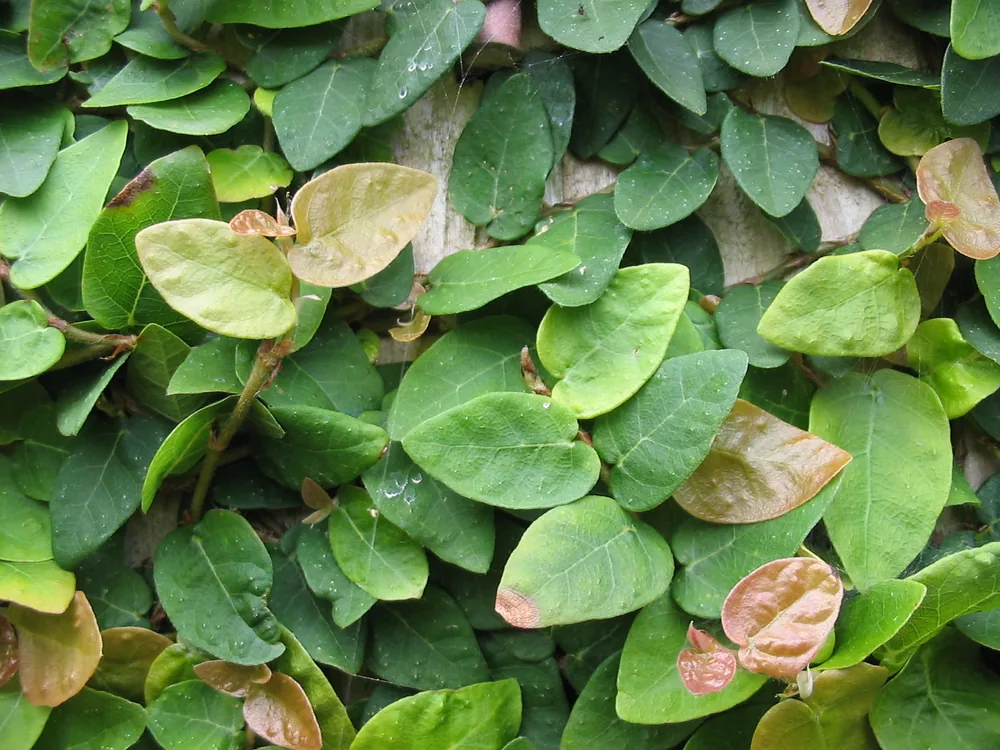
Ficus pumila is one of the few houseplants with two completely different looks in one lifetime: young plants produce small, thin, heart-shaped leaves that cling flat to any surface with tiny aerial rootlets, but if left to mature and climb, the plant switches to a woody, shrubby adult form with much larger, leathery leaves and even fruit.
Bright, indirect light is best; tolerates medium light but variegation fades in low light.
Water
Keep soil lightly and evenly moist, watering when the top 2cm dries out, usually weekly.
Humidity
Prefers moderate to high humidity; dry air can cause leaf browning.
Soil
Rich, well-draining potting mix that retains some moisture.
Size
Climbing stems reach 2.4-4.5m where they have room.
Growth speed
Fast
Best position
east / south-east-facing windowanywhere up to about 2 m from the window
north / north-east / north-west-facing windowanywhere up to about 1 m from the window
south / west-facing windowabout 1 m from the window or further back
Watch for strong direct sun at south / west windows.
See every window directionHide window directions
Best position
right by the window
about 1 m
about 2 m
about 4 m
4 m or more
north
works well✓
works well✓
too dark○
too dark○
too dark○
north-east
works well✓
works well✓
too dark○
too dark○
too dark○
east
works well✓
works well✓
works well✓
too dark○
too dark○
south-east
works well✓
works well✓
works well✓
too dark○
too dark○
south
just about~
works well✓
works well✓
too dark○
too dark○
south-west
just about~
just about~
works well✓
too dark○
too dark○
west
just about~
works well✓
works well✓
too dark○
too dark○
north-west
works well✓
works well✓
too dark○
too dark○
too dark○
✓works well~just about○too dark☼too much direct sun
A rough guide based on window direction and typical daylight through the year. Window size, curtains and whatever stands outside matter just as much.
!Toxic to pets
Toxic to cats and dogs if eaten.
Mostly mild mouth and stomach irritation.
If your pet has eaten some, contact your vet.
Source: ASPCA
Common mistake
Many growers are surprised when an old, neglected Creeping Fig suddenly produces thick, leathery, oddly shaped leaves on woody stems, this is the plant's natural adult phase, not a disease or pest problem, and it happens once a stem is allowed to grow undisturbed for long enough.
Care by Season
Spring
Resume regular watering and light feeding as new trailing growth appears.
Summer
Keep evenly moist and mist occasionally to maintain humidity.
Autumn
Reduce watering slightly as growth slows.
Winter
Water less often, letting soil dry a bit more between waterings, and avoid cold drafts.
Growing & Maintenance
Soil and pot
A rich, soil-based potting mix that holds some moisture, in a pot with drainage holes.
Fertilising
A light feed in spring and summer, while new trailing growth appears.
Pruning
Trim it whenever it outgrows its space. It tolerates cutting back at any time in the growing season.
Support
It clings by aerial rootlets to a moss pole, bark or frame, or trails from a pot.
Propagation
From stem cuttings, which root at the nodes in moist compost.
Pests & Diseases
Common problems
Some leaves look thick, large and different
Most likely cause: The plant's adult growth phase.
What to do: Cut those stems out if you want to keep the small juvenile leaves.
Browning leaves
Most likely cause: Dry air.
What to do: Raise the humidity and mist occasionally.
Variegation fading
Most likely cause: Low light.
What to do: Move it to bright, indirect light.
Dry, crisp leaves all over
Most likely cause: The compost has dried out.
What to do: Water at once and keep the compost lightly and evenly moist. Cut back the dead stems.
Scorched leaves
Most likely cause: Afternoon sun.
What to do: Give bright light, but out of the afternoon sun.
Pests & Diseases
Spider mites
Signs: Fine webbing and pale stippled leaves in dry conditions
Treatment: Raise humidity, rinse leaves, and treat with insecticidal soap. Check the undersides of the leaves and the crevices where the leaf stem meets the main stalk.
Scale insects
Signs: Small brown bumps along stems and leaf undersides
Treatment: Scrape off and wipe with rubbing alcohol; apply horticultural oil if widespread.
Root rot
Signs: Wilting despite damp soil and blackened roots
Treatment: Remove from soggy soil, trim affected roots, and repot in fresh, well-draining mix.
FAQ
Why do some of my Creeping Fig's leaves look totally different from the rest?
That's the plant's adult (mature) growth phase, Ficus pumila naturally switches from small clinging juvenile leaves to larger, thicker, oddly lobed adult leaves on older, unpruned stems; regular trimming keeps it in the compact juvenile form most people prefer indoors.
Will Creeping Fig damage my walls if I let it climb?
Outdoors it clings to brick and stone with sticky aerial rootlets that can leave residue or stain when removed, so indoors it's best trained onto a moss pole, trellis, or dedicated support rather than allowed to attach directly to painted walls.
Is the Creeping Fig toxic to cats and dogs?
Yes, the Creeping Fig is toxic to cats and dogs. Its sap is a mild irritant. Wear gloves when pruning and keep cuttings away from pets.
How often should I water a Creeping Fig?
Usually once a week, when the top 2cm of compost has dried. Keep it lightly and evenly moist in the growing season and water less from autumn to late winter.
How fast does a Creeping Fig grow?
Fast. With something to cling to, the stems reach 2.4-4.5m, so expect to trim it regularly.
How do I prune a Creeping Fig?
Trim it back whenever it gets too long. It takes pruning well, and cutting the tips makes it denser.