No results. Is a plant missing? Tell uscontact@wikiplant.net
Crocus
Crocus vernus
Care level: Very easy
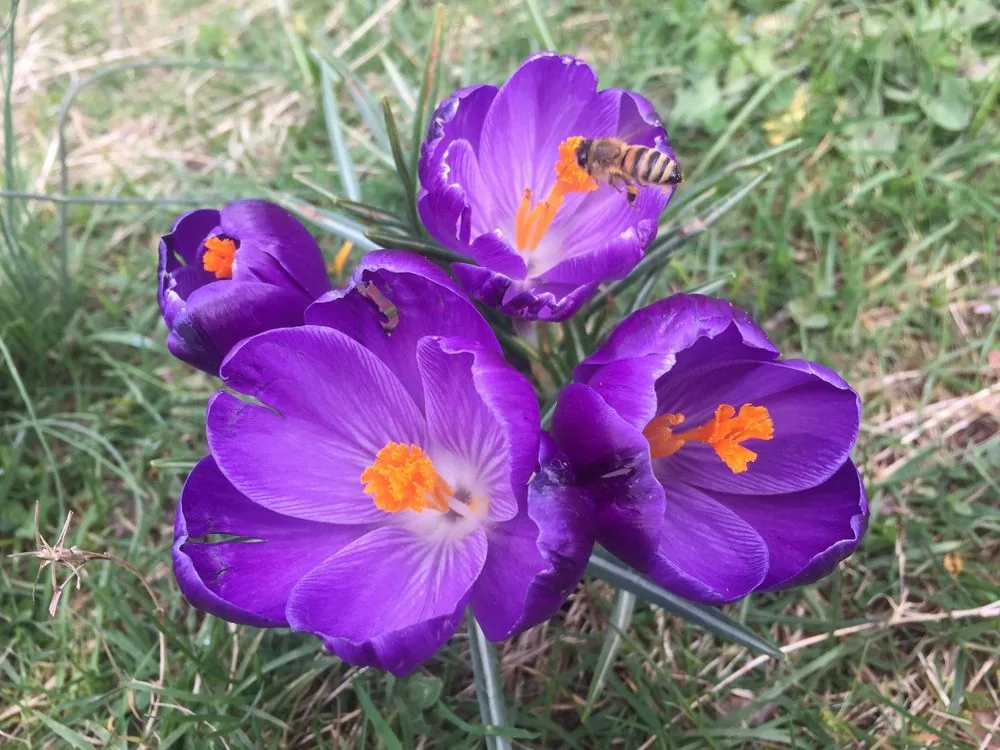
The spring crocus is one of the first flowers of the year: goblet-shaped blooms in purple, white or striped, barely 10cm tall, pushing up through cold soil and short grass in late winter and early spring. It grows from a corm, a small swollen stem base planted like a bulb. The narrow, dark green leaves carry on after the flowers and then die back, and the plant rests underground until the next year. It is fully hardy and well suited to naturalising in a lawn.
Eating it can cause vomiting and an upset stomach.
If your pet has eaten some, contact your vet.
Source: Pet Poison Helpline, RHS
Beginner tip
After flowering, leave the leaves alone for about six weeks. They are feeding next year's flowers, so in a lawn that means holding off the first mowing where the crocuses grow.
Care by Season
Spring
Flowering time. Afterwards let the leaves die down naturally, and do not mow over them for about six weeks.
Summer
The plant is dormant underground. Lift and divide crowded clumps once the leaves have gone.
Autumn
Planting time: set corms 5-6cm deep in well-drained soil in sun.
Winter
Shoots appear late in winter and the first flowers open, often through snow.
Growing & Maintenance
Planting
Plant corms in late summer or autumn, 5-6cm deep, in well-drained soil in full sun. For a lawn, set them under a lifted flap of turf.
Pruning
None is needed. Let the leaves die down naturally.
Propagation
By dividing clumps or separating the small cormlets once the leaves have died back.
Pests & Diseases
Common problems
Flowers that stay closed
Most likely cause: Dull weather or a shady spot.
What to do: Plant where the sun reaches in late winter.
Fewer flowers each year
Most likely cause: The leaves were mown or cut off too early.
What to do: Leave the foliage for about six weeks after flowering.
Corms that never came up
Most likely cause: They were eaten by rodents, or they rotted in wet soil.
What to do: Protect new plantings with wire and improve the drainage.
Plenty of leaves, few flowers
Most likely cause: A crowded clump.
What to do: Lift and divide it after the leaves die back.
Flowers flattened
Most likely cause: Heavy rain or wind on fully open flowers.
What to do: Nothing is needed; more buds follow.
Pests & Diseases
Squirrels and mice
Signs: Corms dug up and eaten soon after planting, leaving small holes in the soil.
Treatment: Firm the soil after planting and cover the area with pegged-down chicken wire until the ground has settled.
Birds
Signs: Flowers pecked and torn to shreds.
Treatment: Stretch black thread on short sticks just above the flowers where the damage returns each year.
Corm rot
Signs: Corms that turn soft and fail to come up, in wet soil or in damp storage.
Treatment: Plant only firm corms, in well-drained soil, and store spare corms dry and airy.
FAQ
When and how deep should I plant crocus corms?
Plant in late summer or autumn, about 5-6cm deep and a few centimetres apart, in well-drained soil in sun. They look best in generous groups rather than in ones and twos.
Can I plant crocuses in a lawn?
Yes. They naturalise well in grass. Lift a flap of turf, set the corms underneath and press it back. The one condition is that you do not mow that area until about six weeks after flowering.
Why do my crocus flowers stay closed?
Crocus flowers open in sunshine and close at night and on dull days. In a shady spot they open less, so plant them where the late winter sun reaches.
Are crocuses toxic to cats and dogs?
Yes. Eating spring crocus causes drooling, vomiting, loss of appetite and diarrhoea in cats and dogs. Do not confuse it with autumn crocus (Colchicum), a different plant that is far more dangerous.
Something is digging up my crocus corms. What can I do?
Squirrels and mice find and eat freshly planted corms. Firm the soil well after planting and lay chicken wire over the area, pegged down, until the ground has settled.
Do crocuses come back every year?
Yes. In well-drained soil they return and slowly multiply. Divide crowded clumps every few years once the leaves have died back.