No results. Is a plant missing? Tell uscontact@wikiplant.net
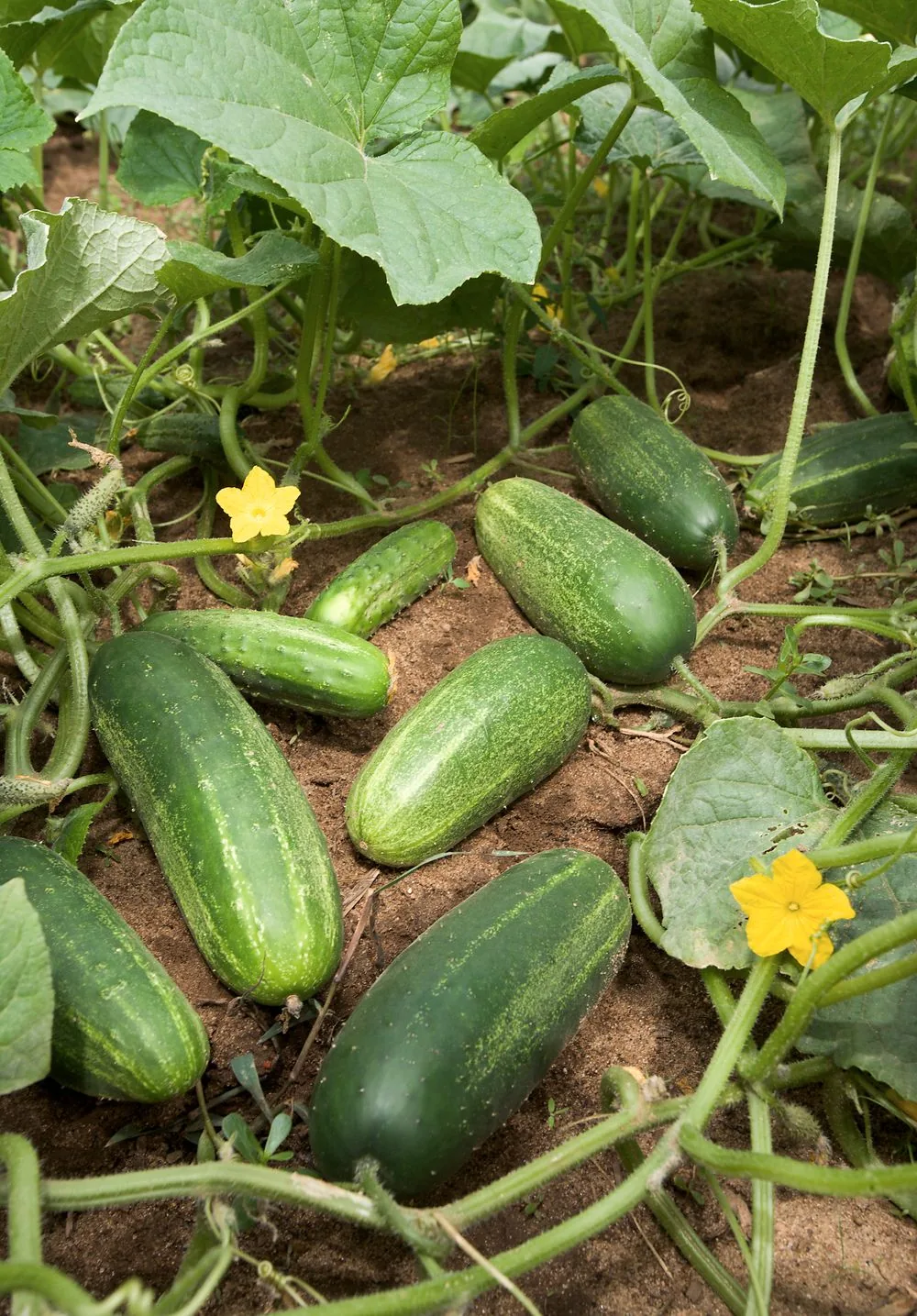
The cucumber is a fast, annual vine from the foothills of the Himalayas, grown for its crisp, green fruits. It climbs by thin tendrils, carries large, rough, angular leaves and opens yellow flowers all summer, each female flower with a tiny cucumber behind it. There are two kinds: long, smooth greenhouse cucumbers, which need steady warmth and humidity, and shorter, rougher outdoor or ridge cucumbers, which crop in a sunny, sheltered bed. Both need rich, moist soil, regular water and no frost, and a couple of plants supply a household.
I have this plantSign in to add this plant to your library
As a precaution, keep it out of reach of children and pets.
Know which type you are growing. Greenhouse cucumbers must not be pollinated, or the fruits turn bitter and full of seeds: grow an all-female variety, or pick off the male flowers. Outdoor cucumbers are the opposite. They need insects to pollinate them, so leave every flower on.
Greenhouse types give long, smooth, thin-skinned fruits and need heat, humidity and a tall support. Outdoor, or ridge, types are hardier, with shorter, often spiny fruits, and are grown in a sunny bed or pot, trailing or trained up netting. Gherkins are small-fruited outdoor types picked young.
Only on greenhouse cucumbers that are not all-female varieties. Male flowers have a plain thin stalk; female ones have a miniature cucumber behind the petals. Modern all-female F1 varieties make this job unnecessary. Never remove male flowers from outdoor cucumbers.
In greenhouse types, pollination. In all types, stress from cold nights, drought or erratic watering. Do not eat bitter fruit and do not feed it to pets, as the bitter compounds can cause stomach upset. Keep watering even and remove the affected fruits.
Indoors in mid-spring, one seed on its edge about 1cm deep in a small pot, at 20°C or more. Sow greenhouse types a little earlier if the greenhouse is heated. Plant out outdoor types only after the last frost, once hardened off.
Tie the main stem to a cane or string and pinch out its tip when it reaches the top of the support. Shorten side shoots to two leaves beyond a fruit. Outdoor types can simply be left to trail, with the tip pinched out after six or seven leaves to make them branch.
The plant is carrying more fruit than it can feed, or it has had a check from cold, dry roots or low light. Remove the withered fruitlets, feed weekly and keep the roots warm and evenly moist.
Every two or three days in midsummer. Cut fruits while they are firm and evenly green; any left to turn yellow and seedy stop the plant producing more.