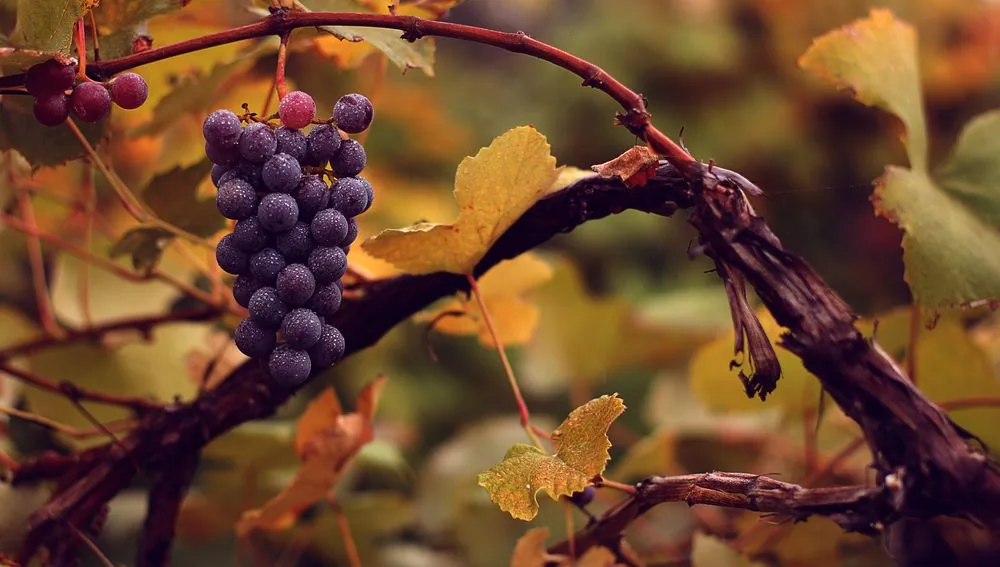
A bunch of dark blue grapes hanging from a vine among yellowing autumn leaves

Grape vine

Vitis vinifera
Care level: Moderate

The grape vine is a vigorous, woody, deciduous climber that pulls itself up by tendrils and can reach 15m or more if nothing stops it. It has large, lobed, toothed leaves that colour in autumn, tiny green flowers in early summer and bunches of green or black grapes in late summer and autumn. It is hardy to about -15°C, but it needs a long, warm season to ripen fruit, so in cooler regions it earns its place on a sunny wall or over a pergola.

I have this plant

Information

Varieties and related species
Vitis vinifera 'Boskoop Glory'Vitis 'Phoenix'Vitis vinifera 'Purpurea'

Light

Full sun. A warm wall helps the fruit to ripen.

Water

Water new plants regularly for the first two years, and established vines in long dry spells while the fruit swells.

Humidity

Not a factor outdoors; still, damp air around the foliage encourages mildew.

Soil

Well-drained, humus-rich soil, preferably neutral to slightly alkaline. Mulch to keep the roots moist.

Size

Climbs to 15m or more if left alone. Pruning keeps it to a few metres.

Hardiness

Hardy down to about -15°C. Source: RHS

Toxic to pets

Toxic to cats and dogs if eaten.

The fruit, fresh or dried, is toxic to dogs: stomach upset first, followed by kidney injury.

If your pet has eaten some, contact your vet.

Source: RHS, Pet Poison Helpline

Common mistake

Pruning a vine late, as the buds swell in spring, makes it bleed sap heavily. Do the main pruning in early winter, once the leaves have fallen and well before the sap rises again.

Care by Season

Spring

Buds break. Protect young shoots from late frost, tie in new growth and mulch.

Summer

Flowers, then fruit set. Shorten side shoots, thin the bunches and remove leaves that shade ripening fruit.

Autumn

Harvest when the grapes are fully coloured and sweet. The leaves turn yellow or red and fall.

Winter

Do the main pruning in early winter while the vine is dormant. Take hardwood cuttings.

Growing & Maintenance

Planting

Plant while dormant in full sun, in well-drained, humus-rich soil, about 20cm out from the wall or support, with wires or a frame already in place.

Pruning

In early winter, cut the fruited side shoots back to one or two buds. In summer, shorten new side shoots beyond the bunches and remove surplus growth.

Support

Train the main stems along horizontal wires or over a pergola and tie in new shoots as they grow.

Propagation

By hardwood cuttings in late autumn or winter.

Pests & Diseases

Common problems

Sap dripping from pruning cuts

Most likely cause: Pruning too late, as the sap was rising.
What to do: It stops by itself. Prune in early winter in future.

Plenty of leaves but no fruit

Most likely cause: No winter pruning, or too much shade.
What to do: Prune back to short spurs every winter and give the vine full sun.

Grapes that stay small and sour

Most likely cause: Too many bunches, or too little warmth.
What to do: Thin to one bunch a shoot and grow the vine on a sunny wall.

Split, mouldy berries

Most likely cause: Powdery mildew or grey mould.
What to do: Open up the plant and remove affected bunches.

Young shoots blackened in spring

Most likely cause: Late frost.
What to do: Cover the vine with fleece on frosty nights; new shoots usually follow.

Pests & Diseases

Powdery mildew

Signs: A grey-white powdery coating on leaves, shoots and berries; affected berries split.
Treatment: Prune for an open plant, water the roots in dry weather and remove badly affected bunches. Choose resistant varieties.

Grey mould

Signs: Ripening berries turn brown and are covered in grey fuzz, especially in a wet late summer.
Treatment: Thin the bunches and the leaves around them so that they dry quickly, and remove mouldy berries promptly.

Wasps and birds

Signs: Ripe grapes hollowed out or stripped from the bunch.
Treatment: Cover the bunches with fine mesh bags or net the whole vine as the fruit colours.

Blister mite

Signs: Raised blisters on the upper side of the leaves with pale felt underneath.
Treatment: No treatment is needed; the crop is not affected.

FAQ

When and how do I prune a grape vine?

Do the main pruning in early winter, when the vine is fully dormant: cut the side shoots that fruited back to one or two buds from the main stem. In summer, shorten the new side shoots and remove excess growth so that sun and air reach the bunches.

Are grapes toxic to dogs?

Yes, and seriously. Grapes, and raisins, sultanas and currants made from them, can cause vomiting followed by kidney injury in dogs, and even a small amount is a reason to call a vet. Pick up fallen fruit under the vine and keep dogs away at harvest time.

Why are the leaves and fruit covered in grey-white powder?

That is powdery mildew, the commonest disease of vines. Berries affected early crack and rot. Prune for an open plant so that air moves freely, water the roots in dry spells and choose a resistant variety for a new planting.

Where should I plant a grape vine?

In full sun, against a south- or west-facing wall or fence, or over a sturdy pergola, in well-drained, humus-rich soil. Put the supporting wires or frame up before planting.

Why does my vine have leaves but no grapes?

Usually too much shade, wrong or missing pruning, or a late frost that killed the young shoots. Vines fruit on shoots that grow in the current year from last year's wood, so regular winter pruning is what keeps the crop coming.

Should I thin the bunches?

Yes, for dessert grapes. Leave one bunch to each side shoot and, for larger berries, snip out some of the small grapes inside each bunch while they are the size of peas.

You might also like