No results. Is a plant missing? Tell uscontact@wikiplant.net
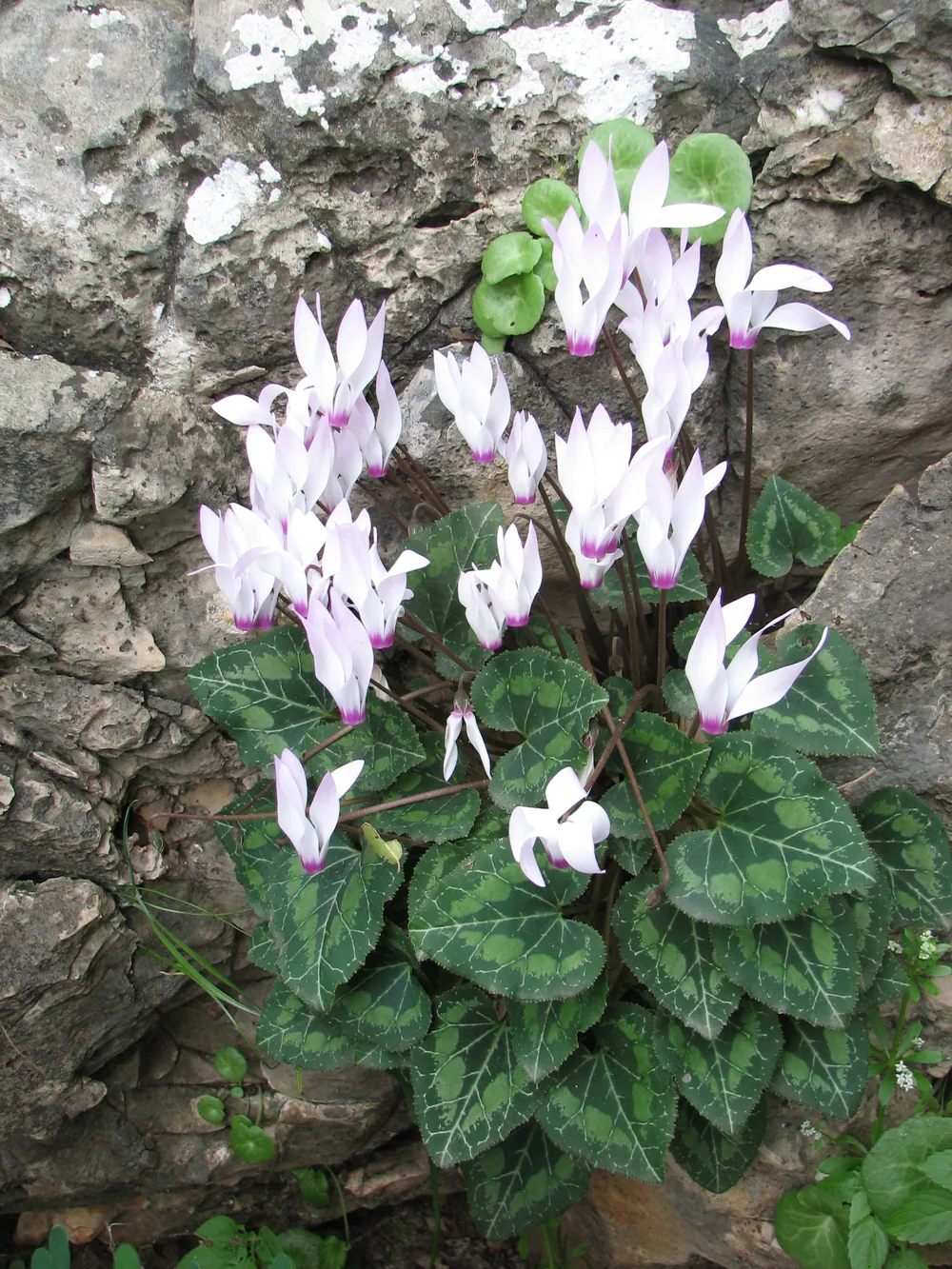
Florist's Cyclamen
Cyclamen persicum
Care level: Moderate
Florist's Cyclamen grows from a flattened tuber native to the rocky, cool hillsides of the eastern Mediterranean, which is why it flowers happily through winter and early spring but then wants to go dormant and rest through the heat of summer, a habit that trips up owners used to houseplants that grow year-round.
Bright, cool, indirect light; avoid hot direct sun which stresses the plant.
Water
Water from the base by soaking the pot when soil surface is dry, roughly weekly, avoiding the tuber crown.
Humidity
Prefers moderate humidity and cool temperatures around 12-18°C.
Soil
Well-draining, slightly acidic potting mix with good organic content.
Temperature
Cool: 12-18°C. Warm rooms shorten the flowering.
Size
15-23cm tall and wide.
Best position
north / north-east-facing windowanywhere up to about 1 m from the window
east-facing windowabout 1 m from the window or further back
west-facing windowabout 2 m from the window or further back
Watch for strong direct sun at east / west windows.
See every window directionHide window directions
Best position
right by the window
about 1 m
about 2 m
about 4 m
4 m or more
north
works well✓
works well✓
too dark○
too dark○
too dark○
north-east
works well✓
works well✓
too dark○
too dark○
too dark○
east
just about~
works well✓
works well✓
too dark○
too dark○
south-east
too much direct sun☼
just about~
just about~
too dark○
too dark○
south
too much direct sun☼
too much direct sun☼
too much direct sun☼
too dark○
too dark○
south-west
too much direct sun☼
too much direct sun☼
just about~
too dark○
too dark○
west
too much direct sun☼
too much direct sun☼
works well✓
too dark○
too dark○
north-west
too much direct sun☼
just about~
too dark○
too dark○
too dark○
✓works well~just about○too dark☼too much direct sun
A rough guide based on window direction and typical daylight through the year. Window size, curtains and whatever stands outside matter just as much.
!Toxic to pets
Toxic to cats and dogs if eaten.
Eating it can cause vomiting and an upset stomach.
If your pet has eaten some, contact your vet.
Source: ASPCA
Common mistake
Watering over the top of the plant is the most frequent cause of failure, since water pooling in the crown around the tuber quickly leads to rot; always water from the base by soaking the pot or watering carefully around the tuber's edge instead.
Care by Season
Spring
As flowering ends, reduce watering and allow the plant to go dormant if leaves yellow.
Summer
Keep dormant tubers dry and cool in a shaded spot, or continue light watering if leaves persist.
Autumn
Resume watering and gentle feeding as new leaves and buds emerge.
Winter
Keep cool, bright, and consistently but lightly moist during peak bloom.
Growing & Maintenance
Soil and pot
A rich, well-drained, slightly acidic potting mix. Plant the tuber with its top just above the surface.
Fertilising
A gentle feed in autumn and winter, while new leaves and buds are forming. None during the summer rest.
Pruning
Remove spent flowers and yellow leaves, taking the whole stalk off at the base so no stub is left to rot.
Propagation
From seed, or by dividing the tuber.
Pests & Diseases
Common problems
Leaves yellowing and dying back after flowering
Most likely cause: Normal. The plant goes dormant in summer.
What to do: Let the compost dry, keep the tuber cool and shaded, and start watering again in autumn.
Sudden wilting although the compost is moist
Most likely cause: Crown or tuber rot from water sitting on top of the tuber.
What to do: Water from the base only. A badly rotted tuber cannot be saved.
Flowers fading fast and yellow leaves in winter
Most likely cause: The room is too warm.
What to do: Move it to a cool, bright spot at 12-18°C.
Scorched leaves
Most likely cause: Hot, direct sun.
What to do: Give bright, indirect light.
Grey mould on leaves and flower stalks
Most likely cause: Botrytis, encouraged by damp, still air.
What to do: Remove affected parts completely and give the plant more air.
Pests & Diseases
Cyclamen mites
Signs: Distorted, curled new leaves and stunted flower buds.
Treatment: Discard heavily infested plants; isolate and treat mild cases with miticide.
Grey mould (Botrytis)
Signs: Fuzzy grey growth on leaves or flowers in damp, still air.
Treatment: Remove affected parts, improve airflow, and avoid wetting foliage.
Vine weevil
Signs: Notched leaf edges and larvae feeding on the tuber and roots.
Treatment: Drench soil with nematodes or appropriate insecticide and remove visible grubs.
FAQ
My Cyclamen's leaves are yellowing and dying back after flowering, is it dead?
No, this is usually the start of natural summer dormancy; let the soil dry out and store the tuber somewhere cool and shaded until fresh leaves emerge again in autumn.
Why did my Cyclamen wilt suddenly even though the soil feels moist?
Sudden wilting despite moist soil is a classic sign of crown or tuber rot from water sitting on top of the tuber; check for softness at the crown and switch to bottom watering going forward.
Is cyclamen toxic to cats and dogs?
Yes, cyclamen is toxic to cats and dogs. The tuber is the most poisonous part, and eating the plant upsets the stomach. Keep it out of reach of pets.
How should I water a cyclamen?
From the base, roughly once a week, when the surface of the compost is dry. Stand the pot in water briefly and let it drain, or water at the edge of the pot, never onto the crown.
Will my cyclamen flower again next year?
Yes, if you let it rest. After flowering it goes dormant in summer; keep the tuber dry and cool, then resume watering in autumn when new leaves appear.
What temperature does a cyclamen need?
Cool conditions, around 12-18°C. In a warm living room the flowers fade quickly and the leaves turn yellow.