No results. Is a plant missing? Tell uscontact@wikiplant.net
Cymbidium orchid
Cymbidium hybrids
Care level: Moderate
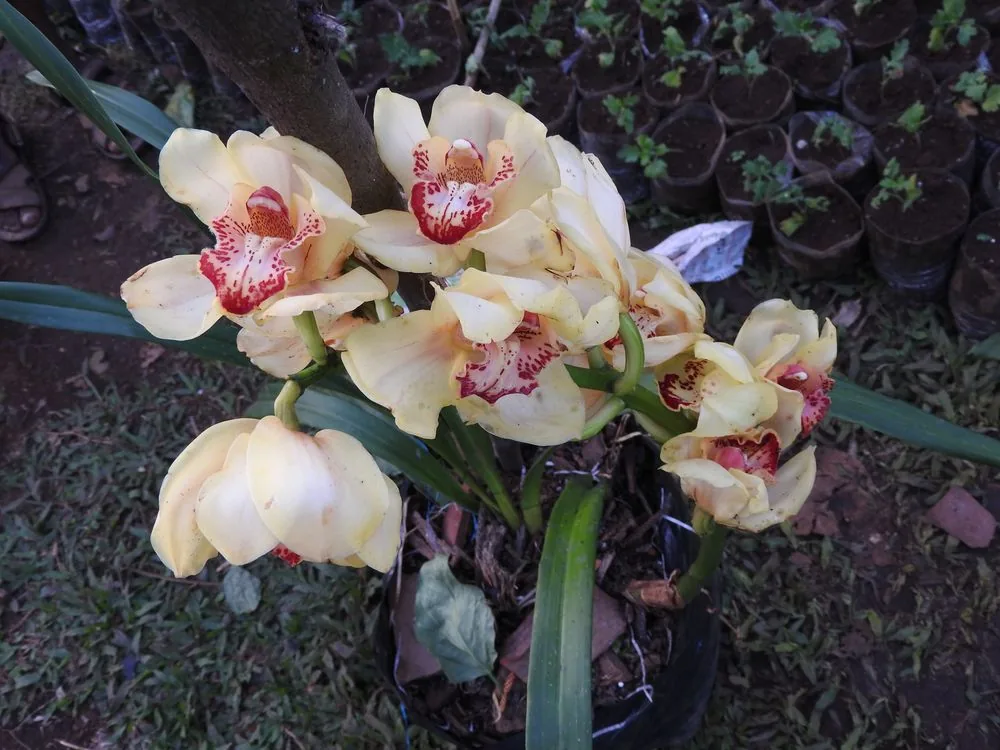
Cymbidiums, or boat orchids, are the orchids with long, arching, grass-like leaves that grow from fat pseudobulbs and carry tall spikes of a dozen or more waxy flowers in winter and spring. The flowers come in white, cream, yellow, green, pink and deep red, usually with a spotted lip, and last for six weeks or longer. The plants sold are hybrids of species from the cool hill forests of Asia, and that origin explains their one unusual demand: they need cool nights to flower.
Cymbidium Sarah Jean gx 'Ice Cascade'Cymbidium lowianumCymbidium ensifolium
Light
Bright light all year. Outdoors in summer, give light shade from hot midday sun.
Water
Water freely in growth and keep just moist in winter. Never leave the pot standing in water.
Humidity
Moderate. Good air movement matters more than high humidity.
Soil
Bark-based orchid compost that drains fast.
Temperature
Cool: about 10-14°C on winter nights, and cool nights in late summer to set flower buds.
Size
0.3-1.2m tall and 30-90cm wide.
?Pet safety not confirmed
As a precaution, keep it out of reach of children and pets.
Beginner tip
Put the plant outdoors for the summer and leave it there until the nights turn cool in early autumn. A clear drop in night temperature at the end of summer is what triggers the flower spikes. Plants kept in a warm room all year grow leaves and nothing else.
Care by Season
Spring
Flowering finishes. Repot if the plant is crowded, start feeding and move it outdoors once frost has passed.
Summer
Keep it outdoors in a bright, sheltered spot. Water and feed regularly as the new growths swell.
Autumn
Leave it out through the first cool nights, then bring it into a bright, cool room before frost. Flower spikes appear at the base of the new pseudobulbs.
Winter
Keep it cool and bright, stake the spikes and water sparingly. Flowering begins.
Growing & Maintenance
Soil and pot
Use a coarse, bark-based orchid compost in a pot that is deep rather than wide.
Repotting
Repot every two to three years after flowering, when the pseudobulbs reach the rim. Move up one size or divide the plant.
Fertilising
Feed with an orchid fertiliser every second or third watering from spring to early autumn, and stop in winter.
Propagation
By division after flowering, keeping at least three pseudobulbs with leaves on each piece.
Pests & Diseases
Common problems
Leaves but no flower spikes
Most likely cause: No cool nights in late summer, or too little light.
What to do: Summer it outdoors and bring it in late.
Buds turn yellow and drop
Most likely cause: A warm, dry room, or a move once the buds had formed.
What to do: Keep it cool and leave it in one place while in bud.
Black tips on the leaves
Most likely cause: Hard water or a build-up of fertiliser salts.
What to do: Use rainwater and flush the pot through with plain water once a month.
Wrinkled pseudobulbs
Most likely cause: Too little water in the growing season, or dead roots in old compost.
What to do: Water more freely; repot into fresh compost if the roots have rotted.
Scorched patches on the leaves
Most likely cause: Sudden full sun after a winter indoors.
What to do: Accustom it to outdoor light over a couple of weeks.
Pests & Diseases
Spider mites
Signs: Fine silvery speckling on the undersides of the leaves, mostly in warm, dry rooms.
Treatment: Wipe or rinse the leaves and move the plant somewhere cooler and more humid. A summer outdoors usually clears them. Check the undersides of the leaves and the crevices where the leaf stem meets the main stalk.
Scale insects
Signs: Small brown, shell-like bumps on the leaves and under the papery sheaths of the pseudobulbs.
Treatment: Peel back the dry sheaths, wipe the scales off with a damp cloth and check again after two weeks.
Slugs and snails
Signs: Holes eaten in flower buds and new shoots while the plant stands outdoors.
Treatment: Raise the pot off the ground and check the pot and its base before bringing it indoors.
FAQ
Why does my cymbidium not flower?
Almost always because it did not get cool nights in late summer and autumn, or because it had too little light. Stand it outdoors in a bright, sheltered spot from late spring, and bring it in only when frost threatens. Feed it through the growing season so that the new pseudobulbs fatten up.
Where should it stand indoors?
In the brightest cool place you have: an unheated bedroom, a porch or a conservatory. In a warm living room the buds tend to yellow and drop before they open.
How do I water a cymbidium?
Water freely in spring and summer so that the compost never dries out completely, and let the pot drain. In winter water less, keeping the compost just moist. Use rainwater if your tap water is hard.
When should I repot it?
Every two to three years, just after flowering, when the pseudobulbs press against the rim of the pot. Use bark-based orchid compost. Old, leafless pseudobulbs at the back can be removed at the same time.
What do I do with the flower spike afterwards?
Cut it off at the base once the last flowers have faded. Each pseudobulb flowers once; next year's spikes come from the new growths.
Do the flower spikes need support?
Usually, yes. Tie the spike loosely to a thin cane as it lengthens, before the buds become heavy, and do not turn the pot once buds have formed.