No results. Is a plant missing? Tell uscontact@wikiplant.net
Daffodil
Narcissus pseudonarcissus
Care level: Easy
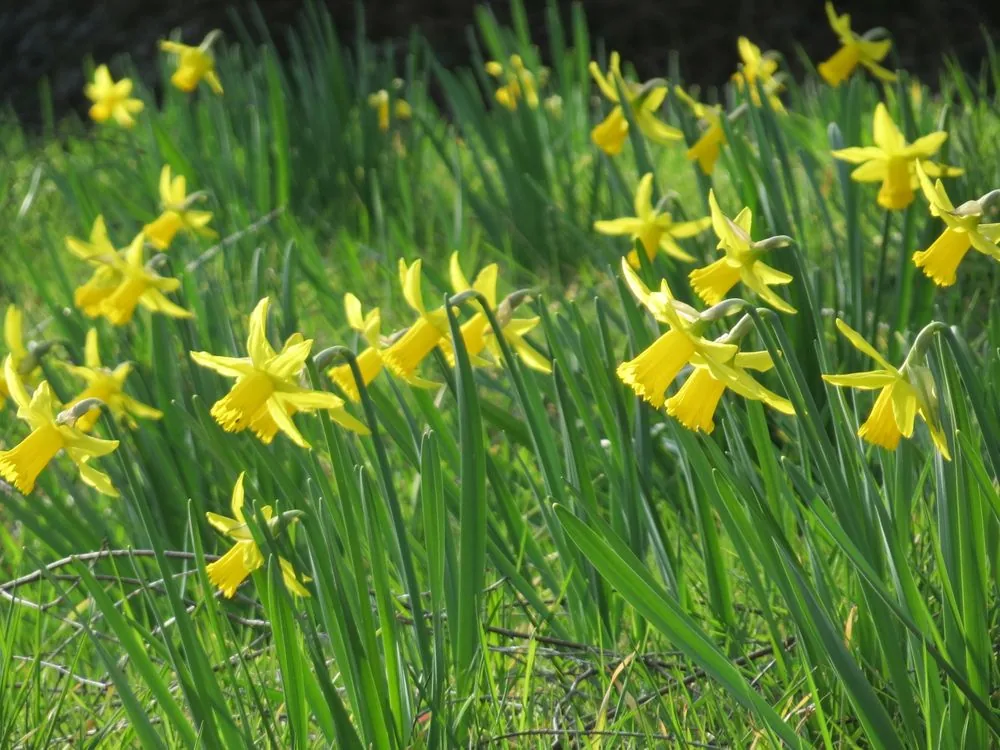
The daffodil is the yellow, trumpet-flowered spring bulb that naturalises in lawns, verges and woodland edges across much of Europe, one of the most reliable and long-lived bulbs a garden can have. Narcissus pseudonarcissus, the wild daffodil native to Western Europe, is a smaller, more delicate plant than the large hybrid daffodils sold for bedding, with a darker yellow trumpet set against paler, almost lemon petals. Unlike many showy hybrid bulbs it spreads and increases reliably year after year once established, which is why it is the classic choice for naturalising in grass.
Full sun to partial shade. It flowers well under deciduous trees, since it completes most of its growth before the canopy fills in for summer.
Water
Water in after planting and during dry spells in active growth. Once dormant for summer the bulb prefers to stay fairly dry.
Humidity
Not a significant factor; this is an open-ground and naturalising bulb unconcerned with ambient humidity.
Soil
Free-draining and reasonably fertile. Bulbs rot in heavy, waterlogged soil, though this species tolerates a wider range of soils than many showier hybrids.
Temperature
Hardy to about -20°C.
Size
20-75cm tall and 15-30cm wide, depending on the variety.
Eating it can cause vomiting and an upset stomach.
If your pet has eaten some, contact your vet.
Source: ASPCA
Signature feature
Daffodil sap is mildly irritant and actively shortens the vase life of other flowers, which is why florists always condition cut daffodils separately, in their own water, for several hours before mixing them with tulips or other spring flowers in the same arrangement. Mixing them too soon lets the sap stunt or kill the other stems; once conditioned on their own, daffodils can safely join a mixed vase.
Care by Season
Spring
Flowering, typically March to April. Deadhead spent flowers if you like, but always leave the foliage to die back naturally rather than cutting or tying it.
Summer
The bulb is dormant underground by early summer once the leaves have yellowed and can be removed. This is a reasonable time to lift and divide an overcrowded clump.
Autumn
The main planting season for new bulbs, from early to mid-autumn, which gives roots time to establish before the ground gets cold.
Winter
Fully hardy once planted; the cold itself does the bulb no harm; it is waterlogged soil, not frost, that causes winter losses.
Growing & Maintenance
Planting
Plant the bulbs in early to mid-autumn, in groups of six or more, in free-draining soil in sun or partial shade. Water them in.
Pruning
Remove the spent flowers if you like, but leave the foliage until it has turned yellow.
Propagation
By dividing crowded clumps once the foliage has died back.
Pests & Diseases
Common problems
Plenty of leaves but few flowers
Most likely cause: An overcrowded clump.
What to do: Lift and divide it once the foliage has died back, and replant the bulbs with more space.
No flowers the year after tidying up
Most likely cause: The leaves were cut, tied or folded too early.
What to do: Leave the foliage alone until it has yellowed.
Soft, rotting bulbs
Most likely cause: Waterlogged soil, which leads to basal rot.
What to do: Discard the affected bulbs and plant new ones in free-draining soil.
A soft bulb with a grub inside
Most likely cause: Narcissus bulb fly.
What to do: Dig up and destroy the bulb. There is no treatment.
Ragged holes in the flowers
Most likely cause: Slugs and snails.
What to do: Pick them off by hand in the evening.
Pests & Diseases
Narcissus bulb fly
Signs: A single large maggot inside the bulb, found when a bulb that should have flowered produces only thin, grass-like leaves or nothing at all.
Treatment: There is no treatment for an infested bulb; dig up and destroy any bulb that fails to flower normally. Mounding soil over the neck of the bulb as the foliage dies back in early summer, when the adult fly lays eggs, reduces the risk for the rest of a clump.
Basal rot
Signs: A soft, brown rot starting at the base of the bulb and spreading upward, usually noticed when lifting or at planting time.
Treatment: Discard any soft or discoloured bulb rather than planting it, and avoid planting into waterlogged or very heavy soil, where the fungus is more active. There is no cure once a bulb is infected.
Slugs and snails
Signs: Ragged holes in the flowers and leaves, with slime trails
Treatment: Pick them off by hand in the evening.
FAQ
Can I tie or plait the leaves after flowering to tidy them up?
It is best avoided. The leaves are what refill the bulb for next year's flowering, and tying or folding them cuts down the leaf area exposed to light, weakening the display the following spring even though the bulb itself survives. Leaving the foliage loose and untouched for at least six weeks after flowering, however untidy it looks, gives a far better display next year than a neat but curtailed leaf.
My daffodil clump flowers less than it used to, with lots of leaves but few blooms. What's wrong?
Usually simple overcrowding. A clump left undisturbed for many years builds up more bulbs than the soil can support in flower, a condition sometimes called daffodil blindness, and the bulbs compete with each other for nutrients and space. Lifting and dividing the clump after the leaves have died back, replanting the bulbs further apart with fresh compost worked into the soil, usually restores flowering within a year or two.
Are Daffodils toxic to cats and dogs?
Yes, Daffodils are toxic to cats and dogs. Eating any part, and above all the bulb, can cause stomach upset, so keep bulbs out of reach.
When should I plant Daffodil bulbs?
In early to mid-autumn. That gives the roots time to establish before winter.
When should I divide Daffodils?
When a clump flowers less than it used to. Lift it once the foliage has died back, split the bulbs and replant them.
Do Daffodils grow in shade?
They grow in full sun or partial shade. They flower well under deciduous trees, because they do most of their growing before the leaves come out.