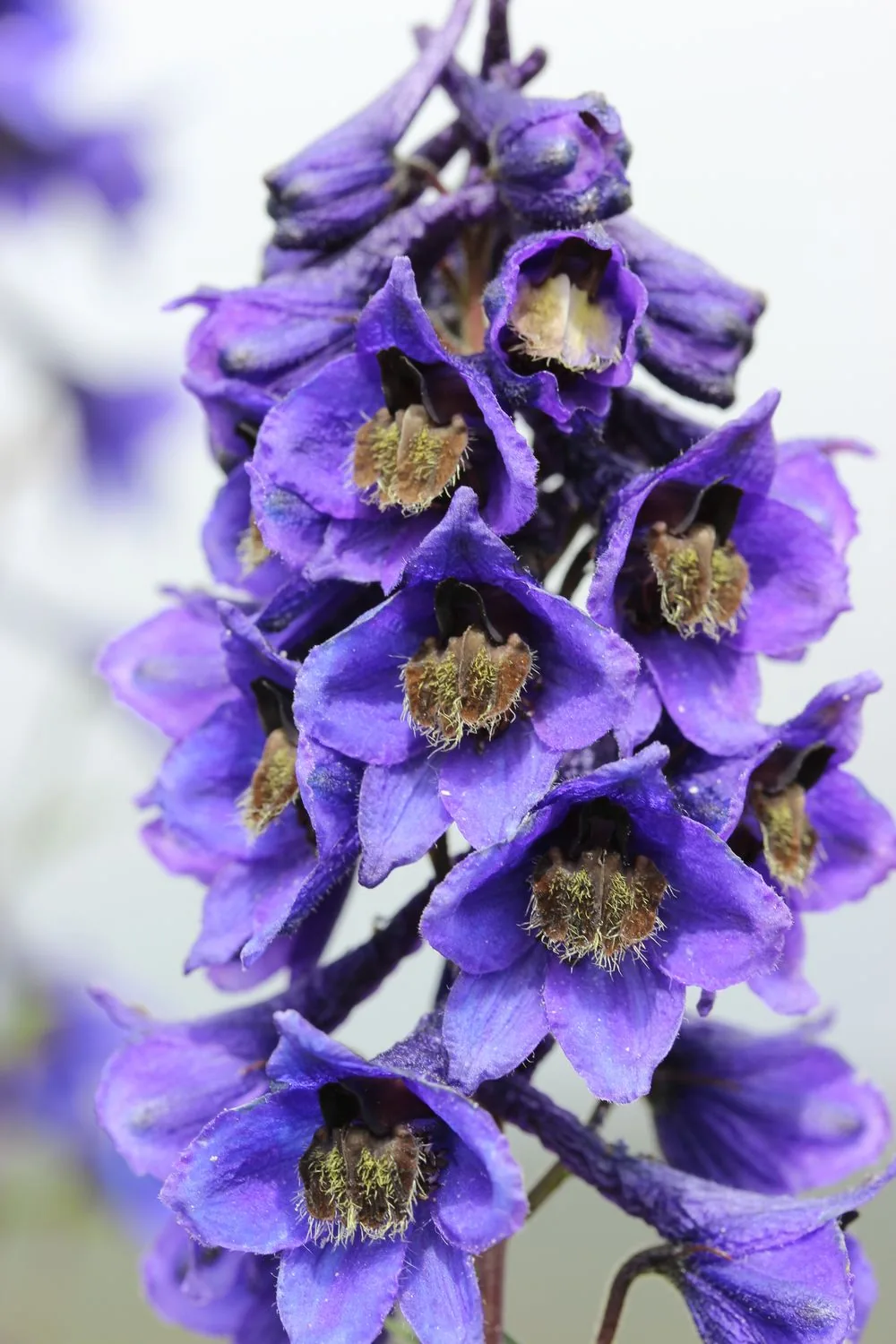
A tall spike of deep blue delphinium flowers with dark centres

Delphinium

Delphinium elatum
Care level: Moderate

The delphinium is the tallest and bluest of the classic border perennials. From a clump of deeply cut leaves it sends up stiff spires of 1.5-2m in early summer, packed with flowers in true blue, violet, white or pink, each with a contrasting centre called the bee. Delphinium elatum, a wild flower of European and Asian mountains, is the main parent of the large-flowered garden hybrids. It gives a great deal but asks for attention: rich soil, full sun, shelter from wind, firm staking and protection from slugs in spring.

I have this plant

Information

Varieties and related species
Delphinium (Black Knight Group)Delphinium (Belladonna Group) 'Völkerfrieden'Delphinium Magic Fountains Series

Light

Full sun, with shelter from strong wind.

Water

Water well in dry spells, especially while the spikes are forming. Avoid waterlogged soil in winter.

Humidity

Not a factor for this outdoor plant.

Soil

Fertile, well-drained soil enriched with garden compost.

Size

1.5-2m tall and 0.5-1m wide.

Growth speed

Medium

Hardiness

Hardy down to about -15°C. Source: RHS

Toxic to pets

Toxic to cats and dogs if eaten.

Eating it can cause vomiting and an upset stomach.

If your pet has eaten some, contact your vet.

Source: RHS, NC State Extension, Pet Poison Helpline

Beginner tip

Stake early and thin the shoots. In spring, when the shoots are about 7cm tall, reduce a young plant to two or three and an established clump to five to seven, then put canes in before the stems need them. Fewer shoots give taller, fuller spikes that stand up.

Care by Season

Spring

Protect new shoots from slugs, thin them at about 7cm, take basal cuttings and put stakes in.

Summer

Flowering in early summer. Tie in, water, then cut back after flowering for a second flush.

Autumn

Cut all stems down once the leaves die back and clear the debris.

Winter

Dormant. Keep the crown free of standing water and watch for slugs from late winter.

Growing & Maintenance

Planting

Plant in spring, 60-75cm apart, with the crown at soil level, in sun and fertile, well-drained soil.

Fertilising

Mulch with garden compost in spring and apply a general fertiliser. Feed again after the first flowering.

Pruning

Thin the shoots in spring. After flowering cut the spike back to a side shoot, then cut flowered stems to the ground.

Support

Stake each stem with a cane, or ring the clump with canes and string, by mid-spring.

Propagation

By basal softwood cuttings in early spring, taken when the shoots are pencil-thick and solid at the base, or by fresh seed.

Pests & Diseases

Common problems

Shoots vanish in spring

Most likely cause: Slugs and snails.
What to do: Protect the crowns before growth starts.

Spikes snap in wind and rain

Most likely cause: No staking, or staking too late.
What to do: Put canes in by mid-spring and tie in as stems grow.

Many thin, short spikes

Most likely cause: Too many shoots left on the clump.
What to do: Thin to five to seven shoots in spring.

The crown rots over winter

Most likely cause: Heavy, wet soil.
What to do: Improve the drainage with grit or replant in a raised bed.

White coating on the leaves

Most likely cause: Powdery mildew.
What to do: Water more at the roots and thin the clump.

Leaves yellow and plant declines

Most likely cause: An old plant, crown rot or virus.
What to do: Replace it with young plants from cuttings taken from healthy stock.

Pests & Diseases

Slugs and snails

Signs: New shoots eaten at or below soil level in late winter and spring; ragged leaves later.
Treatment: Protect the crowns from late winter, clear debris around them and pick slugs off in the evening.

Powdery mildew

Signs: A white powdery coating on leaves and stems from midsummer, worst on dry soil.
Treatment: Water at the base in dry spells, thin crowded clumps and cut back after flowering.

Delphinium black blotch

Signs: Black, angular blotches on the leaves that spread to stems and buds in wet weather.
Treatment: Remove affected leaves, do not water overhead and clear all debris in autumn.

Delphinium leaf miner

Signs: Large brown blotches on the leaves, each with small grubs inside.
Treatment: Pick off and destroy mined leaves.

Aphids

Signs: Clusters of small insects on shoot tips and buds.
Treatment: Rub them off or rinse them away early.

FAQ

Are delphiniums poisonous to dogs and cats?

Yes. All parts are harmful if eaten and cause vomiting, diarrhoea and lethargy in pets. The sap can also irritate skin, so wear gloves when cutting them back.

Why did my delphinium not come up this spring?

Slugs or winter wet. Slugs graze the new shoots below and at soil level before you see them, and the crown rots in heavy, wet soil. Protect the crowns from late winter and plant in well-drained ground.

How do I get a second flowering?

Cut the faded spike back to a small flowering side shoot. Once those finish, cut all the flowered stems to the ground, feed and water; a smaller second flush often follows in late summer.

How should I stake them?

Use one sturdy cane per stem, or three canes and string around the clump, put in by mid-spring. Tie the stems in loosely as they grow, up to just below the flower spike.

Why are there black blotches on the leaves?

Delphinium black blotch, a bacterial disease that spreads by rain splash in wet weather. Remove affected leaves, avoid overhead watering and clear all the debris in autumn.

How long does a delphinium live?

Often only a few years. Keep it going by taking basal cuttings in early spring, which also keeps a named variety true.

Can I grow them from seed?

Yes, and seed-raised strains flower in their second year. Use fresh seed, as it loses its ability to germinate quickly, and keep it cool.

You might also like