No results. Is a plant missing? Tell uscontact@wikiplant.net
Dendrobium orchid
Dendrobium nobile
Care level: Moderate
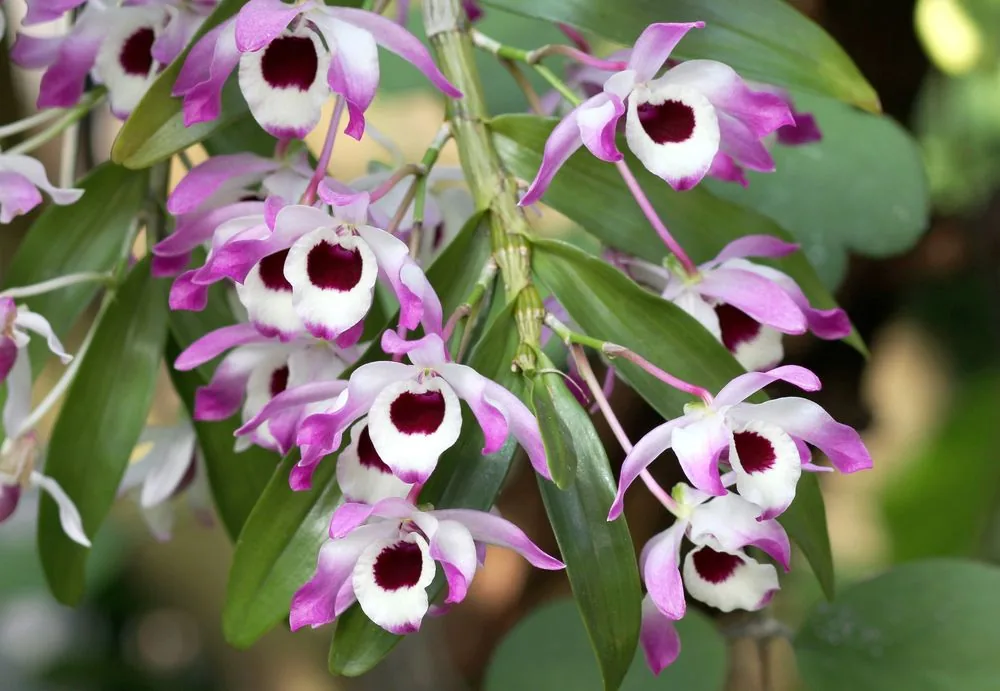
Dendrobium nobile is an orchid from the foothills of the Himalaya and south-east Asia that grows on trees. It forms upright, jointed, cane-like stems with oval leaves along them, and from winter into spring those canes are studded for most of their length with clusters of fragrant flowers, rose-pink to white with a dark maroon lip. It is not difficult, but it follows a strict yearly rhythm: a warm, wet, well-fed summer, then a cool, bright, dry winter that sets the flower buds.
Bright light all year: partial shade in summer, full light from autumn to spring.
Water
Water freely in spring and summer. From autumn give very little until the flower buds appear.
Humidity
High in summer; mist in warm weather. Drier air is fine during the winter rest.
Soil
Epiphytic orchid compost of coarse bark, in a small pot.
Temperature
Summer days of 18-25°C with nights above 10°C; a cool winter rest with nights around 10°C.
Size
30-50cm tall.
?Pet safety not confirmed
As a precaution, keep it out of reach of children and pets.
Common mistake
Keeping this orchid warm and watered all winter is the classic mistake. Without a cool, dry rest the buds along the canes turn into small plantlets with aerial roots, known as keikis, where the flowers should have been.
Care by Season
Spring
Flowering ends and new canes start to grow. Resume watering and feeding, and repot only if the plant overfills its pot.
Summer
The growing season. Water freely, feed at every third watering, mist and give partial shade with plenty of air.
Autumn
The new canes finish growing. Move the plant to a cool, bright place, stop feeding and reduce watering sharply.
Winter
Keep it cool, bright and nearly dry. Flower buds form along the canes; water a little more once they show.
Growing & Maintenance
Soil and pot
Use coarse bark-based epiphytic orchid compost in a pot that looks too small; the roots like to be confined.
Repotting
Repot only when the plant overfills its pot, just after flowering, into a pot one size larger.
Fertilising
Add orchid fertiliser at every third watering from spring to late summer. Do not feed in autumn and winter.
Propagation
By division when the plant overfills its pot, or by potting up the plantlets that form on the canes.
Pests & Diseases
Common problems
Plantlets where the flowers should be
Most likely cause: A winter that was too warm and too wet.
What to do: Give a cool, bright, dry rest from autumn.
No flowers at all
Most likely cause: Too little light, or no winter rest.
What to do: Give more light and a cool rest.
Shrivelled canes in summer
Most likely cause: Too little water during growth, or dead roots.
What to do: Water more freely; repot if the roots have rotted.
Buds that drop
Most likely cause: A sudden move, a draught or watering too early in the rest.
What to do: Leave the plant in place and keep it almost dry until the buds are well formed.
A leaning, top-heavy plant
Most likely cause: Tall canes in a small pot.
What to do: Stake the canes and stand the pot in a heavier outer pot.
Pests & Diseases
Mealybugs
Signs: White, cottony tufts in the leaf joints and around the buds.
Treatment: Wipe them off with a cotton bud dipped in rubbing alcohol and repeat weekly. Check the undersides of the leaves and the crevices where the leaf stem meets the main stalk.
Spider mites
Signs: Fine silvery speckling on the undersides of the leaves in warm, dry air.
Treatment: Rinse the leaves and raise the humidity in the growing season. Check the undersides of the leaves and the crevices where the leaf stem meets the main stalk.
Aphids
Signs: Clusters of small insects on flower buds and young shoots.
Treatment: Rinse them off with water before the buds open.
FAQ
Why does my dendrobium grow baby plants and no flowers?
It did not get its winter rest. From autumn, move it to a bright, cool place with nights around 10°C, stop feeding and give very little water until flower buds show along the canes. Then water normally again.
What do I do with the plantlets on the canes?
Leave them until their roots are 3-5cm long, then twist or cut them off and pot them in fine orchid bark. They are small copies of the parent plant and flower in two to three years.
Should I cut off the old canes?
No, not while they are green and firm, even when leafless. Old canes store water and food for the plant and can flower again. Remove only canes that are brown, shrivelled and dry.
How do I water it in summer?
Freely, letting water run through the pot, with orchid fertiliser added at every third watering, and mist the plant in warm weather. The compost should drain fast and never stay sodden.
Why are the leaves turning yellow and falling?
On older canes, in autumn and winter, that is normal: the canes may shed their leaves before flowering. Yellowing of young growth in summer points to overwatering and rotting roots.
Where should it stand?
In bright light with good air movement: partial shade in summer, outdoors if you like, and as much light as possible from autumn to spring.