No results. Is a plant missing? Tell uscontact@wikiplant.net
Echeveria
Echeveria elegans
Care level: Easy
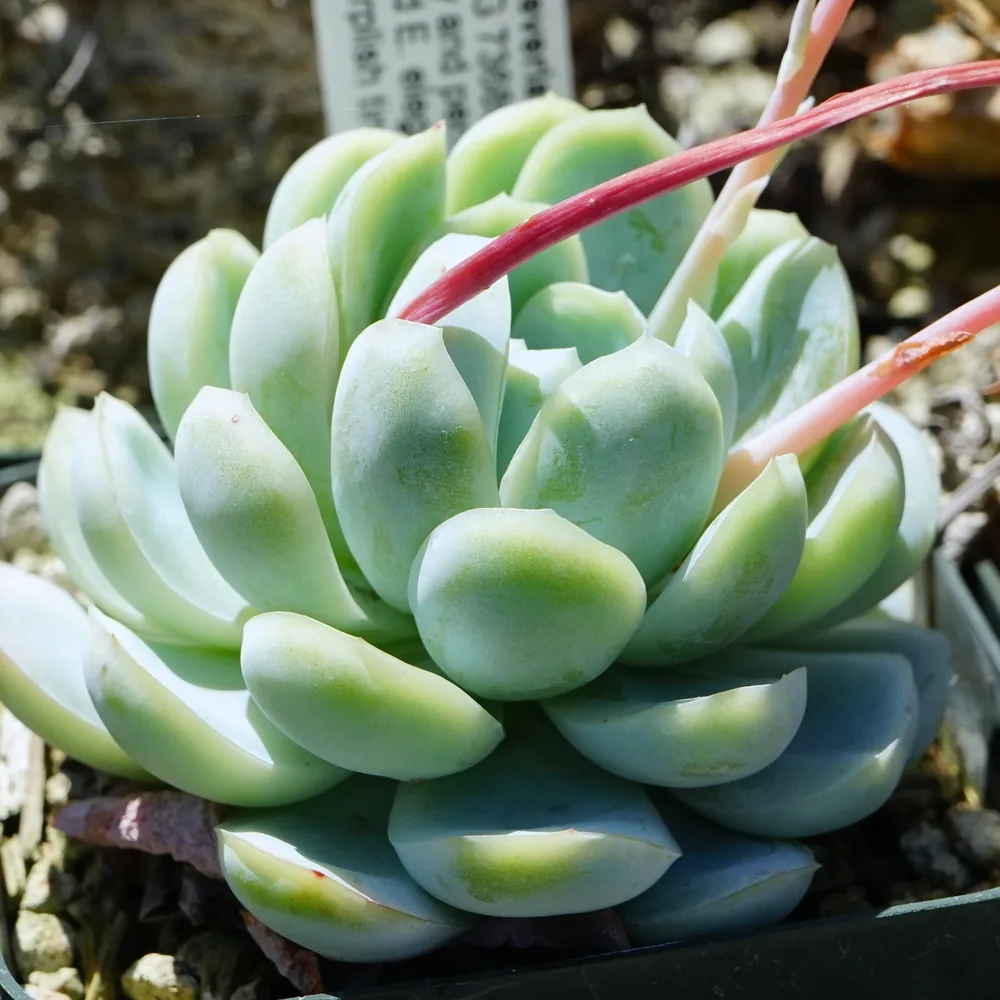
Echeveria elegans, sometimes called the Mexican snowball, is coated in a delicate powdery layer called farina that helps reflect intense high-altitude sunlight in its native Mexican highlands, and that same coating rubs off permanently at the slightest touch, so it is best admired without handling.
Echeveria elegans 'Mexican Snowball'Echeveria 'Perle von Nurnberg'Echeveria 'Black Prince'
Light
Needs bright light and at least a few hours of direct sun daily to prevent stretching (etiolation).
Water
Water deeply then let soil dry completely, roughly every 2-3 weeks; water at the base to avoid wetting the rosette.
Humidity
Prefers low humidity and good air circulation; excess moisture invites rot.
Soil
Very fast-draining cactus or succulent mix with added grit or sand.
Growth speed
Slow
Best position
south-east / south / south-west-facing windowanywhere up to about 1 m from the window
east / west-facing windowright by the window
See every window directionHide window directions
Best position
right by the window
about 1 m
about 2 m
about 4 m
4 m or more
north
too dark○
too dark○
too dark○
too dark○
too dark○
north-east
too dark○
too dark○
too dark○
too dark○
too dark○
east
works well✓
too dark○
too dark○
too dark○
too dark○
south-east
works well✓
works well✓
too dark○
too dark○
too dark○
south
works well✓
works well✓
too dark○
too dark○
too dark○
south-west
works well✓
works well✓
too dark○
too dark○
too dark○
west
works well✓
too dark○
too dark○
too dark○
too dark○
north-west
too dark○
too dark○
too dark○
too dark○
too dark○
✓works well~just about○too dark☼too much direct sun
A rough guide based on window direction and typical daylight through the year. Window size, curtains and whatever stands outside matter just as much.
?Pet safety not confirmed
As a precaution, keep it out of reach of children and pets.
Propagation tip
A healthy leaf twisted gently from the stem, left to callus for a couple of days, then rested on top of dry succulent mix, will often sprout a tiny new rosette at its base within a few weeks without needing any soil covering it.
Care by Season
Spring
Resume regular watering and provide maximum available light for compact growth.
Summer
Water when fully dry and protect from intense midday heat if grown outdoors.
Autumn
Reduce watering frequency as light levels drop.
Winter
Water very sparingly, roughly monthly, and keep in the brightest possible location.
Growing & Maintenance
Soil and pot
A very fast-draining cactus or succulent mix with added grit or sand, in a shallow pot with drainage holes.
Pruning
Pull away the dried lower leaves once they come off easily. A stretched plant can be cut off below the rosette and rooted again.
Propagation
From single leaves, from stem cuttings or by separating the offsets around the base.
Pests & Diseases
Common problems
Stretched stem with widely spaced leaves
Most likely cause: Too little light.
What to do: Move it to a brighter, sunnier spot. The stretched growth does not shrink back; re-root the top if you want a compact rosette.
Soft, translucent, mushy leaves
Most likely cause: Overwatering, the most common problem with this plant.
What to do: Stop watering, take it out of the wet compost, cut away the rot and replant in dry, gritty mix.
Lower leaves drying up
Most likely cause: Normal. The oldest leaves wither as the rosette grows.
What to do: Pull them off once they are dry.
Wrinkled, soft leaves all over
Most likely cause: Thirst.
What to do: Water deeply at the base, then let the compost dry out completely.
Pale or brown scorch marks
Most likely cause: A sudden move into intense midday sun.
What to do: Increase the sun gradually and shade it from the hottest midday sun outdoors.
Pests & Diseases
Mealybugs
Signs: White cottony fuzz nestled between tightly packed leaves.
Treatment: Remove with an alcohol-dipped cotton swab and repeat as needed. Check the undersides of the leaves and the crevices where the leaf stem meets the main stalk.
Root rot
Signs: Mushy, translucent leaves and blackened roots from excess water.
Treatment: Remove from soil, cut away rot, let callus, and repot in dry succulent mix.
Etiolation (stretching)
Signs: Elongated stem and spaced-out leaves reaching for light.
Treatment: Move to a brighter, sunnier location; stretched growth will not reverse.
FAQ
Why did my echeveria's rosette shape stretch out and get leggy?
This is etiolation, caused by insufficient light. The stem elongates and leaves space out as the plant stretches toward a light source, and stretched growth won't compact back down, so the fix is more light going forward.
Why does my echeveria look dusty or lose its color when I touch it?
The pale, powdery coating on the leaves is a natural wax called farina that protects against sun and moisture loss. It rubs off permanently with handling, so it's best to avoid touching the leaves.
How often should I water an echeveria?
Roughly every 2-3 weeks, once the compost has dried out completely, and about once a month in winter. Water at the base so the rosette stays dry.
Does an echeveria flower?
Yes. It sends up stalks of pink, tubular flowers with yellow tips in winter and spring, and can flower many times in its life.
How do I propagate an echeveria?
From a leaf, a cutting or an offset. Twist off a healthy leaf, let it dry for a couple of days and rest it on dry succulent mix until roots and a tiny rosette appear.
How much light does an echeveria need?
It needs bright light with at least a few hours of direct sun a day. Without it the rosette stretches and loses its shape.