No results. Is a plant missing? Tell uscontact@wikiplant.net
Elder
Sambucus nigra
Care level: Easy
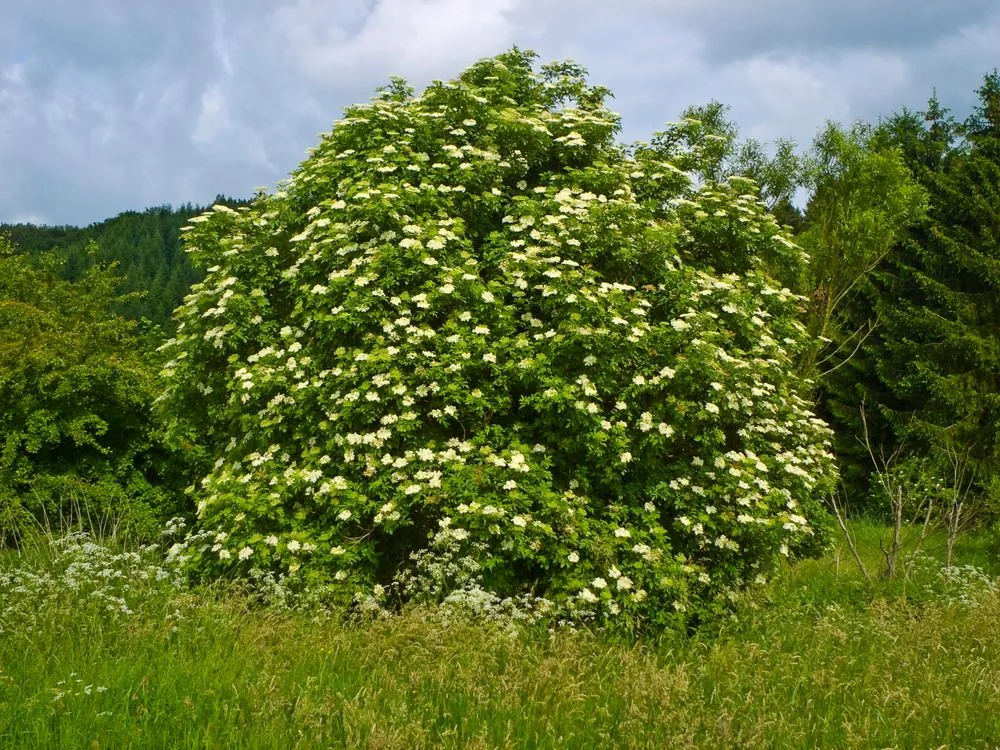
The elder is a fast, bushy large shrub or small tree of European hedgerows and waste ground, with corky bark and leaves made up of five to seven toothed leaflets. In early summer it is covered in flat, plate-sized heads of tiny cream flowers with a sweet, heavy scent, and by late summer these become hanging bunches of small, shiny black berries. Both are gathered for the kitchen, the flowers for cordial and the berries for syrup and jam. It grows in almost any soil, including chalk, and regrows from the hardest pruning.
Eating it can cause vomiting and an upset stomach.
If your pet has eaten some, contact your vet.
Source: RHS, Pet Poison Helpline
Safety note
Cook the berries before eating them, and use only the flowers and the ripe black fruit. Raw berries, leaves, stems, bark and seeds are harmful to people and pets and cause stomach upset.
Care by Season
Spring
Leaves open early, among the first of any shrub.
Summer
Cream flower heads in early summer, then green berries that turn black by late summer.
Autumn
Pick ripe berries for cooking. The leaves turn pale yellow and fall.
Winter
Prune while dormant and take hardwood cuttings.
Growing & Maintenance
Planting
Plant between autumn and early spring in any reasonable soil, in sun or partial shade, with room to reach several metres or with a plan to prune.
Pruning
Prune in winter. For flowers and berries, cut out a third of the oldest stems at the base each year. For the best foliage on coloured forms, cut all stems to near the ground every year or two.
Propagation
By hardwood cuttings in winter or softwood cuttings in early summer.
Pests & Diseases
Common problems
No flowers after pruning
Most likely cause: All the older wood was cut away.
What to do: Remove only a third of the stems each winter.
Black insects on the shoot tips
Most likely cause: Aphids in late spring.
What to do: Pinch out the tips or leave them to predators.
Leaves revert from dark or gold to green
Most likely cause: Too much shade.
What to do: Move it into sun, or prune to let light in.
Branches snap
Most likely cause: Brittle wood under wind or snow.
What to do: Cut back cleanly to a joint; it regrows quickly.
Seedlings in beds and paving
Most likely cause: Seed spread by birds.
What to do: Pull them out while small.
Pests & Diseases
Aphids
Signs: Dense black colonies on the young shoot tips in late spring, with curled leaves.
Treatment: Pinch out the worst tips or rinse them off. The plant grows through it.
Red spider mite
Signs: Fine pale speckling on the leaves in hot, dry summers.
Treatment: Water in drought; treatment is rarely needed outdoors. Check the undersides of the leaves and the crevices where the leaf stem meets the main stalk.
Verticillium wilt
Signs: Leaves on one or more branches wilt, yellow and die back; the wood shows dark streaks under the bark.
Treatment: Cut out affected branches, clean the blades and avoid replanting susceptible shrubs in the same soil.
Honey fungus
Signs: The plant declines and dies; white fungal sheets under the bark at the base and honey-coloured toadstools in autumn.
Treatment: Remove the plant with as much root as possible.
FAQ
Can you eat elderberries?
Only cooked. Heat makes the ripe black berries safe for syrup, jam and wine. Raw berries, and all the green parts of the plant, cause nausea and vomiting.
Is elder toxic to dogs and cats?
Yes, it is harmful if eaten. Leaves, stems and uncooked berries cause vomiting and diarrhoea. Clear up prunings and fallen fruit where a pet might chew them.
When do I pick the flowers?
In early summer, on a dry morning, when the heads are freshly open and creamy white. Shake off insects and do not wash them, as the scent is in the pollen. Leave plenty for berries and for wildlife.
How hard can I prune it?
As hard as you like. Elder flowers on wood made in earlier years, so cutting everything down means no flowers the next summer; for flowers and fruit, remove a third of the oldest stems each winter. Coloured-leaved forms are often cut to the ground every year for the best foliage.
Is it suitable for a small garden?
The wild species reaches 4-8m and seeds itself about, so it suits a hedge or wild corner. For a small garden choose one of the dark-leaved or cut-leaved forms and prune it every year.
Why are there seedlings everywhere?
Birds eat the berries and drop the seeds. Pull the seedlings while they are small; older ones root deeply.
How do I take cuttings?
Elder roots easily. Push pencil-thick lengths of bare stem into the ground in winter, or take soft tip cuttings in early summer.