No results. Is a plant missing? Tell uscontact@wikiplant.net
European beech
Fagus sylvatica
Care level: Easy
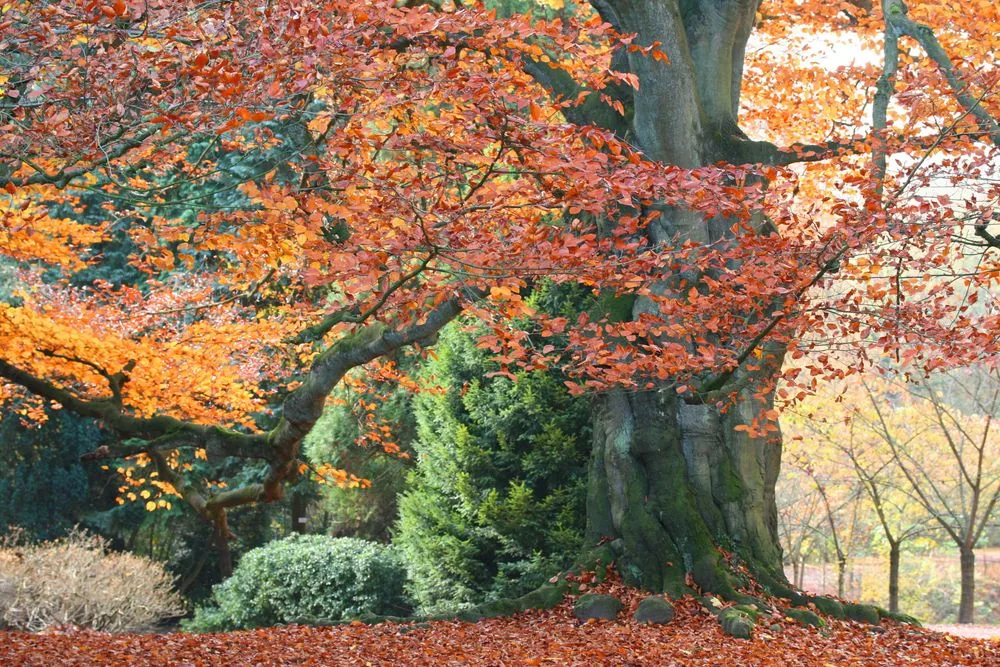
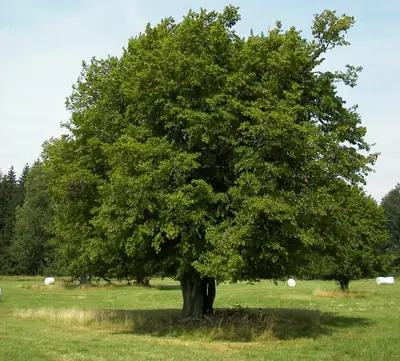
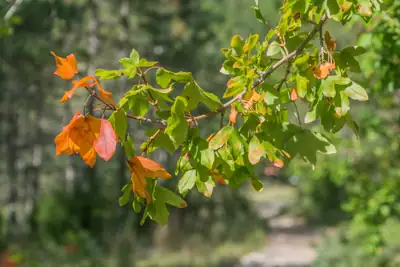
The European beech is a large deciduous tree with smooth grey bark, a broad, spreading crown and oval leaves with a wavy edge that open yellow-green in spring and turn golden copper to russet in autumn. As a free-standing tree it can reach 30m. It is just as familiar as a clipped hedge, where it has the useful habit of holding its dead copper leaves all winter. It tolerates most soils, including chalk, as long as they drain.
Eating it can cause vomiting and an upset stomach.
If your pet has eaten some, contact your vet.
Source: RHS, Pet Poison Helpline
Signature feature
A clipped beech hedge keeps its dry, copper-brown leaves through the winter and only drops them when the new buds open in spring. That gives a deciduous hedge the year-round screening of an evergreen one.
Care by Season
Spring
New leaves open yellow-green and push last year's dead leaves off the hedge. Water recent plantings in dry weather.
Summer
Trim hedges in late summer. Keep young plants watered.
Autumn
The leaves turn golden copper to russet and the beechnuts fall. Planting time begins.
Winter
Hedges hold their dry brown leaves. Plant bare-root trees and hedging while the plants are dormant.
Growing & Maintenance
Planting
Plant in autumn or winter, in well-drained soil in sun or partial shade. For a hedge, set young plants in a row and keep them watered for the first few summers.
Pruning
Trim hedges once a year in late summer. Free-standing trees need only dead or crossing branches removed, in winter.
Propagation
By seed; named forms are grafted.
Pests & Diseases
Common problems
Poor growth and yellow leaves on heavy ground
Most likely cause: Waterlogged soil.
What to do: Improve the drainage, or plant hornbeam instead.
A hedge that drops its leaves in winter
Most likely cause: It was not trimmed, or was trimmed too early in the year.
What to do: Trim once in late summer.
Brown, crisp leaf edges on a new hedge
Most likely cause: Drought in the first years.
What to do: Water deeply in dry spells and mulch the row.
Sticky leaves with white fluff
Most likely cause: Woolly beech aphids.
What to do: Nothing is needed.
Bare ground under the tree
Most likely cause: Dense shade and shallow roots.
What to do: Mulch the area or plant spring bulbs that grow before the leaves open.
Bracket fungi on the trunk
Most likely cause: Decay inside the wood.
What to do: Have the tree inspected by a tree specialist.
Pests & Diseases
Woolly beech aphid
Signs: White, fluffy wax under the leaves in early summer, with sticky honeydew.
Treatment: No treatment is needed; the tree tolerates it and predators follow.
Beech bark scale
Signs: White, waxy specks in the crevices of the bark on the trunk.
Treatment: Light infestations do no harm. Keep the tree growing well, as heavy infestations open the way to beech bark disease.
Beech bark disease
Signs: Dark, weeping patches on the trunk, followed by dying bark and yellowing foliage.
Treatment: There is no cure. Have a badly affected tree inspected, as the wood may become unsafe.
Powdery mildew
Signs: A white, powdery coating on the leaves, mostly on hedges in dry weather.
Treatment: Water in dry spells and clear fallen leaves; the plant grows through it.
FAQ
Why does my beech hedge keep its brown leaves in winter?
That is normal and one of the reasons beech is planted as a hedge. Clipped plants hold their dead leaves until spring, when the new growth pushes them off. Tall, unclipped trees drop their leaves in autumn.
When should I trim a beech hedge?
Once a year in late summer. Trimming then gives a neat outline for winter and encourages the hedge to hold its leaves.
Is beech toxic to dogs and cats?
The beechnuts are the problem. Eaten raw in quantity they can cause vomiting, diarrhoea and abdominal pain in dogs. Serious poisoning is not expected in small animals, but do not let a dog eat fallen nuts.
What soil does beech need?
It grows in a wide range of soils, including chalk, in sun or partial shade. What it will not tolerate is ground that stays wet; on heavy, wet soil hornbeam is the usual substitute.
How fast does beech grow?
Slowly at first. A hedge takes several years to fill out, and a tree takes decades to reach its full size.
Why are there white fluffy patches under the leaves?
Those are woolly beech aphids, which cover themselves in white wax. They make the leaves sticky but do little lasting harm, even on a hedge.