No results. Is a plant missing? Tell uscontact@wikiplant.net
Elephant Bush
Portulacaria afra
Care level: Very easy
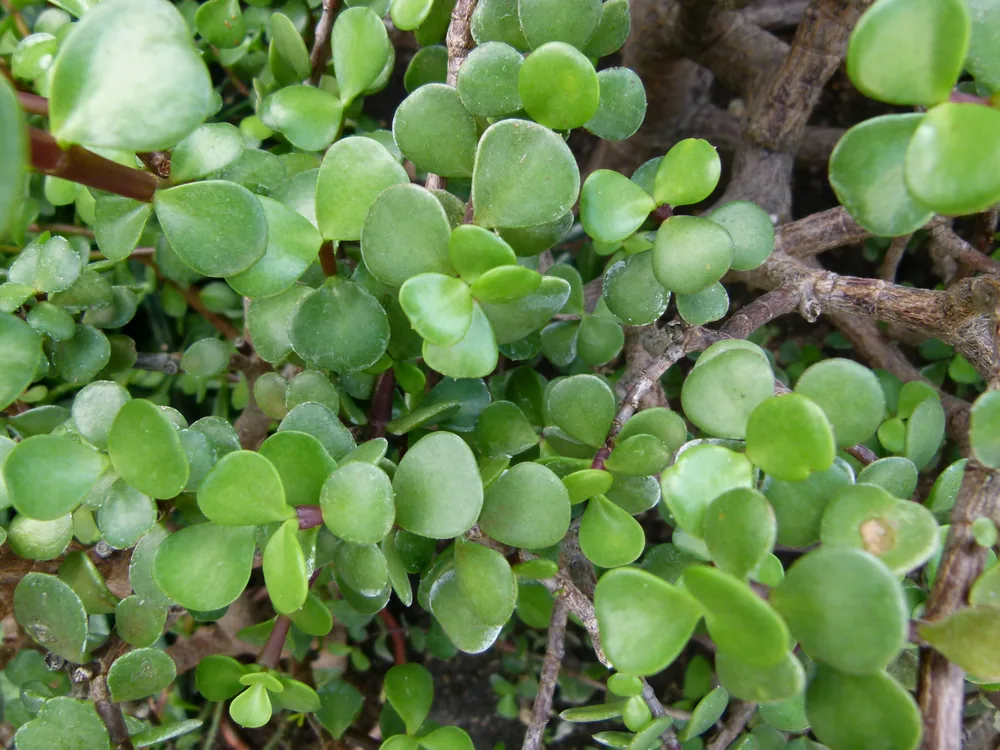
In its native South Africa, Portulacaria afra forms dense thickets known as spekboom that are famous for pulling remarkable amounts of carbon out of the air, making this humble jade-plant lookalike a small-scale climate hero as well as a favorite bonsai subject.
Portulacaria afra 'Variegata'Portulacaria afra 'Minima'Portulacaria afra f. macrophylla
Light
Loves bright light and does best with several hours of direct sun; can scorch if moved suddenly from shade to full sun.
Water
Very drought-tolerant succulent; let soil dry out completely between waterings, roughly every 2-3 weeks.
Humidity
Tolerates dry indoor air well and does not need extra humidity.
Soil
Fast-draining cactus or succulent mix with added grit or perlite.
Temperature
Normal room temperatures. Protect it from temperatures below 5°C.
Best position
south-east / south / south-west-facing windowanywhere up to about 1 m from the window
east / west-facing windowright by the window
See every window directionHide window directions
Best position
right by the window
about 1 m
about 2 m
about 4 m
4 m or more
north
too dark○
too dark○
too dark○
too dark○
too dark○
north-east
too dark○
too dark○
too dark○
too dark○
too dark○
east
works well✓
too dark○
too dark○
too dark○
too dark○
south-east
works well✓
works well✓
too dark○
too dark○
too dark○
south
works well✓
works well✓
too dark○
too dark○
too dark○
south-west
works well✓
works well✓
too dark○
too dark○
too dark○
west
works well✓
too dark○
too dark○
too dark○
too dark○
north-west
too dark○
too dark○
too dark○
too dark○
too dark○
✓works well~just about○too dark☼too much direct sun
A rough guide based on window direction and typical daylight through the year. Window size, curtains and whatever stands outside matter just as much.
?Pet safety not confirmed
As a precaution, keep it out of reach of children and pets.
Did you know?
Elephant Bush gets its name because actual elephants browse on its fleshy stems and leaves in the wild, and its fast, woody growth makes it one of the most popular succulents trained as bonsai.
Care by Season
Spring
Increase watering slightly as growth resumes and move gradually into brighter light.
Summer
Give as much sun as possible and water when fully dry; can go outdoors in summer.
Autumn
Cut back watering as light and temperatures drop.
Winter
Keep nearly dry and away from cold windows; protect from temperatures below 5°C.
Growing & Maintenance
Soil and pot
A fast-draining cactus or succulent mix with added grit or perlite, in a pot with drainage holes.
Pruning
Trim the stems at any time in the growing season to shape the plant. It recovers quickly and branches below each cut.
Propagation
From stem cuttings. Let the cut end dry for a few days, then set it in barely moist succulent mix.
Pests & Diseases
Common problems
Leaves dropping
Most likely cause: Usually overwatering. A sudden cold spell or change of position does it too.
What to do: Let the compost dry out completely between waterings and keep the plant away from cold windows.
Wrinkled leaves
Most likely cause: Thirst.
What to do: Water thoroughly. The leaves plump up again within days.
Scorched leaves
Most likely cause: A sudden move from shade into strong sun.
What to do: Move it into brighter light step by step.
Long, weak stems
Most likely cause: Too little light.
What to do: Give it several hours of direct sun and prune the stretched growth.
Soft, blackened stems
Most likely cause: Rot from wet compost.
What to do: Cut back to healthy tissue, let the cuts dry and replant in fresh, dry mix.
Pests & Diseases
Mealybugs
Signs: White cottony masses in leaf joints and stem crevices
Treatment: Dab with rubbing-alcohol soaked cotton swab and repeat weekly until gone. Check the undersides of the leaves and the crevices where the leaf stem meets the main stalk.
Spider mites
Signs: Tiny speckling on leaves and fine webbing in dry conditions
Treatment: Rinse foliage and treat with insecticidal soap if infestation persists. Check the undersides of the leaves and the crevices where the leaf stem meets the main stalk.
Root rot
Signs: Soft, blackened stem base and mushy roots from overwatering
Treatment: Remove from wet soil, cut away rotten tissue, let cuttings callous and repot in dry succulent mix.
FAQ
Is Elephant Bush the same as Jade Plant?
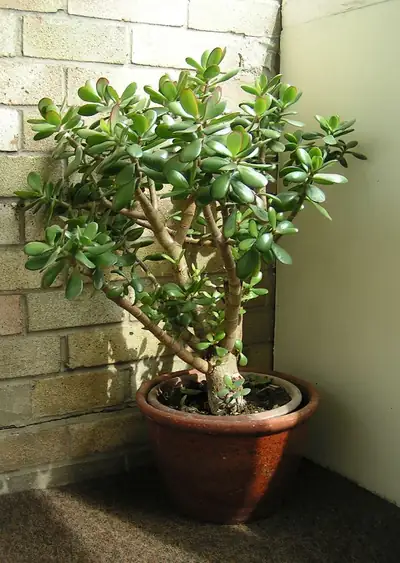
No, they just look similar. Elephant Bush (Portulacaria afra) has smaller, thinner leaves and reddish stems, while Jade Plant (Crassula ovata) has thicker, glossier leaves; Elephant Bush also grows noticeably faster.
Can I shape my Elephant Bush like a bonsai?
Yes, its flexible young stems and quick recovery from pruning make it one of the easiest succulents to train into bonsai form; just prune after a cut has calloused and avoid heavy shaping right after repotting.
How often should I water an Elephant Bush?
Roughly every 2-3 weeks, once the compost has dried out completely. Keep it nearly dry in winter. It is very drought-tolerant.
How do I propagate an Elephant Bush?
From stem cuttings. Let the cut end dry for a few days and set it in barely moist succulent mix, where it roots readily.
How much light does an Elephant Bush need?
It needs bright light with several hours of direct sun. Get it used to stronger sun gradually, because a sudden move scorches the leaves.
How cold can an Elephant Bush get?
Keep it above 5°C. It can go outdoors in summer but must come in well before the first cold nights.