No results. Is a plant missing? Tell uscontact@wikiplant.net
Jade Plant
Crassula ovata
Care level: Very easy
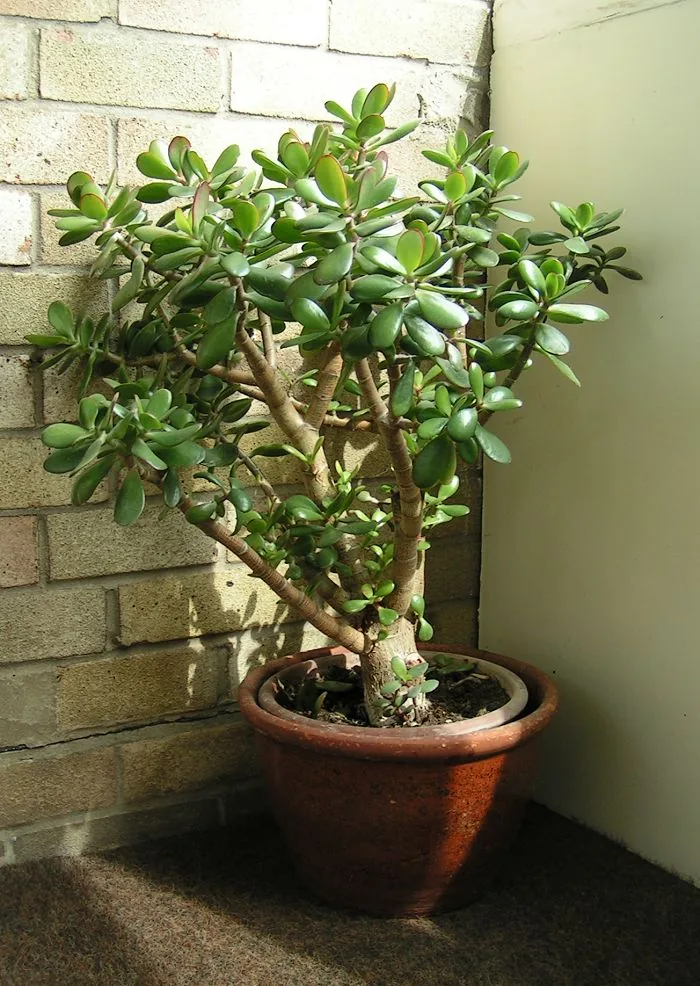
Crassula ovata is often called the 'money plant' or 'friendship tree' in East Asian and Southern African folklore, believed to bring prosperity to its owner, and with good light and years of growth it can develop a thick, gnarled trunk that makes it look like a miniature tree.
Needs bright light and several hours of direct sun to keep its compact, tree-like shape.
Water
Let soil dry out completely between waterings, roughly every 2-3 weeks; its thick leaves store water.
Humidity
Prefers dry air; typical indoor humidity is ideal.
Soil
Fast-draining cactus or succulent mix.
Temperature
Average to cool room temperatures.
Size
0.9-1.8m tall and 60-90cm wide with age, like a miniature tree.
Best position
east / south-east / south / south-west / west-facing windowanywhere up to about 2 m from the window
north / north-east / north-west-facing windowanywhere up to about 1 m from the window
See every window directionHide window directions
Best position
right by the window
about 1 m
about 2 m
about 4 m
4 m or more
north
works well✓
works well✓
too dark○
too dark○
too dark○
north-east
works well✓
works well✓
too dark○
too dark○
too dark○
east
works well✓
works well✓
works well✓
too dark○
too dark○
south-east
works well✓
works well✓
works well✓
too dark○
too dark○
south
works well✓
works well✓
works well✓
too dark○
too dark○
south-west
works well✓
works well✓
works well✓
too dark○
too dark○
west
works well✓
works well✓
works well✓
too dark○
too dark○
north-west
works well✓
works well✓
too dark○
too dark○
too dark○
✓works well~just about○too dark☼too much direct sun
A rough guide based on window direction and typical daylight through the year. Window size, curtains and whatever stands outside matter just as much.
!Toxic to pets
Toxic to cats and dogs if eaten.
If your pet has eaten some, contact your vet.
Source: ASPCA
Propagation tip
A single healthy leaf, allowed to callus over for a day or two and then set on top of moist succulent mix, will often sprout tiny roots and a new plantlet at its base within a few weeks.
Care by Season
Spring
Resume regular watering and light feeding as active growth resumes.
Summer
Give plenty of direct sun and water once soil is fully dry.
Autumn
Reduce watering as growth slows with shorter days.
Winter
Water sparingly, about once a month, and keep in the brightest spot available.
Growing & Maintenance
Soil and pot
A free-draining cactus and succulent mix in a pot with drainage holes. A heavy pot stops an older, top-heavy plant from tipping over.
Repotting
Only when the plant has outgrown its pot, in spring. Move up one size and let the compost dry before the first watering.
Fertilising
A light liquid feed a few times in spring and summer. No feeding from autumn to late winter.
Pruning
Shorten new growth just above a pair of leaves to build a fuller, tree-like shape. Remove weak or crossing branches.
Propagation
From leaf or stem cuttings. Let the cut end dry for a day or two, then set it on barely moist succulent mix. Roots and a small plantlet follow within a few weeks.
Pests & Diseases
Common problems
Leaves dropping
Most likely cause: Usually overwatering. Long, complete drought can cause it too.
What to do: Water only when the compost is dry, then water thoroughly. Water much less from autumn to late winter.
Soft, mushy leaves and stems
Most likely cause: Root rot from compost that stays wet.
What to do: Take the plant out of the pot, trim the rotten roots, let it dry and repot in fresh succulent mix.
Wrinkled, shrivelled leaves
Most likely cause: Thirst. The plant has drawn on the water in its leaves.
What to do: Water thoroughly. The leaves plump up again within days.
Long, weak stems with widely spaced leaves
Most likely cause: Too little light.
What to do: Move it to a sunny windowsill and prune the stretched growth back in spring.
Red leaf edges
Most likely cause: Strong sun. It is harmless colouring, not damage.
What to do: Nothing to treat. Give a little afternoon shade if you prefer plain green leaves.
Pests & Diseases
Mealybugs
Signs: White cottony clumps tucked between leaves and stems.
Treatment: Remove with an alcohol-soaked cotton swab and isolate the plant. Check the undersides of the leaves and the crevices where the leaf stem meets the main stalk.
Root rot
Signs: Soft, translucent, mushy leaves and blackened roots from overwatering.
Treatment: Remove from soil, trim rotten roots, let dry, and repot in fresh succulent mix.
Scale insects
Signs: Small brown bumps on stems and leaf undersides.
Treatment: Scrape off and treat with insecticidal soap or rubbing alcohol.
FAQ
Why is my jade plant losing leaves?
Most often because of overwatering. Jade plants shed their plump leaves quickly when the roots sit in wet compost. A very long dry spell can have the same effect, so water thoroughly but only when the compost is dry.
Can I shape my jade plant like a bonsai?
Yes, its thick, woody stem makes it well suited to an informal bonsai shape. Prune new growth regularly and a fuller, tree-like outline builds up over several years.
How often should I water a jade plant?
Roughly every 2-3 weeks, once the compost has dried out completely. From autumn to late winter, about once a month is enough. The thick leaves store water.
Is the jade plant toxic to cats and dogs?
Yes, the jade plant is toxic to cats and dogs. Keep it where pets cannot chew the leaves.
How do I propagate a jade plant?
From a leaf or a stem cutting. Let it dry for a day or two so the wound seals, then set it on barely moist succulent mix. It roots within a few weeks.
Does a jade plant flower?
Rarely indoors. Plants grown outdoors carry tiny pink flowers in spring, but in a home it does not usually bloom.