No results. Is a plant missing? Tell uscontact@wikiplant.net
English bluebell
Hyacinthoides non-scripta
Care level: Easy
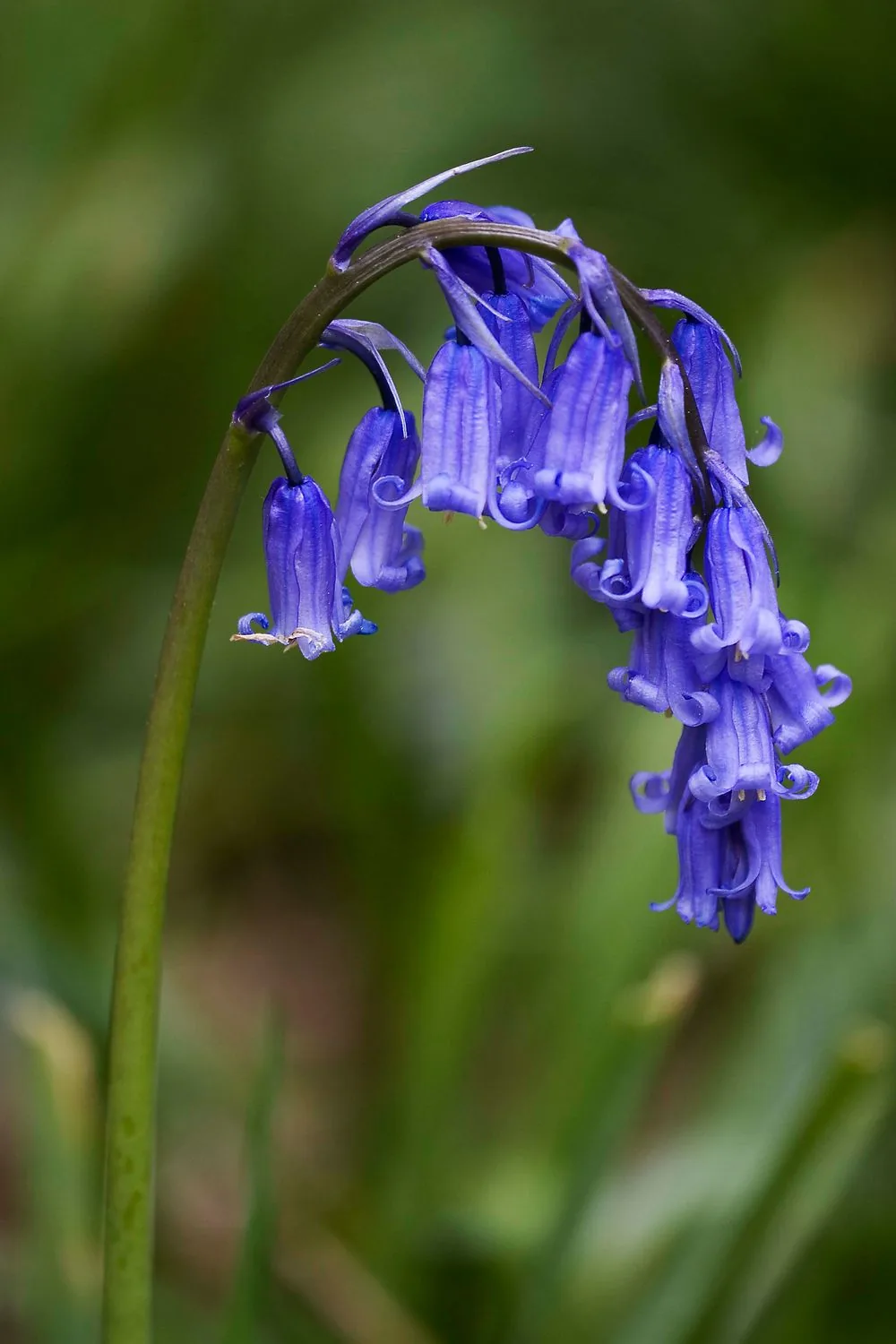
The English bluebell is the bulb that turns old woods violet-blue in mid to late spring. Each plant sends up glossy, strap-shaped leaves and an arching stem of narrow, scented, tubular bells that hang to one side, their tips curled back. It grows 20-40cm tall, is fully hardy, and spreads steadily by seed and offsets wherever the soil is humus-rich and does not dry out. Under deciduous trees it needs no care at all.
Hyacinthoides non-scripta 'Alba'Hyacinthoides hispanicaHyacinthoides x massartiana
Light
Partial shade, as under deciduous trees. It tolerates sun where the soil stays moist.
Water
Keep the soil moist while the plant is in growth. It needs no watering once the leaves have died back, as long as the soil does not dry out completely.
Humidity
Not a factor for this outdoor bulb.
Soil
Moderately fertile, humus-rich, well-drained soil that does not dry out.
It can make cats and dogs unwell, so keep it out of their reach.
If your pet has eaten some, contact your vet.
Source: RHS
Did you know?
The English bluebell is easy to tell from the Spanish bluebell often sold in its place. English flowers hang along one side of a drooping stem, are narrow with strongly curled tips, smell sweet and carry cream pollen. Spanish bluebells stand upright with flowers all round the stem, open wider, have little scent and blue pollen.
Care by Season
Spring
Leaves appear early and the flowers open in mid to late spring. Remove faded stems if you do not want seedlings.
Summer
The leaves yellow and die back and the bulbs rest. Offsets can be lifted and replanted now.
Autumn
Planting time: set bulbs about 8cm deep. Leave fallen leaves in place as a mulch.
Winter
The bulbs are dormant underground and fully hardy.
Growing & Maintenance
Planting
Plant bulbs about 8cm deep in autumn, in humus-rich, well-drained soil in partial shade, in informal groups.
Pruning
None. Remove faded flower stems to prevent self-seeding, and let the leaves die down naturally.
Propagation
By removing offsets in summer, or by seed sown when ripe and kept shaded and moist.
Pests & Diseases
Common problems
Upright, pale, unscented flowers
Most likely cause: Spanish bluebells or hybrids.
What to do: Buy bulbs sold under the full Latin name from a reputable grower.
Few flowers
Most likely cause: Deep shade all year, or leaves removed too early.
What to do: Plant under deciduous trees and leave the foliage to die back.
Seedlings everywhere
Most likely cause: Self-seeding.
What to do: Cut off the flower stems as they fade.
Dry bulbs that did not come up
Most likely cause: The bulbs dried out before planting.
What to do: Plant promptly, or buy plants in the green.
Leaves flopping after flowering
Most likely cause: Normal die-back.
What to do: Nothing is needed.
Pests & Diseases
Slugs and snails
Signs: Holes in young leaves and flower buds in a wet spring.
Treatment: Damage is rarely serious; pick them off after dark if needed.
Bulb rot
Signs: Bulbs that turn soft and fail to come up in waterlogged soil.
Treatment: Plant in well-drained soil and avoid low spots where water stands in winter.
Rust
Signs: Small dark brown pustules on the leaves late in spring.
Treatment: Remove badly affected leaves. The plant is dying back by then and comes up clean the following year.
FAQ
When and how do I plant English bluebells?
Plant the bulbs about 8cm deep in autumn, in humus-rich, well-drained soil that does not dry out, in partial shade. They are also sold 'in the green', in leaf just after flowering, and these often settle faster than dry bulbs.
Are bluebells toxic to cats and dogs?
Yes. All parts are harmful if eaten, for dogs, cats and rabbits as well as people. Wear gloves when handling the bulbs and keep pets from digging them up.
Do bluebells spread?
Yes, quickly in the right place, by seed and by offsets. That is welcome under trees and a nuisance in a small border. Removing the flower stems once they fade stops the seeding.
Why are my bluebells upright and pale?
They are probably Spanish bluebells or hybrids between the two species, which are very common in gardens. If native bluebells grow wild nearby, avoid planting Spanish ones, because the two cross freely.
Can I dig up bluebells from a wood?
No. Wild bluebells should be left where they grow, and in the United Kingdom digging up the bulbs is illegal. Buy bulbs from a nursery that raises its own stock.
Can I cut the leaves back after flowering?
Not until they have yellowed. The leaves feed the bulb for next year, so cutting or mowing them early weakens the display.