No results. Is a plant missing? Tell uscontact@wikiplant.net
English Ivy
Hedera helix
Care level: Easy
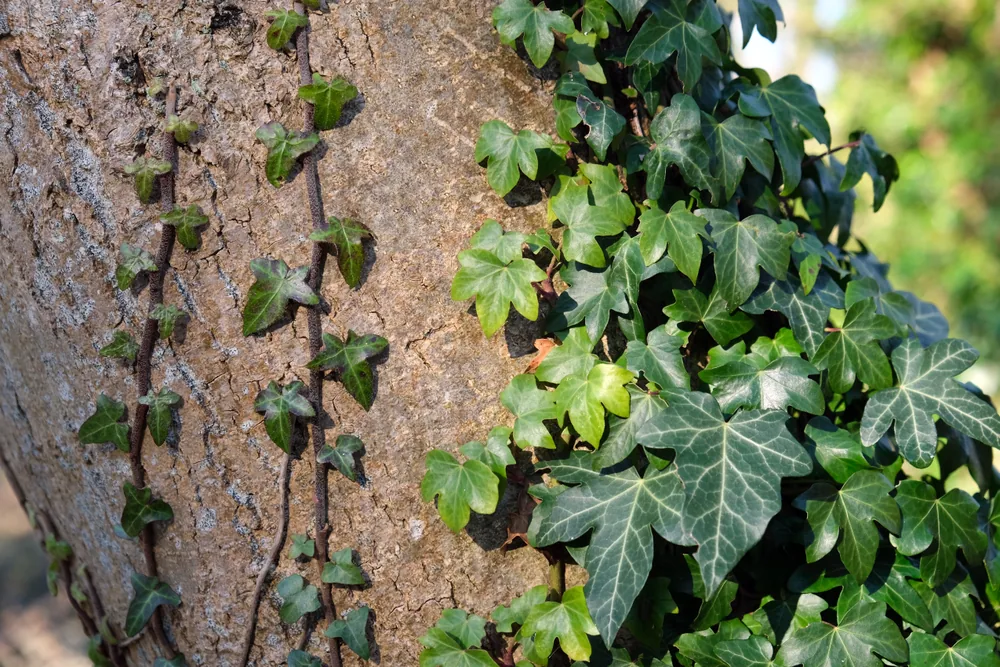
English ivy has climbed buildings and trees across Europe for centuries using tiny root-like holdfasts that cling to almost any surface, and the ancient Greeks associated its evergreen vines with Dionysus, weaving it into ceremonial wreaths and crowns.
Tolerates low light but grows fuller in bright, indirect light.
Water
Keep soil lightly moist, watering when the top layer feels dry, roughly weekly.
Humidity
Prefers higher humidity; dry air encourages spider mites and brown tips.
Soil
Well-draining, general-purpose potting mix.
Temperature
Prefers cool rooms. Keep it away from heaters in winter.
Size
Outdoors it climbs 6m and far higher. Indoors the stems are kept short by trimming.
Growth speed
Fast
Best position
east / south-east-facing windowanywhere up to 4 m or more from the window
north / north-east / north-west-facing windowanywhere up to about 2 m from the window
south / west-facing windowabout 1 m from the window or further back
Watch for strong direct sun at south / west windows.
See every window directionHide window directions
Best position
right by the window
about 1 m
about 2 m
about 4 m
4 m or more
north
works well✓
works well✓
works well✓
just about~
just about~
north-east
works well✓
works well✓
works well✓
just about~
just about~
east
works well✓
works well✓
works well✓
works well✓
works well✓
south-east
works well✓
works well✓
works well✓
works well✓
works well✓
south
just about~
works well✓
works well✓
works well✓
works well✓
south-west
just about~
just about~
works well✓
works well✓
works well✓
west
just about~
works well✓
works well✓
works well✓
works well✓
north-west
works well✓
works well✓
works well✓
just about~
just about~
✓works well~just about○too dark☼too much direct sun
A rough guide based on window direction and typical daylight through the year. Window size, curtains and whatever stands outside matter just as much.
!Toxic to pets
Toxic to cats and dogs if eaten.
Eating it can cause vomiting and an upset stomach.
If your pet has eaten some, contact your vet.
Source: ASPCA
Did you know?
English ivy clings to surfaces using small root-like structures called holdfasts rather than by twining, which is why it can climb a flat brick wall just as easily as a tree trunk.
Care by Season
Spring
Resume regular watering and trim leggy vines to encourage bushier growth.
Summer
Water consistently and mist occasionally to deter spider mites.
Autumn
Reduce watering slightly as growth slows.
Winter
Water sparingly and keep in a cool but frost-free spot away from heaters.
Growing & Maintenance
Soil and pot
A well-draining, general-purpose potting mix rich in organic matter, in a pot with drainage holes.
Pruning
Trim leggy stems in spring, cutting just above a leaf, to make the plant bushier.
Support
It clings with small holdfasts to a moss pole or frame, or trails from a shelf or basket.
Propagation
From stem cuttings, which root in water or moist compost.
Pests & Diseases
Common problems
Brown, dry leaf tips and edges
Most likely cause: Warm, dry air.
What to do: Move it to a cooler spot away from heaters and raise the humidity.
Long, sparse stems
Most likely cause: Too little light and no pruning.
What to do: Give it bright, indirect light and trim the stems back.
Variegation fading
Most likely cause: Low light.
What to do: Move variegated varieties to a brighter position.
Yellow leaves and rotting stems
Most likely cause: Overwatering.
What to do: Let the top layer dry before watering again and make sure the pot drains.
Spots on the leaves
Most likely cause: A leaf spot disease, encouraged by wet foliage and still air.
What to do: Remove the affected leaves and give the plant more air.
Pests & Diseases
Spider mites
Signs: Fine webbing and speckled yellow leaves, especially in dry indoor air.
Treatment: Increase humidity, rinse foliage, and apply insecticidal soap. Check the undersides of the leaves and the crevices where the leaf stem meets the main stalk.
Aphids
Signs: Small clustered insects on new growth tips.
Treatment: Spray off with water and treat with insecticidal soap.
Scale insects
Signs: Small brown bumps along stems.
Treatment: Scrape off and wipe with rubbing alcohol.
FAQ
Why does my English ivy keep getting spider mites?
Ivy grown indoors in warm, dry air is especially prone to spider mites. Regular misting or an occasional rinse in the shower to raise humidity around the leaves goes a long way toward preventing infestations.
Can I grow my indoor English ivy outdoors instead?
In many regions it can, but English ivy is classified as invasive in parts of North America and elsewhere because it spreads aggressively and can smother other plants, so check local guidance before planting it outside.
Is English ivy toxic to cats and dogs?
Yes, English ivy is toxic to cats and dogs. Eating the leaves upsets the stomach, and the sap can irritate skin. Keep trailing stems out of reach.
How often should I water English ivy?
Roughly once a week, when the top layer of compost feels dry. Keep it lightly moist and water sparingly in winter.
How do I propagate English ivy?
From stem cuttings. Cut a length of stem with a few leaves, remove the lowest ones and root it in water or moist compost.
How much light does English ivy need?
It tolerates low light but grows fuller in bright, indirect light. Variegated varieties need more light to keep their markings.