No results. Is a plant missing? Tell uscontact@wikiplant.net
English oak
Quercus robur
Care level: Easy
The English oak is the great deciduous tree of European lowland woods and parkland: a short, massive trunk, a broad crown on heavy, spreading branches, and dark green leaves with rounded lobes and almost no stalk. Its acorns hang on long stalks, which gives it its other name, pedunculate oak. It grows slowly into a tree 20-40m tall that can live for many centuries, and it feeds and shelters more insects, birds and fungi than almost any other tree.
It can make cats and dogs unwell, so keep it out of their reach.
If your pet has eaten some, contact your vet.
Source: RHS
Signature feature
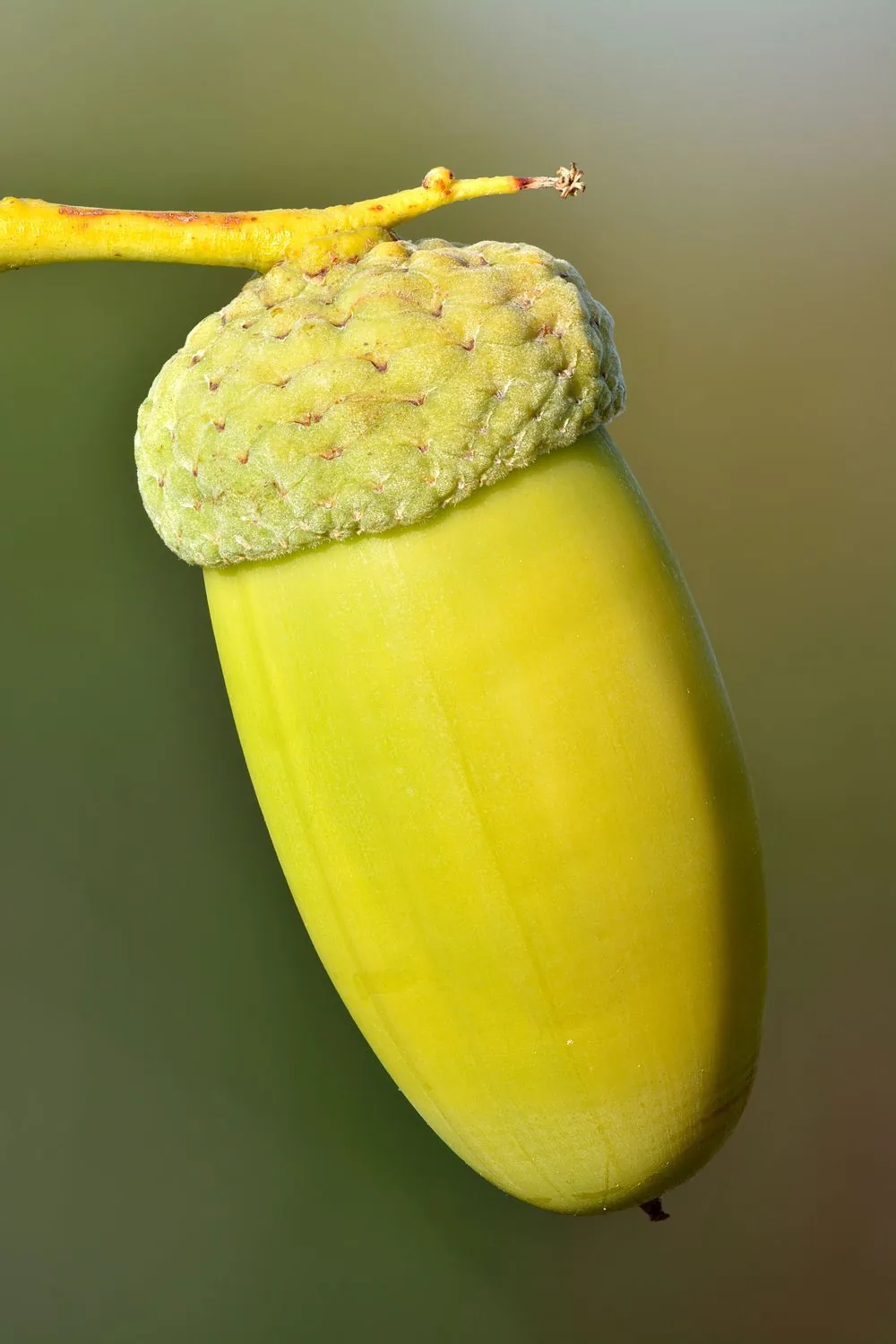
The long stalk of the acorn is the surest way to tell this oak from the sessile oak, its close relative. English oak has stalked acorns and nearly stalkless leaves with small lobes like ears at the base; sessile oak has stalkless acorns and leaves on clear stalks.
Care by Season
Spring
Leaves and catkins open late, often after other trees. Caterpillars may thin the first leaves; a second flush follows.
Summer
The crown is in full leaf. Water young trees in dry weather.
Autumn
Acorns fall and the leaves turn russet brown. Sow acorns at once; plant young trees.
Winter
The tree is dormant. Plant bare-root trees, and remove dead or damaged branches if needed.
Growing & Maintenance
Planting
Plant young trees between autumn and early spring in deep soil in full sun, with room for a very large crown and well away from buildings. Protect the stem from deer and rabbits and keep the base clear of grass for the first years.
Pruning
Little is needed. Remove dead, damaged or crossing branches in winter. Work on a large tree is a job for a tree surgeon.
Propagation
By acorns sown as soon as they are ripe.
Pests & Diseases
Common problems
Leaves eaten in spring
Most likely cause: Caterpillars of several moths.
What to do: Nothing is needed; a second flush of leaves follows.
White coating on new growth
Most likely cause: Powdery mildew.
What to do: Nothing is needed on an established tree.
Odd growths on leaves and twigs
Most likely cause: Galls.
What to do: They are harmless; leave them.
A young tree stripped of bark
Most likely cause: Rabbits or deer.
What to do: Fit a tree guard at planting.
Dark, weeping patches on the trunk and a thinning crown
Most likely cause: Possibly acute oak decline.
What to do: Have the tree inspected by a tree specialist.
Pests & Diseases
Oak processionary moth
Signs: Hairy caterpillars moving in lines on the trunk and branches in late spring and summer, with white silk nests.
Treatment: Do not touch them. The hairs are a health hazard for people and pets; report the nest to the local authorities and leave removal to specialists.
Gall wasps
Signs: Round, knobbly or disc-shaped growths on leaves, buds, twigs and acorns.
Treatment: No treatment is needed. The galls are harmless to the tree.
Powdery mildew
Signs: A white, powdery coating on young leaves and summer shoots.
Treatment: No treatment is needed on an established tree. Water young trees in dry spells so that they grow through it.
Caterpillars
Signs: Young leaves eaten in spring, sometimes across the whole crown.
Treatment: The tree replaces the leaves with a second flush in early summer. The caterpillars are food for nesting birds.
FAQ
Can I grow an oak from an acorn?
Yes. Collect acorns as soon as they fall, discard any that float in water, and sow them straight away in pots outdoors, protected from mice and squirrels. Acorns die if they dry out, so do not store them indoors over winter.
How big does an English oak get, and how fast?
Eventually 20-40m tall with a crown at least as wide as a house. Growth is steady rather than fast. It is a tree for a large garden, a field edge or parkland, planted well away from buildings.
Are acorns toxic to dogs?
Yes. Acorns and young oak leaves contain tannins and are harmful if eaten. Do not let a dog eat fallen acorns, and ask a vet for advice if it has swallowed a number of them.
What are the round growths on the leaves and twigs?
Galls, caused by tiny gall wasps. Oak apples, marble galls and the flat discs under the leaves called spangle galls are all common. They look odd but do the tree no harm.
Why are the young leaves coated in white?
That is oak powdery mildew, which is very common on young trees and on the second flush of growth in summer. An established tree shrugs it off.
What should I know about oak processionary moth?
Its caterpillars move nose to tail in lines and live in white silk nests on the trunk and branches. Their hairs cause rashes and breathing problems in people and animals. Do not touch the caterpillars or nests, keep pets away and report them to the local authorities.