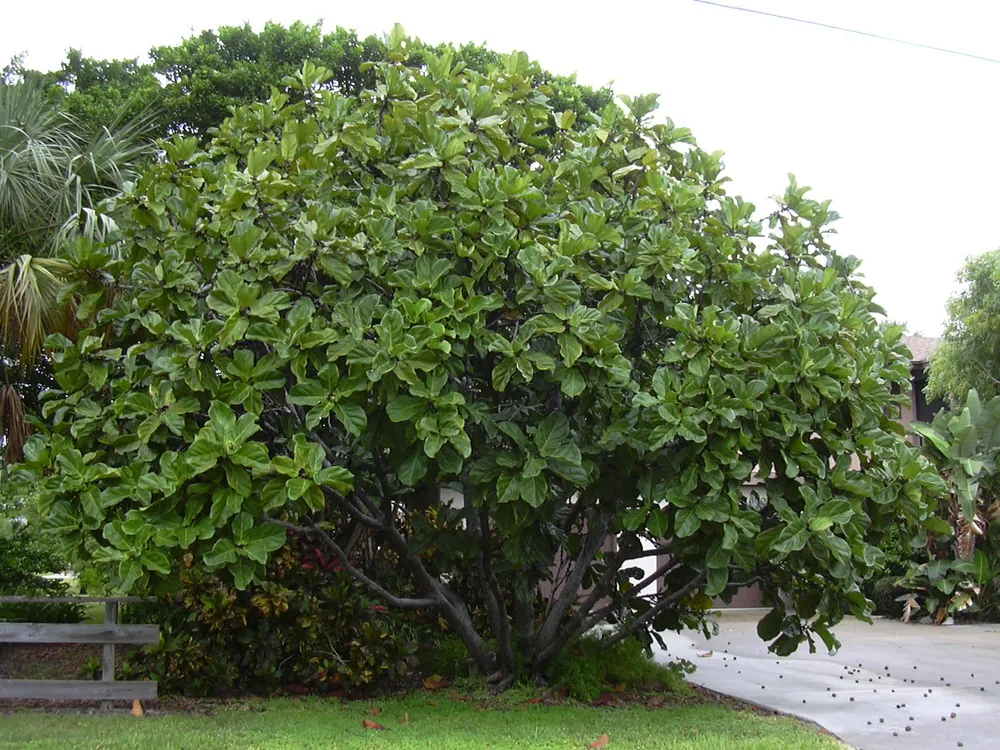
Fiddle Leaf Fig (Ficus lyrata)

Fiddle Leaf Fig

Ficus lyrata
Care level: Moderate

Native to the lowland tropical rainforests of West Africa, the fiddle leaf fig became an interior-design darling in the 2010s for its huge, violin-shaped leaves, but that same photogenic size makes it slow to adjust, and it is notorious for dropping leaves after even a short move or a change in light.

I have this plant

Information

Varieties and related species
Ficus lyrata 'Bambino'Ficus lyrata 'Compacta'Ficus lyrata 'Variegata'

Light

Needs bright, indirect light and tolerates a few hours of gentle direct morning sun; low light causes leaf drop.

Water

Water when the top 3-5cm of soil is dry, typically every 1-2 weeks, and never let it sit in water.

Humidity

Prefers moderate to high humidity around 40-60%; mist or use a pebble tray in dry rooms.

Soil

Well-draining, peat-based potting mix with added perlite for aeration.

Temperature

Above 13°C, in a spot free of cold draughts.

Size

0.6-3m tall as a houseplant, with leaves up to 45cm long.

Growth speed

Medium

Best position

  • east / south-east-facing windowanywhere up to about 2 m from the window
  • north / north-east / north-west-facing windowanywhere up to about 1 m from the window
  • south / west-facing windowabout 1 m from the window or further back

Watch for strong direct sun at south / west windows.

See every window direction Hide window directions
Best positionright by the windowabout 1 mabout 2 mabout 4 m4 m or more
northworks wellworks welltoo darktoo darktoo dark
north-eastworks wellworks welltoo darktoo darktoo dark
eastworks wellworks wellworks welltoo darktoo dark
south-eastworks wellworks wellworks welltoo darktoo dark
southjust aboutworks wellworks welltoo darktoo dark
south-westjust aboutjust aboutworks welltoo darktoo dark
westjust aboutworks wellworks welltoo darktoo dark
north-westworks wellworks welltoo darktoo darktoo dark

works well just about too dark too much direct sun

A rough guide based on window direction and typical daylight through the year. Window size, curtains and whatever stands outside matter just as much.

Toxic to pets

Toxic to cats and dogs if eaten.

Mostly mild mouth and stomach irritation.

If your pet has eaten some, contact your vet.

Source: ASPCA

Common mistake

The most common fiddle leaf fig mistake is moving it around the house chasing better light or repotting it right after bringing it home. This plant dislikes change and often drops leaves in protest, then needs weeks to settle before showing new growth.

Care by Season

Spring

Repot if root-bound and resume monthly feeding as active growth restarts.

Summer

Water more frequently and wipe dust off leaves regularly so they can photosynthesize well.

Autumn

Cut back on watering as growth slows and stop fertilizing by mid-autumn.

Winter

Keep away from cold drafts and heating vents; water sparingly and avoid moving the plant, which dislikes change.

Growing & Maintenance

Soil and pot

Potting compost with about one third perlite or fine bark for aeration, in a pot with drainage holes that is only slightly larger than the root ball.

Repotting

Every two years in spring, when root-bound. It dislikes disturbance, so do not repot and move it to a new spot at the same time. For a large plant, replace the top 5cm of compost instead.

Fertilising

A balanced liquid feed once a month from spring to late summer. Stop by mid-autumn.

Pruning

Cut the top off just above a leaf in late spring to encourage branching, and remove damaged leaves at the stalk. The sap irritates skin, so wear gloves.

Support

A young plant with a tall, thin stem may need a cane until the trunk thickens. Tie it loosely so the stem can still move a little.

Propagation

Tip cuttings with two or three leaves in late spring, in water or moist compost. Rooting is slow, 4-8 weeks; air-layering is more reliable on a thick stem.

Pests & Diseases

Common problems

Sudden leaf drop

Most likely cause: Stress after a move, a draught, repotting or a change in watering.
What to do: Keep its position and care steady. New growth usually follows within a few weeks once conditions are stable.

Brown spots with yellow halos

Most likely cause: A bacterial or fungal leaf spot, triggered by wet leaves or overwatering.
What to do: Remove affected leaves, keep water off the foliage and let the compost dry more between waterings.

Brown, dry leaf edges

Most likely cause: Dry air or compost that is left dry for too long.
What to do: Water as soon as the top 3-5cm is dry and raise the humidity with a pebble tray.

Lower leaves turning yellow

Most likely cause: Overwatering. The plant is sensitive to wet roots.
What to do: Check the drainage, never let the pot stand in water and let the top of the compost dry between waterings.

Leaning, one-sided growth

Most likely cause: The plant grows toward its light source.
What to do: Give it the brightest indirect light you have. Stake a young, thin stem until it thickens.

Scorched patches on the leaves

Most likely cause: Hot afternoon sun through glass.
What to do: Move it out of the afternoon sun. Gentle morning sun is fine.

Pests & Diseases

Spider mites

Signs: Tiny speckled spots on leaves and fine webbing on the undersides.
Treatment: Rinse leaves with lukewarm water and treat with insecticidal soap weekly until clear. Check the undersides of the leaves and the crevices where the leaf stem meets the main stalk.

Scale insects

Signs: Small brown bumps along stems and leaf veins with sticky residue.
Treatment: Scrape off scale with a soft cloth or cotton swab dipped in rubbing alcohol.

Bacterial leaf spot

Signs: Brown spots with yellow halos, often from overwatering or wet leaves.
Treatment: Remove affected leaves, avoid wetting foliage, and improve air circulation.

FAQ

Why is my fiddle leaf fig dropping leaves?

Sudden leaf drop is almost always a reaction to stress: a move, a draught, repotting or a change in watering. It is rarely fatal. Keep conditions stable and new growth should follow within a few weeks.

Why does my fiddle leaf fig have brown spots?

Brown spots with yellow halos are usually a bacterial or fungal leaf spot. Wet leaves and overwatering set it off. Remove the affected leaves, keep the foliage dry and let the compost dry more between waterings.

How often should I water a fiddle leaf fig?

Typically every 1-2 weeks, when the top 3-5cm of compost is dry. Water thoroughly and never let the pot stand in water. The plant is sensitive to overwatering.

How much light does a fiddle leaf fig need?

It needs bright, indirect light. A few hours of gentle morning sun are fine, but hot afternoon sun scorches the leaves. In low light it drops leaves.

Is the fiddle leaf fig toxic to cats and dogs?

Yes, the fiddle leaf fig is toxic to cats and dogs. The milky sap in the stems irritates the mouth and skin. Wear gloves when pruning or taking cuttings.

How do I make my fiddle leaf fig branch?

Cut the growing tip off just above a leaf in late spring. Side shoots then form below the cut. The sap irritates skin, so wear gloves.

You might also like