No results. Is a plant missing? Tell uscontact@wikiplant.net
Fig tree
Ficus carica
Care level: Moderate
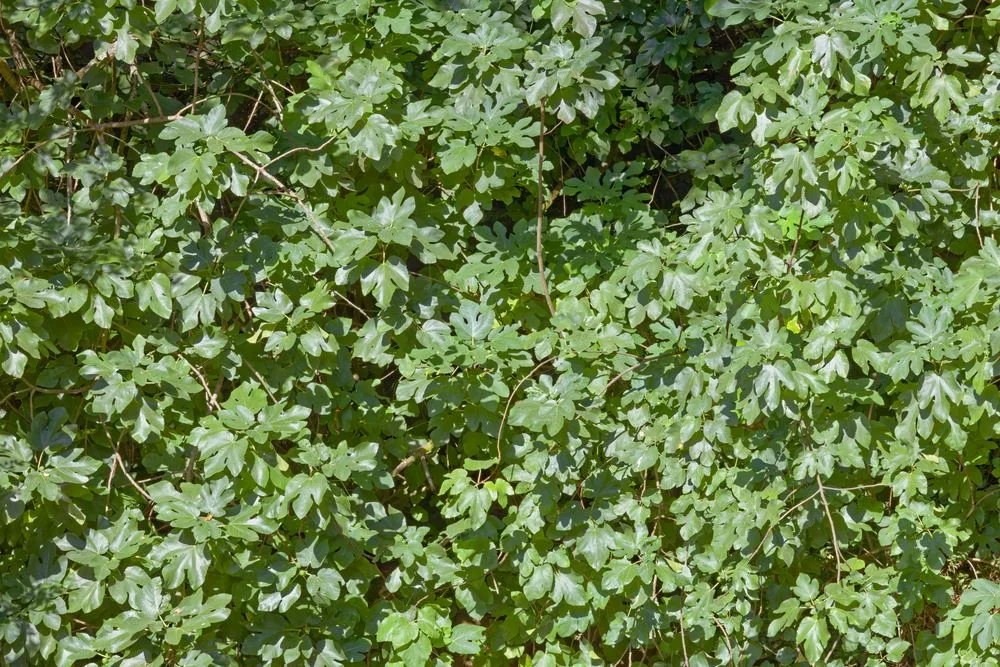
The fig is a spreading, deciduous large shrub or small tree from the Mediterranean and western Asia, with smooth grey bark and big, rough, deeply lobed leaves that smell of summer when the sun is on them. The fruits form without visible flowers and ripen to green, brown or purple with soft, sweet, pink flesh. In a cool climate it is best fan-trained against a warm, sunny wall or grown in a large pot, where it fruits reliably if its roots are confined. It needs sun, shelter, sharp drainage and some protection in a hard winter.
Full sun, against a warm, sheltered, south- or west-facing wall if possible.
Water
Water regularly while the fruits are swelling, and daily in pots in summer. Erratic watering makes the fruits drop or split. Keep it on the dry side in winter.
Humidity
Not a factor outdoors. Under glass, dry air encourages red spider mite.
Soil
Well-drained soil of moderate fertility, with the roots confined. It tolerates chalk and poor, stony ground.
Large amounts can cause photosensitivity, a sunburn-like skin reaction, rather than the usual digestive upset.
If your pet has eaten some, contact your vet.
Source: RHS, NC State Extension
Beginner tip
Restrict the roots. A fig with a free root run makes metres of leafy growth and little fruit. Grow it in a large pot, or plant it in a pit about 60cm square lined with paving slabs, with rubble in the bottom, and it turns its energy into figs.
Care by Season
Spring
Remove winter protection, prune in mid-spring and start feeding plants in pots.
Summer
Pinch out shoot tips in early summer. Water regularly; last year's embryo figs swell and ripen from late summer.
Autumn
Pick ripe figs. After leaf fall, remove any unripe figs larger than a pea.
Winter
Leafless and dormant. Protect the branches in hard frost and move pots under cover.
Growing & Maintenance
Planting
Plant in spring against a sunny wall, in a pit about 60cm square and deep, lined with slabs that stand 2-3cm above the soil, with 20cm of rubble in the bottom. Or use a large pot. Fix wires for fan training.
Fertilising
Mulch in spring and feed with a high-potash liquid fertiliser every week or two from the time the fruits appear until they ripen.
Pruning
In mid-spring remove a quarter to a third of the older branches and any dead wood. Pinch out new shoots at five or six leaves in early summer and tie in the framework.
Propagation
By hardwood cuttings in winter, by layering a low branch, or by detaching rooted suckers.
Pests & Diseases
Common problems
Lots of leaves and no fruit
Most likely cause: Unrestricted roots, rich soil or too much nitrogen.
What to do: Confine the roots, stop feeding nitrogen and give more sun.
Fruits drop while small
Most likely cause: Drought, or a cold spell.
What to do: Water regularly while the fruits swell.
Fruits stay hard and green
Most likely cause: A summer too short or cool for a second crop.
What to do: Remove them in late autumn; rely on the overwintered embryo figs.
Shoot tips black in spring
Most likely cause: Frost damage.
What to do: Cut back to healthy wood in mid-spring and protect next winter.
Fruits split
Most likely cause: Heavy watering or rain after a dry spell.
What to do: Water evenly through the summer.
Yellow leaves falling in autumn
Most likely cause: Normal leaf fall.
What to do: Nothing to do; the tree is deciduous.
Pests & Diseases
Birds and wasps
Signs: Ripe figs pecked open or hollowed out.
Treatment: Pick as soon as fruits are ripe and net the tree or bag individual fruits.
Red spider mite
Signs: Fine pale speckling on the leaves and thin webbing on plants under glass or against a hot wall.
Treatment: Raise the humidity, hose the foliage down and ventilate. Check the undersides of the leaves and the crevices where the leaf stem meets the main stalk.
Scale insects
Signs: Brown bumps on the stems and under the leaves, with sticky honeydew, mostly under glass.
Treatment: Scrub them off the bare branches in winter and wipe leaves in summer.
Mealybugs
Signs: White, woolly tufts in the leaf joints of plants under glass.
Treatment: Dab them off with a cotton bud dipped in alcohol and repeat weekly. Check the undersides of the leaves and the crevices where the leaf stem meets the main stalk.
Honey fungus
Signs: The tree declines and dies back; white fungal sheets under the bark at the base.
Treatment: Remove the plant with as much root as possible.
FAQ
When are figs ripe?
In late summer and early autumn. A ripe fig turns soft, changes colour, droops on its stalk and may split slightly or show a drop of nectar at the eye. Figs do not ripen after picking, so wait until they are fully ready.
Why do the figs never ripen on my tree?
In a cool climate only the pea-sized embryo figs that form near the shoot tips in late summer survive the winter and ripen the following year. Larger figs still green in autumn will not make it: remove them in late autumn so that the tree puts its energy into the small ones.
Does it need a second tree for pollination?
No. Garden varieties set fruit without pollination.
How do I prune it?
In mid-spring, once hard frosts are past, remove a quarter to a third of the oldest branches and any frost-damaged growth. In early summer pinch out the tips of new shoots at five or six leaves to encourage the embryo fruits. Wear gloves, as the milky sap irritates the skin.
Will it survive the winter?
An established tree against a warm wall takes brief frosts of around -5 to -10°C, though young shoots and embryo fruits can be killed. In colder areas protect it with fleece or straw, or grow it in a pot and move it into an unheated shed or garage once the leaves have dropped.
Can I grow a fig in a pot?
Yes, and it suits the plant. Use a pot of 35-45cm with loam-based compost, water daily in summer, feed weekly with a high-potash fertiliser once fruits form, and repot every two or three years.
Is the sap harmful?
The white sap in the stems and leaves can cause skin irritation that worsens in sunlight, in people and in pets. Wash it off promptly and keep animals from chewing the prunings.