No results. Is a plant missing? Tell uscontact@wikiplant.net
Sweet cherry
Prunus avium
Care level: Moderate
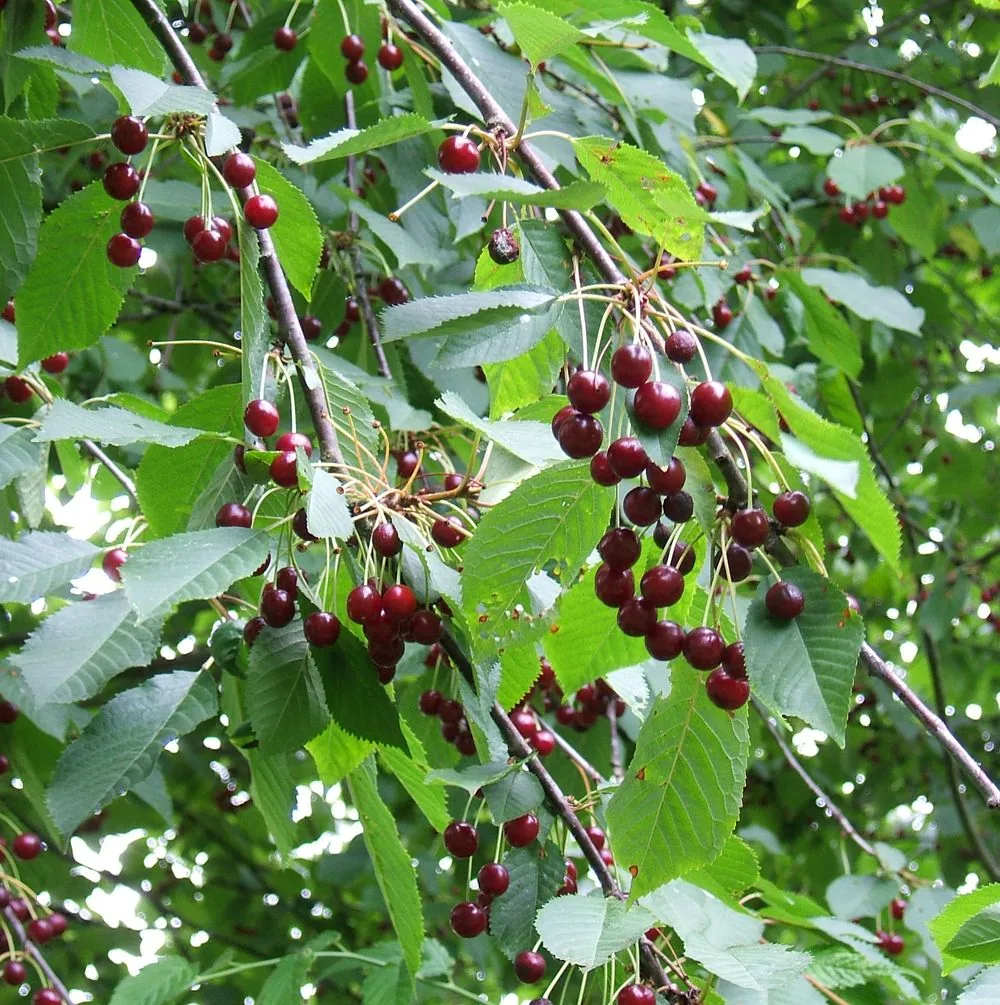
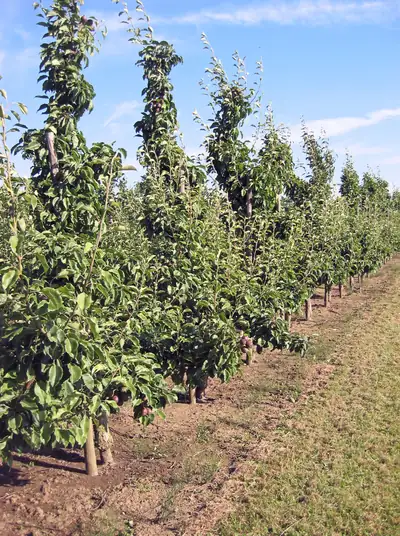
The sweet cherry is a tall, deciduous European tree with shining, banded, red-brown bark, clouds of white blossom in mid-spring and leaves that turn orange and red in autumn. The wild tree gives small, dark fruits that birds strip quickly; garden varieties bred from it carry the large, sweet cherries of early to midsummer. Left on its own roots it becomes a big woodland tree, so fruiting cherries are grafted onto dwarfing rootstocks that keep them small enough to net. It wants a warm, sheltered, sunny spot and deep, well-drained soil.
Leaves, stems and seeds contain cyanide compounds; wilting leaves are the most dangerous.
If your pet has eaten some, contact your vet.
Source: NC State Extension, Pet Poison Helpline
Common mistake
Never prune a cherry in winter. Cuts made in the cold, wet months let in silver leaf and bacterial canker, the two diseases that kill most garden cherries. Do all pruning in dry weather between late spring and the end of summer, when wounds seal fast.
Care by Season
Spring
Blossom opens. Protect small trees from frost, mulch and feed.
Summer
Net against birds, pick the fruit and prune after harvest in dry weather.
Autumn
Leaves colour. Clear fallen leaves and any mummified fruit.
Winter
Dormant. Plant bare-root trees but do not prune.
Growing & Maintenance
Planting
Plant between late autumn and early spring with the graft union above soil level, and stake the tree. Trees on dwarfing rootstocks need a permanent stake.
Fertilising
Mulch with garden compost in spring and apply a balanced fertiliser. Keep the base clear of grass.
Pruning
Sweet cherries fruit on wood two years old and older. Shape young trees in spring as the buds open, and prune established trees lightly in summer after picking, removing dead, damaged and crossing branches.
Propagation
By grafting or budding onto a rootstock in summer. Seedlings give variable, usually small-fruited trees.
Pests & Diseases
Common problems
Blossom but no fruit
Most likely cause: Frost on the flowers, no pollination partner or cold weather keeping insects away.
What to do: Plant a self-fertile variety in a sheltered spot and fleece small trees on frosty nights.
Fruit disappears before it ripens
Most likely cause: Birds.
What to do: Net the tree in good time.
Fruit splits
Most likely cause: Rain or uneven watering during ripening.
What to do: Water evenly and pick promptly.
Fruit rots with buff pustules
Most likely cause: Brown rot.
What to do: Remove and bin all affected fruit, including dried fruit left on the tree.
Branch dies back with gum on the bark
Most likely cause: Bacterial canker.
What to do: Cut out in summer and never prune in winter.
Small maggots in the fruit
Most likely cause: Spotted wing drosophila.
What to do: Pick as soon as the fruit is ripe, remove all fallen fruit and cover small trees with fine insect mesh.
Pests & Diseases
Cherry blackfly
Signs: Leaves at the shoot tips curl tightly in late spring, with clusters of black aphids inside and sticky honeydew.
Treatment: Squash colonies early on small trees and encourage ladybirds and other predators. Damage is mostly cosmetic on established trees.
Pear and cherry slugworm
Signs: Slimy, black, slug-like larvae that graze the upper leaf surface, leaving brown, see-through patches.
Treatment: Pick them off or hose them from a small tree. Trees tolerate light damage.
Bacterial canker
Signs: Sunken, dead patches of bark oozing amber gum, and leaves peppered with small holes.
Treatment: Cut out affected branches to healthy wood in summer and prune only in dry summer weather.
Silver leaf
Signs: A silvery sheen on the leaves, followed by dieback of the branch; a dark stain shows in the cut wood.
Treatment: Cut back affected branches well past the stain in summer and disinfect the blades.
Birds
Signs: Ripening fruit pecked or stripped.
Treatment: Net the tree as the fruit colours.
FAQ
Do I need two cherry trees?
Not if you choose a self-fertile variety such as 'Stella' or 'Sunburst', which crop alone. Many older varieties need a compatible partner that flowers at the same time.
How do I stop birds taking the fruit?
Net the tree as soon as the cherries start to colour. This is only practical on a small tree, which is the main reason to choose a dwarfing rootstock or to fan-train the tree on a wall.
Why do the cherries split?
Heavy rain as the fruit ripens: the skin takes up water and bursts. A rain cover over a wall-trained tree helps, as does even watering. Pick split fruit promptly, as it rots quickly.
How long before a cherry tree fruits?
Three to four years on a dwarfing rootstock such as Gisela 5; longer on vigorous rootstocks.
Can I grow a cherry in a pot?
Yes, on Gisela 5 rootstock in a container of at least 45-60cm filled with loam-based compost. Water regularly, feed in spring and summer and repot or top-dress every couple of years.
What is the amber gum oozing from the bark?
Gumming is a reaction to stress or damage. Combined with sunken, dead patches of bark and leaves full of small holes, it points to bacterial canker. Cut out affected branches in summer.
Is it the same as the sour cherry?
No. The sour or Morello cherry is Prunus cerasus, a smaller tree that fruits on young wood, tolerates a north-facing wall and gives sharp fruit for cooking.