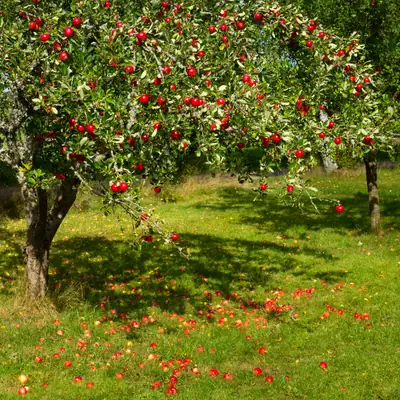
No results. Is a plant missing? Tell uscontact@wikiplant.net
Pear tree
Pyrus communis
Care level: Moderate
The pear is a long-lived, upright, deciduous fruit tree with glossy, dark green leaves and clusters of white blossom in mid-spring, a week or two before the apples. The fruit ripens from late summer to autumn, depending on the variety. Like apples, garden pears are grafted, usually onto quince roots, which keep the tree to a manageable 3-4m and bring it into fruit sooner. Pears want more warmth and shelter than apples: a sunny, protected spot, or a wall where they can be trained flat as an espalier or cordon.
Pyrus communis 'Conference'Pyrus communis 'Doyenné du Comice'Pyrus communis 'Williams' Bon Chrétien'
Light
Full sun, in a warm, sheltered position. A south- or west-facing wall is ideal for trained forms.
Water
Water young trees regularly and established ones in dry spells while the fruit is swelling. Trees on quince roots are less drought tolerant than those on pear roots.
Humidity
Not a factor for this outdoor tree.
Soil
Deep, fertile, moist but well-drained, fairly neutral soil. It does poorly on very acid soil and shallow chalk.
Size
About 3-4m on a quince rootstock; 8-12m as a tree on pear roots.
As a precaution, keep it out of reach of children and pets.
Beginner tip
Pick pears before they are ripe. A pear ripens from the core outwards, so one left to soften on the tree is brown and mealy inside. Harvest when the fruit is still firm and parts from the spur with a gentle lift and twist, then ripen it indoors at room temperature for a few days to a couple of weeks.
Care by Season
Spring
Blossom opens in mid-spring. Protect it from frost, mulch and feed.
Summer
Thin the fruitlets in early summer, water in dry weather and prune trained forms in late summer.
Autumn
Pick the fruit while firm and ripen it indoors. Clear fallen fruit and leaves.
Winter
Dormant. Plant new trees and prune free-standing ones.
Growing & Maintenance
Planting
Plant between late autumn and early spring, with the graft union above soil level, in a sunny, sheltered position. Stake the tree; those on quince need support for several years.
Fertilising
Mulch with garden compost each spring and apply a balanced fertiliser. Keep the base clear of grass and weeds.
Pruning
Winter-prune bush trees for an open framework and thin old spur systems. Summer-prune cordons, espaliers and fans. Thin the fruit to one or two per cluster in early summer.
Propagation
By grafting or budding onto a rootstock. Trees grown from pips do not resemble the parent.
Pests & Diseases
Common problems
Blossom but no fruit
Most likely cause: Frost on the flowers, or no pollination partner.
What to do: Give shelter, protect the blossom and plant a compatible variety.
Fruit brown and mushy at the core
Most likely cause: Left to ripen on the tree.
What to do: Pick firm and ripen indoors.
Small, hard, gritty fruits
Most likely cause: Drought, an overloaded tree or a cool summer.
What to do: Water, thin the fruit and plant in more warmth.
Fruitlets blacken and drop
Most likely cause: Pear midge.
What to do: Remove affected fruitlets promptly.
Fruit rots on the tree with rings of buff pustules
Most likely cause: Brown rot.
What to do: Remove and bin all affected fruit.
Strong upright shoots and little fruit
Most likely cause: Hard winter pruning.
What to do: Prune less in winter and shorten the upright shoots in late summer.
Pests & Diseases
Pear midge
Signs: Fruitlets that swell quickly, turn black from the base and fall in early summer, with small grubs inside.
Treatment: Pick off and destroy blackened fruitlets and collect fallen ones before the grubs enter the soil.
Pear blister mite
Signs: Raised yellow-green or pink blisters on the leaves in spring that turn black by summer.
Treatment: Pick off affected leaves on a small tree. The crop is not affected.
Pear scab
Signs: Dark, scabby spots on leaves and fruit; badly affected fruit cracks.
Treatment: Rake up fallen leaves, prune for an open canopy and choose resistant varieties.
European pear rust
Signs: Bright orange spots on the upper leaf surface in summer, with brown, horn-like growths underneath.
Treatment: Pick off affected leaves early. Removing nearby junipers breaks the cycle but is seldom practical.
Fireblight
Signs: Blossom and shoots wilt and turn black as if scorched, and the dead leaves stay on the branch.
Treatment: Cut out affected branches at least 30cm into healthy wood and disinfect the blades between cuts.
FAQ
Do I need two pear trees?
Usually, yes. Most pears need pollen from a different variety that flowers at the same time. 'Conference' sets some fruit by itself, but it too crops better with a partner. A neighbour's tree within bee range is enough.
Why did my tree blossom well but set no fruit?
Pears flower early, and frost on the open blossom kills it. Cold, wet weather also keeps pollinating insects away. Plant in a sheltered spot out of frost pockets, and cover small or wall-trained trees with fleece on frosty nights.
When and how do I prune a pear tree?
Prune free-standing trees in winter, removing crossing and crowded branches and thinning old, congested fruiting spurs. Prune espaliers and cordons in late summer by shortening the new side shoots to a few leaves.
Why do the young fruitlets turn black and fall?
Pear midge. The tiny grubs feed inside the fruitlets, which swell abnormally, blacken from the base and drop in early summer. Pick off and destroy affected fruitlets before the grubs leave them, and collect any that have fallen.
What are the bright orange spots on the leaves?
European pear rust, a fungus that spends the winter on junipers. It looks alarming but seldom harms the crop unless most leaves are affected. Pick off spotted leaves early in the season.
How long before a pear tree bears fruit?
Three to five years on quince rootstock. Trees on vigorous pear seedling roots can take eight years or more but live far longer.
Can I grow a pear tree in a pot?
Yes, on a dwarfing quince rootstock, in a container of at least 45-50cm with loam-based compost. Water regularly and never let it dry out while the fruit is swelling.