No results. Is a plant missing? Tell uscontact@wikiplant.net
Forget-me-not
Myosotis sylvatica
Care level: Very easy
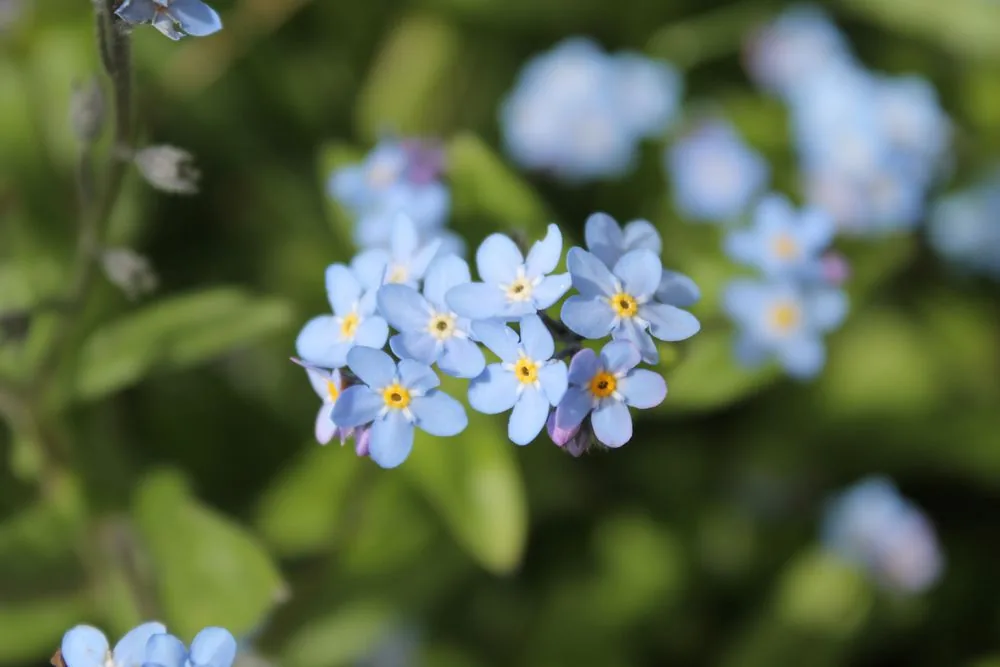
The forget-me-not is a small, soft, hairy plant grown as a biennial for its haze of tiny sky-blue flowers in spring, each with a yellow or white eye. Seed sown in early summer makes a leafy tuft that winters outdoors and flowers from mid-spring to early summer the following year. It is the classic carpet beneath tulips and wallflowers and along the edge of a shady border. Once it has flowered it scatters seed freely and comes back year after year without help. There are also pink and white varieties.
As a precaution, keep it out of reach of children and pets.
Beginner tip
Pull the plants out as soon as flowering ends, but shake them over the bed first. After flowering the leaves turn grey with powdery mildew and the plants look ragged, so there is no reason to keep them. Shaking the seed heads over bare soil sows next year's display in a few seconds.
Care by Season
Spring
Flowers from mid-spring. Water in dry spells.
Summer
Pull out spent plants, shaking the seed over the soil. Sow new seed in early summer.
Autumn
Thin self-sown seedlings and move young plants to where they are to flower.
Winter
The leafy tufts stand through winter and need no protection.
Growing & Maintenance
Planting
Plant young plants in autumn, 15-20cm apart, between or over spring bulbs. Water them in.
No pruning. Remove the whole plant after flowering.
Propagation
By seed sown from late spring to midsummer, lightly covered, since the seed germinates best in the dark. Or simply let the plants self-seed and move the seedlings.
Pests & Diseases
Common problems
Grey, ragged plants in early summer
Most likely cause: Mildew after flowering.
What to do: Pull the plants out and let the seedlings replace them.
No flowers the first year
Most likely cause: Normal for a biennial sown that year.
What to do: Wait: it flowers the following spring.
Too many seedlings
Most likely cause: Heavy self-seeding.
What to do: Hoe off the surplus, or remove plants before the seed ripens.
No seedlings return
Most likely cause: The soil was mulched or dug after flowering, or plants were removed before seeding.
What to do: Shake the spent plants over bare soil and leave it undisturbed.
Plants wilt in spring
Most likely cause: Dry soil in sun.
What to do: Water, or grow in partial shade.
Leggy, floppy plants
Most likely cause: Deep shade or very rich soil.
What to do: Give more light and do not feed.
Pests & Diseases
Powdery mildew
Signs: A white or grey powdery coating on the leaves, mostly after flowering and in dry weather.
Treatment: Pull out the spent plants. Keep young plants watered in dry spells.
Slugs and snails
Signs: Seedlings and young leaves eaten, with slime trails.
Treatment: Hand-pick after dark and protect seed trays.
Aphids
Signs: Clusters of small insects on the flower stems and sticky leaves.
Treatment: Rub them off or leave them to ladybirds and other predators.
FAQ
Does it come back every year?
The individual plants usually die after flowering, but they self-seed so freely that new ones appear each year. In practice a patch renews itself for as long as there is bare soil for the seedlings.
When do I sow forget-me-nots?
From late spring to midsummer, outdoors in a seedbed or in trays. Move the young plants to their flowering positions in autumn, and they bloom the following spring.
Why are the leaves covered in white powder?
Powdery mildew, which almost always appears as flowering finishes, especially in dry weather. It is not worth treating: pull out the spent plants and leave the seedlings.
Will it take over my garden?
It seeds around generously, but the seedlings are shallow-rooted and easy to hoe or pull out. Remove the plants before the seed ripens if you want fewer.
Does it grow in shade?
Yes. It is a woodland plant and is at its best in partial shade, though it flowers in sun as long as the soil stays moist.
Can I grow it in pots?
Yes. Plant young plants in autumn with tulips or other spring bulbs, in multipurpose compost, and keep the pot watered through dry spells in spring.
Is it good for bees?
Yes. The small, open flowers are visited by bees, hoverflies and butterflies in spring.