No results. Is a plant missing? Tell uscontact@wikiplant.net
Foxglove
Digitalis purpurea
Care level: Easy
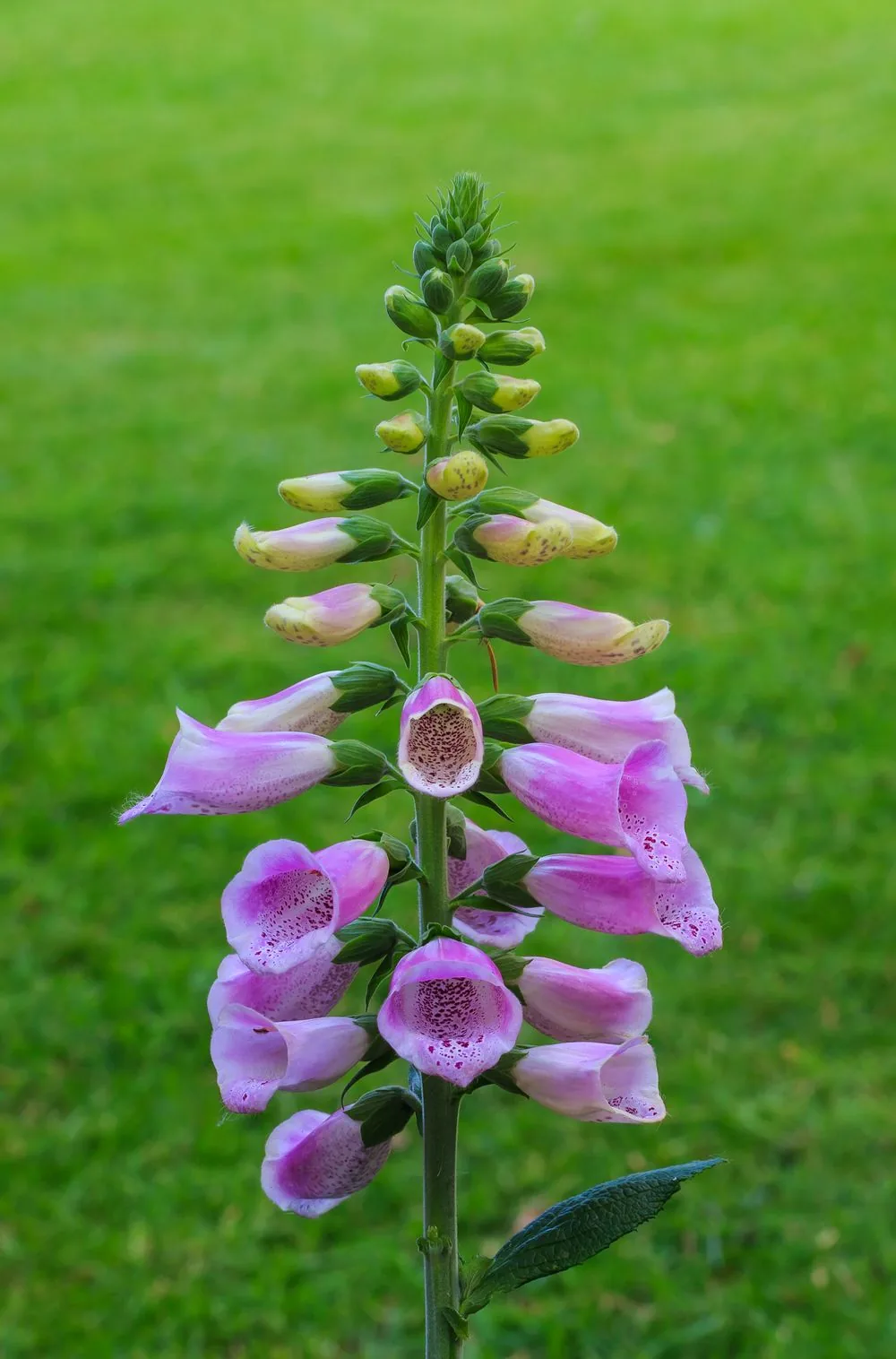
The foxglove is a wild flower of European woodland edges and clearings, grown in gardens for its tall, one-sided spikes of purple-pink bells, each spotted inside. It is a biennial: in its first year it makes a flat rosette of soft, grey-green leaves, in its second it sends up a flower spike of 1-2m in early summer, sets thousands of dust-fine seeds and dies. Left to self-sow it comes back year after year in light shade. Bumblebees crawl right inside the bells. Every part of the plant is poisonous.
It contains cardiac glycosides, which act on the heart: stomach upset, changes in heart rhythm, and it can be fatal.
If your pet has eaten some, contact your vet.
Source: RHS, Pet Poison Helpline
Safety note
All parts are toxic if eaten, to people, cats, dogs and livestock. The plant contains compounds that act on the heart. Wear gloves when handling it and do not grow it where pets or small children chew plants.
Care by Season
Spring
Second-year plants grow away and the flower spike rises. Sow seed for next year's plants in late spring.
Summer
Flowering in early summer. Cut back or leave to seed, and thin or move seedlings.
Autumn
Plant out young rosettes in their flowering positions.
Winter
Rosettes sit through the cold; they are fully hardy and need no protection.
Growing & Maintenance
Planting
Plant young rosettes in autumn or spring, 30-45cm apart, in groups, in light shade.
Pruning
Cut the main spike down after flowering to prevent seeding and encourage side spikes, or leave it to scatter seed. Remove the dead plant afterwards.
Propagation
Sow in late spring or early summer on the surface of the compost and do not cover the seed, as it needs light to germinate. Prick out and plant in autumn. Self-sown seedlings can be moved while small.
Pests & Diseases
Common problems
Leaves but no flower spike
Most likely cause: A first-year plant.
What to do: Wait; it flowers next year.
The plant died after flowering
Most likely cause: The normal end of a biennial.
What to do: Let it seed, or sow and plant new ones every year.
Short spikes and scorched leaves
Most likely cause: Dry soil in full sun.
What to do: Water, mulch and choose light shade.
Rosettes rot in winter
Most likely cause: Waterlogged soil.
What to do: Improve the drainage or plant on a slight rise.
Seedlings everywhere
Most likely cause: Spikes left to shed seed.
What to do: Hoe off or move the surplus while small, or deadhead.
White forms turning purple over the years
Most likely cause: Crossing with purple plants nearby.
What to do: Remove seedlings with purple-tinged leaf stalks before they flower.
Pests & Diseases
Aphids
Signs: Clusters of small insects on the flower spike and under the leaves, with sticky honeydew.
Treatment: Rub them off or rinse them away; predators usually follow.
Leaf and bud eelworm
Signs: Brown patches on the leaves, sharply limited by the veins, that spread up the plant in wet summers.
Treatment: Remove and destroy affected plants and do not compost them.
Powdery mildew
Signs: A white powdery coating on the leaves in dry weather late in the season.
Treatment: Water at the base in dry spells and remove badly affected leaves.
Leaf spot
Signs: Brown or purple spots on the leaves in wet weather.
Treatment: Remove marked leaves and space plants so that air moves between them.
FAQ
Is foxglove poisonous to dogs and cats?
Yes, every part of it, including the water in a vase of cut stems. It affects the heart and can be fatal. Contact a vet at once if a pet has eaten any.
Is it safe to touch?
Handling it is not dangerous, but the sap can irritate, so wear gloves and wash your hands afterwards. The danger lies in eating it.
Why did my foxglove not flower this year?
It is a biennial. A plant sown or bought as a young rosette flowers the following year. Plants in their first year only make leaves.
Will it come back every year?
The plant itself dies after flowering, but it self-sows freely. Leave a few spikes to shed seed and seedlings will appear around the parent and flower two years later.
Should I cut off the faded spike?
Cut the main spike back after flowering if you want a few smaller side spikes and no seedlings. Leave it standing if you want the plant to seed itself.
Where does it grow best?
In partial shade, in soil rich in leaf mould that stays moist but drains. It also grows in sun where the soil does not dry out.
Why are the seedlings a different colour?
Foxgloves cross freely. Seedlings from white or selected forms tend to revert to purple-pink over the generations. Seedlings with purple-tinged leaf stalks will usually flower purple; those with plain green stalks are more likely to be white.