No results. Is a plant missing? Tell uscontact@wikiplant.net
Fuchsia
Fuchsia × hybrida
Care level: Moderate
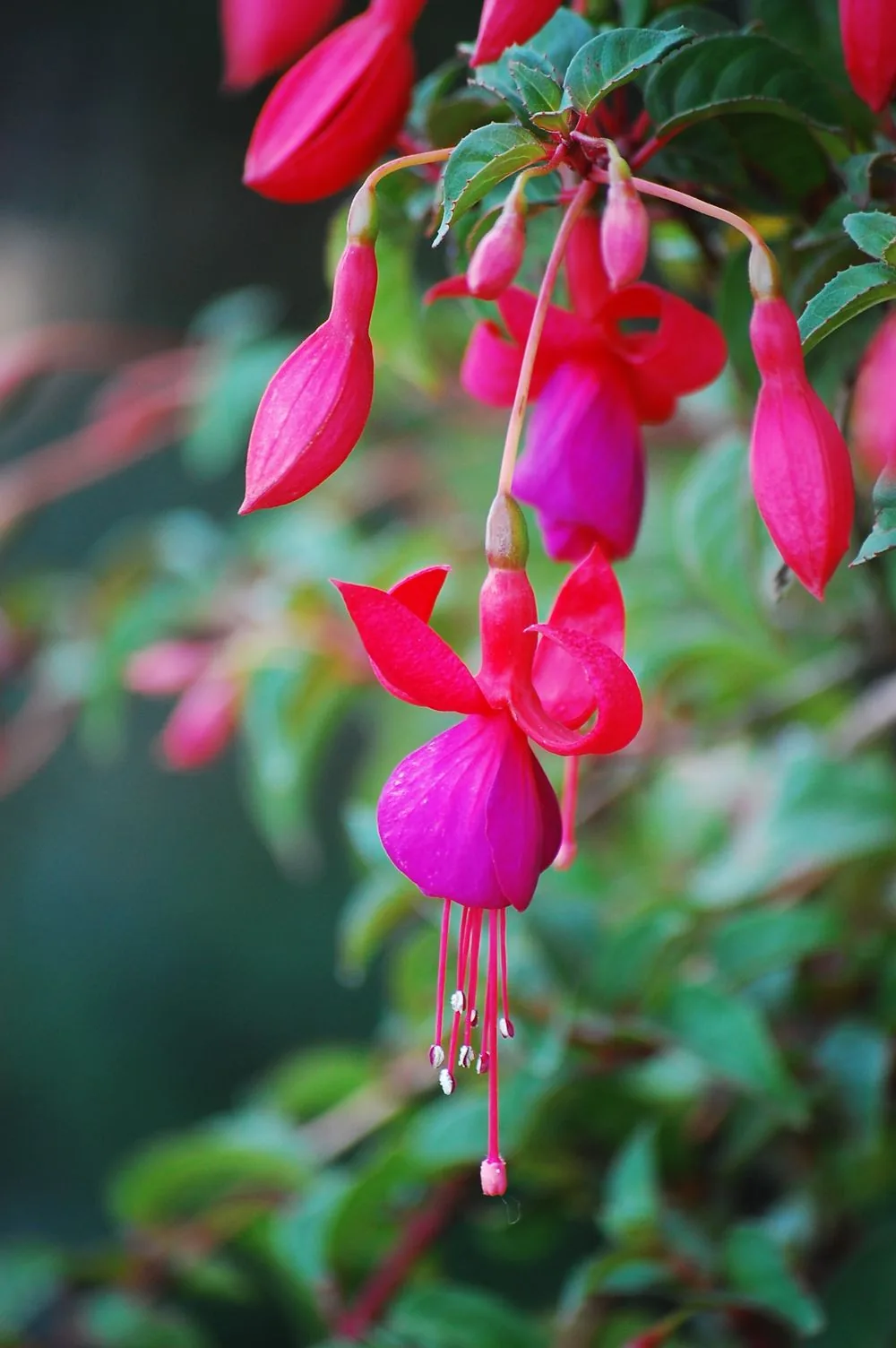
Fuchsia is the South and Central American shrub behind the pendulous, bicolour bell-flowers that fill hanging baskets and patio pots across northern Europe through summer. Garden fuchsias sold today are complex hybrids, Fuchsia × hybrida, in both upright bush forms and trailing types bred specifically for baskets, with flowers typically combining an outer skirt of sepals in one colour and a hanging corolla in another, most often red, pink, purple or white. Most of what is sold as summer bedding is tender and treated as an annual, though a smaller group of genuinely hardy fuchsias can be grown as permanent garden shrubs in milder parts of Europe.
Bright light with some shade from the hottest midday sun, especially in southern Europe; too much direct, hot sun scorches the leaves and dries baskets out fast.
Water
Keep the compost consistently moist; fuchsias, especially in hanging baskets, dry out quickly in summer heat and wilt fast when they do, though they usually recover if watered promptly.
Humidity
Appreciates moderate to high humidity, particularly in hot, dry weather; occasional misting or grouping plants together helps where the air is very dry.
Soil
Rich, moisture-retentive and free-draining. A basket or container needs regular feeding once in full growth, since the compost's nutrients are used up within weeks.
Temperature
Prefers cool summers; flowering slows in heat. Tender types need a frost-free winter.
Size
45-90cm tall and 30-60cm wide.
Growth speed
Medium
?Pet safety not confirmed
As a precaution, keep it out of reach of children and pets.
Signature feature
The flower is built in two distinct parts that are often different colours: an outer whorl of sepals, usually swept sharply upward and backward, and an inner corolla of petals hanging below it like a skirt. This two-tone, almost ballerina-like structure, together with the long protruding stamens on many varieties, is what distinguishes a fuchsia flower from almost anything else grown in a basket.
Care by Season
Spring
Start tender fuchsias into growth gradually after overwintering, increasing water and light, and pinch young growth to encourage bushier plants before moving them outside once frost has passed.
Summer
Main flowering season. Water and feed regularly, especially in baskets and containers, and deadhead spent flowers to keep the display going.
Autumn
Flowering continues until the first frost threatens. Bring tender fuchsias under cover before the first hard frost; hardy types can generally stay outside.
Winter
Tender fuchsias need a cool, frost-free space and minimal water to survive; hardy fuchsia varieties die back to the base in cold winters and resprout from the roots in spring.
Growing & Maintenance
Soil and pot
Rich, moisture-retentive, slightly acidic compost with plenty of organic matter. Baskets and pots need shelter from wind.
Fertilising
Feed regularly once the plant is in full growth and flower, since a basket soon exhausts its compost.
Pruning
Pinch out the shoot tips in spring for a bushier plant and remove faded flowers. Cut the plant back by a third to a half before overwintering it.
Propagation
From stem cuttings. Seed from these hybrids does not give plants like the parent.
Pests & Diseases
Common problems
Buds dropping before they open
Most likely cause: Stress: a sudden change in light, temperature or watering.
What to do: Keep the watering even and leave the plant in one place while it is in bud.
Wilting in hot weather
Most likely cause: The compost has dried out. Baskets dry very quickly.
What to do: Water thoroughly and check baskets every day in summer heat.
Fewer flowers in midsummer
Most likely cause: Heat. Fuchsias flower best in cool summer weather.
What to do: Give shade from the hottest sun and keep the compost moist. Flowering picks up again as it cools.
Scorched leaves
Most likely cause: Hot, direct midday sun.
What to do: Move the plant to bright light with midday shade.
Swollen, distorted, reddish shoot tips
Most likely cause: Fuchsia gall mite.
What to do: Cut off and destroy the affected shoots well below the damage.
Pests & Diseases
Fuchsia gall mite
Signs: Distorted, thickened, reddened growth at the shoot tips and flower buds, which fail to open normally, caused by a microscopic mite.
Treatment: No effective chemical treatment is available to most home gardeners; remove and destroy affected growth promptly to slow its spread. In areas where it is established, resistant varieties are a more reliable long-term answer than ongoing treatment.
Whitefly
Signs: Tiny white insects that fly up in a cloud when the plant is disturbed, with sticky honeydew on the leaves beneath, common on fuchsias kept under glass.
Treatment: Yellow sticky traps catch adults; a soap or horticultural oil spray on leaf undersides controls nymphs. Good ventilation reduces the still, warm conditions whitefly favour.
Aphids
Signs: Clusters of small insects on the shoot tips and under young leaves, with sticky honeydew
Treatment: Rinse them off with a strong jet of water or use an insecticidal soap spray.
FAQ
My fuchsia has dropped most of its flower buds before they opened. What caused this?
Bud drop is almost always a stress response rather than disease: a sudden change in light, temperature or watering, letting the compost dry out and then soaking it, or moving the plant to a very different position, can all trigger it. Keeping watering consistent and avoiding moving the plant around once it is in bud is the most reliable prevention; a plant that drops buds from one stress event usually recovers and flowers normally once conditions settle.
Can I keep a tender fuchsia through winter rather than buying a new one each year?
Yes, if you have a cool, frost-free, reasonably bright space such as a garage with a window or an unheated porch. Cut the plant back by about a third to a half before the first frost, reduce watering drastically so the compost is barely damp over winter, and move it there; it will lose its leaves and look dead but should resume growth when brought back into warmth and light in spring. Hardy fuchsia varieties, by contrast, can often be left in the ground and simply cut back in spring.
Does a fuchsia need sun or shade?
It needs bright light with shade from the hottest midday sun. It tolerates shade better than most summer flowers, which makes it useful for a darker corner.
How often should I water a fuchsia?
Often enough to keep the compost consistently moist. Fuchsias do not withstand drought, and a hanging basket may need water every day in hot weather.
How do I make a fuchsia bushier?
Pinch out the tips of the young shoots in spring. Each pinched shoot branches, which gives a fuller plant with more flowers.
How do I propagate a fuchsia?
Take stem cuttings. Seed is not worth sowing, because these are hybrids and the seedlings do not resemble the parent plant.