No results. Is a plant missing? Tell uscontact@wikiplant.net
Garden Pansy
Viola × wittrockiana
Care level: Easy
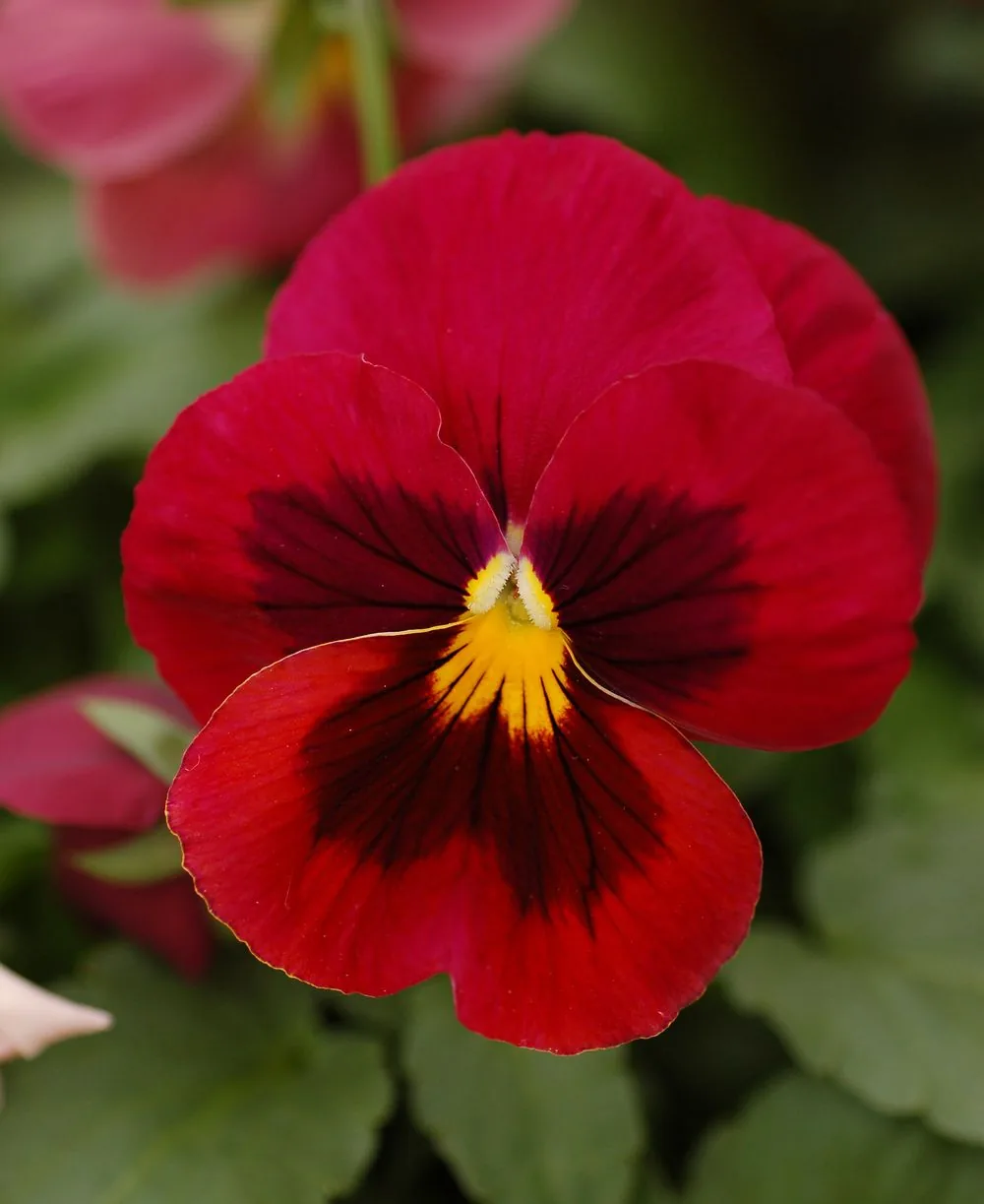
The garden pansy is the complex hybrid viola that fills European bedding displays from autumn through to late spring, prized above almost any other bedding plant for flowering through genuinely cold weather. Each flower is broad and flat-faced, usually with a dark central blotch, in colours ranging from single shades to elaborate bicolours and near-black. It is correctly a short-lived perennial but is grown almost everywhere as a hardy annual or biennial, planted in autumn for winter and spring colour or in spring for a shorter summer display before the heat makes it fade.
Full sun to light shade. Full sun gives the most compact, free-flowering plants; some afternoon shade helps prolong flowering once the weather warms.
Water
Keep the soil or compost evenly moist. Pansies have shallow roots and dry out faster than many bedding plants, especially in containers.
Humidity
Average outdoor humidity is fine; good air movement between plants matters more, since crowded, still conditions favour the grey mould and mildew pansies are prone to.
Soil
Fertile, moisture-retentive and well-drained. Poor, dry soil is the main reason for sparse flowering and premature legginess.
Temperature
A cool-season plant: it tolerates light frost and declines in summer heat.
Size
10-23cm tall and 23-30cm wide.
Growth speed
Medium
?Pet safety not confirmed
As a precaution, keep it out of reach of children and pets.
Signature feature
Unlike most bedding flowers, pansies are chosen specifically for cold tolerance: many varieties keep producing flowers through light frost and simply pause rather than die back in a hard freeze, resuming as soon as it thaws. This makes autumn planting, rather than spring, the more common way to grow them across much of Europe, for colour through the darkest months of the year.
Care by Season
Spring
Flowering picks up through spring from an autumn planting, or new plants go in now for summer colour. Feed lightly every few weeks to keep flowers coming.
Summer
Spring-planted pansies flower until the weather turns hot, then decline; most gardeners replace them with heat-tolerant summer bedding rather than nursing them through.
Autumn
The main planting season across much of Europe, for flowers through winter and into spring. Deadhead regularly to keep new buds forming before growth slows for winter.
Winter
Flowering slows or pauses in the coldest weeks but the plant itself tolerates light frost well and resumes as soon as it warms slightly; remove only growth that has genuinely collapsed.
Growing & Maintenance
Planting
Plant in autumn for flowers through winter and spring, or in spring for early summer colour. Use humus-rich soil that stays moist but drains well.
Pruning
Remove faded flowers regularly. Deadheading prolongs flowering, which can last four to six months.
Pests & Diseases
Common problems
No flowers in deep winter
Most likely cause: A normal pause in the coldest, darkest weeks.
What to do: Leave the plants alone. Flowering resumes as the days lengthen.
Leggy plants with fewer flowers in late spring
Most likely cause: Rising temperatures. Pansies are cool-season plants.
What to do: Trim them lightly, or replace them with summer bedding once they fade.
Wilting
Most likely cause: Shallow roots that dry out fast.
What to do: Water as soon as the surface dries, especially in pots and baskets.
Sparse flowering
Most likely cause: Poor, dry soil.
What to do: Plant in fertile, moisture-retentive soil and deadhead regularly.
Holes in leaves and flowers
Most likely cause: Slugs and snails.
What to do: Check by torchlight after dark and pick them off, or use barriers and traps.
White powdery coating on the leaves
Most likely cause: Powdery mildew, encouraged by crowded, still conditions.
What to do: Space the plants out and remove affected leaves.
Pests & Diseases
Slugs and snails
Signs: Ragged holes in leaves and flowers, often overnight, with a silvery slime trail nearby.
Treatment: Beer traps, torchlight checks after dark, and copper tape around containers all reduce damage. Pansies in raised containers generally suffer less than those in open ground beds.
Powdery mildew
Signs: A white, powdery coating on leaves and stems, usually in warm, humid conditions as the weather turns in late spring.
Treatment: Improve air circulation by spacing plants and removing crowded foliage; remove badly affected leaves. Since mildew usually appears as pansies are naturally declining with the heat, replacement is often simpler than treatment.
Pansy leaf spot
Signs: Dark spots on the leaves, which then yellow and die back
Treatment: Remove affected leaves and water at the base, not over the plants.
FAQ
My autumn-planted pansies stopped flowering completely in deep winter. Are they dead?
Almost certainly not. Pansies slow or stop flowering entirely in the coldest, darkest weeks of winter, which is a normal pause rather than a sign of failure, and they resume as day length and temperature pick up in late winter. Deadheading any tired flowers before the cold sets in, and removing anything that has actually turned to mush after a hard freeze, is usually all that is needed; the crown of the plant is what to check for firmness if in doubt.
Why have my pansies gone leggy and stopped flowering as well by late spring?
This is normal seasonal decline as the weather warms, not a care mistake. Pansies are a cool-season plant and naturally stretch, flower less and often succumb to disease as temperatures rise in late spring; most gardeners simply replace them with summer bedding at that point rather than trying to carry them through a hot summer, which they rarely do well.
Are pansy flowers edible?
Yes, pansy flowers are edible. Do not eat flowers from plants bought at a garden centre, though, as they may have been treated with pesticides.
When should I plant pansies?
In autumn for flowers through winter and spring, or in spring for flowers until the weather turns hot. Autumn planting gives the longest display.
Do pansies come back every year?
Not reliably. They are grown as cool-season bedding and usually succumb to summer heat, so most gardeners replace them.
Do I need to deadhead pansies?
Yes, it is worth doing. Removing the faded flowers stops the plant setting seed and keeps new buds coming.