No results. Is a plant missing? Tell uscontact@wikiplant.net
Gasteria
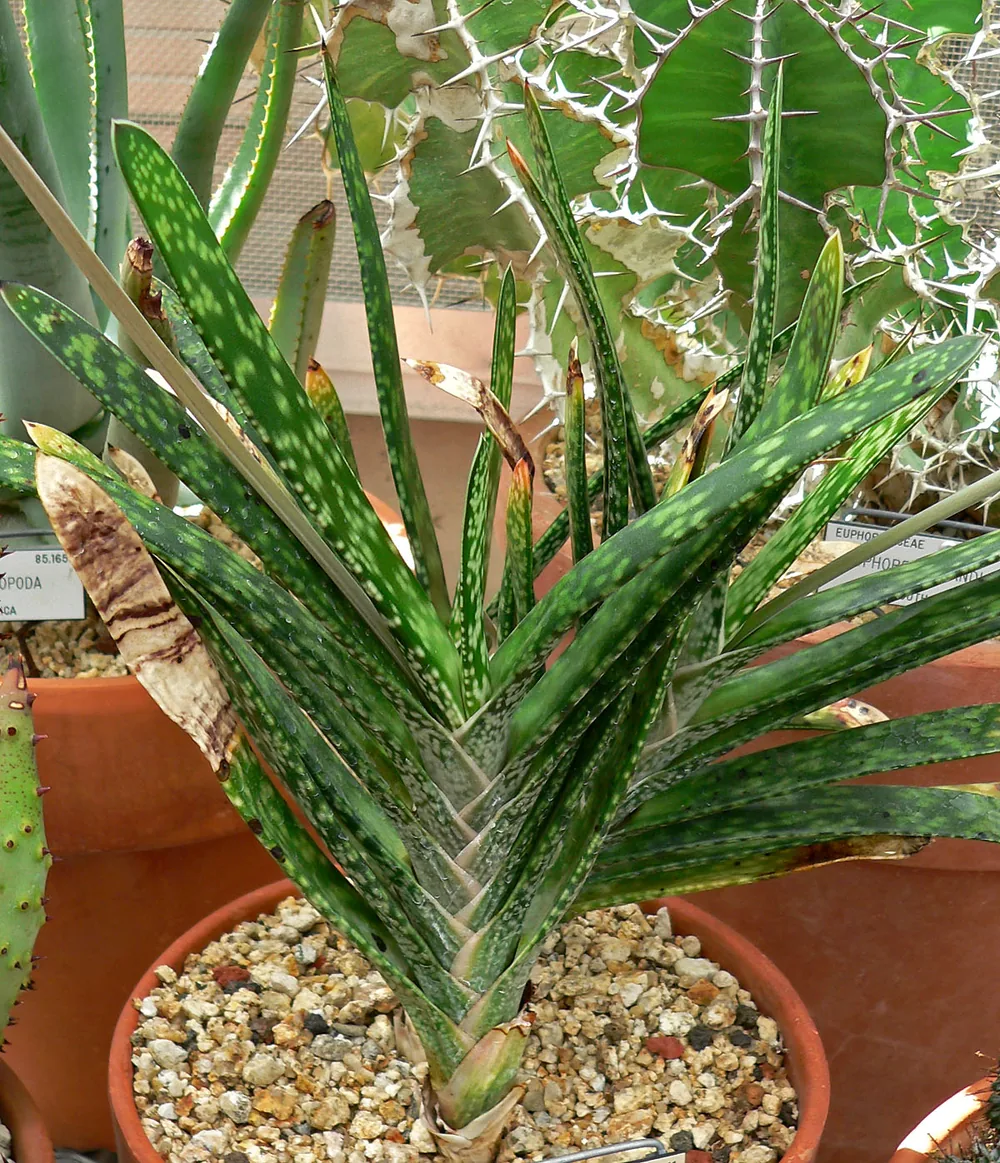
Gasteria bicolor
Care level: Very easy
Gasteria takes its name from the Latin for 'stomach,' a nod to the swollen, pouch-like base of its tubular flowers, and in the wild this South African native often grows tucked beneath shrubs or in rock crevices, which is why it tolerates far less light than most other succulents.
Gasteria bicolor var. liliputanaGasteria carinataGasteria 'Little Warty'
Light
Prefers bright, indirect light or partial shade; tolerates lower light better than most succulents but avoid harsh direct midday sun.
Water
Let soil dry out fully between waterings, about every 2-3 weeks; very tolerant of neglect.
Humidity
Average indoor humidity is fine; good air circulation helps prevent rot.
Soil
Gritty, fast-draining succulent or cactus mix.
Best position
east / south-east-facing windowanywhere up to about 2 m from the window
north / north-east / north-west-facing windowanywhere up to about 1 m from the window
south / west-facing windowabout 1 m from the window or further back
Watch for strong direct sun at south / west windows.
See every window directionHide window directions
Best position
right by the window
about 1 m
about 2 m
about 4 m
4 m or more
north
works well✓
works well✓
too dark○
too dark○
too dark○
north-east
works well✓
works well✓
too dark○
too dark○
too dark○
east
works well✓
works well✓
works well✓
too dark○
too dark○
south-east
works well✓
works well✓
works well✓
too dark○
too dark○
south
just about~
works well✓
works well✓
too dark○
too dark○
south-west
just about~
just about~
works well✓
too dark○
too dark○
west
just about~
works well✓
works well✓
too dark○
too dark○
north-west
works well✓
works well✓
too dark○
too dark○
too dark○
✓works well~just about○too dark☼too much direct sun
A rough guide based on window direction and typical daylight through the year. Window size, curtains and whatever stands outside matter just as much.
?Pet safety not confirmed
As a precaution, keep it out of reach of children and pets.
Propagation tip
A single healthy leaf, removed cleanly at the base and left to callous for a few days before being set on top of dry succulent mix, will readily root and sprout a cluster of tiny new rosettes, one of the easiest succulents to multiply this way.
Care by Season
Spring
Resume light watering as growth picks up after winter dormancy.
Summer
Water when fully dry and keep out of intense direct afternoon sun to prevent scorching.
Autumn
Reduce watering frequency as temperatures cool.
Winter
Water very sparingly and keep in a bright, cool spot away from frost.
Growing & Maintenance
Soil and pot
A gritty, fast-draining succulent or cactus mix in a pot with drainage holes.
Propagation
By separating the offsets that form around the base, or from a single leaf left to dry for a few days and then rested on gritty mix.
Pests & Diseases
Common problems
Red-brown, scorched leaves
Most likely cause: Hot, direct afternoon sun.
What to do: Move it to bright, indirect light or partial shade.
Soft, mushy base
Most likely cause: Root rot from overwatering.
What to do: Unpot it, cut away the rotten roots, let it dry and repot in fresh, gritty mix.
Thin, wrinkled leaves
Most likely cause: A long dry spell.
What to do: Water thoroughly, then let the compost dry out fully again.
Pale, stretched growth
Most likely cause: Too little light, even for this shade-tolerant succulent.
What to do: Move it somewhere brighter, still out of harsh sun.
No growth in winter
Most likely cause: Normal winter rest.
What to do: Water very sparingly and keep it cool, bright and frost-free until spring.
Pests & Diseases
Mealybugs
Signs: White cottony deposits between leaves near the base
Treatment: Remove with an alcohol-soaked swab and repeat treatment weekly. Check the undersides of the leaves and the crevices where the leaf stem meets the main stalk.
Scale insects
Signs: Small brown bumps stuck to leaf surfaces
Treatment: Scrape off gently and wipe leaves with diluted rubbing alcohol.
Root rot
Signs: Soft, translucent leaves and mushy roots from overwatering
Treatment: Unpot, cut away rotten roots, dry out and repot in fresh gritty mix.
FAQ
Why does my Gasteria do fine without direct sun?
In the wild Gasteria typically grows in the dappled shade of shrubs and rock overhangs rather than in open, blazing sun, so it's adapted to lower light than cacti or agaves and can scorch if moved into harsh direct midday sun too quickly.
Can I grow a new Gasteria from just one leaf?
Yes, remove a leaf at its base, let the cut end dry and callous for 2-3 days, then rest it on top of gritty succulent soil; roots and small plantlets typically form at the base within several weeks.
How often should I water a Gasteria?
About every 2-3 weeks, once the compost has dried out fully, and very sparingly in winter. It tolerates neglect far better than wet roots.
How much light does a Gasteria need?
It prefers bright, indirect light or partial shade. It copes with lower light better than most succulents, but hot afternoon sun scorches it.
How should I overwinter a Gasteria?
In a bright, cool spot away from frost. It rests in winter, so water very sparingly until growth picks up in spring.
What soil does a Gasteria need?
A gritty, fast-draining succulent or cactus mix. Good drainage and air around the plant are what keep rot away.