No results. Is a plant missing? Tell uscontact@wikiplant.net
Geranium
Pelargonium × hortorum
Care level: Easy
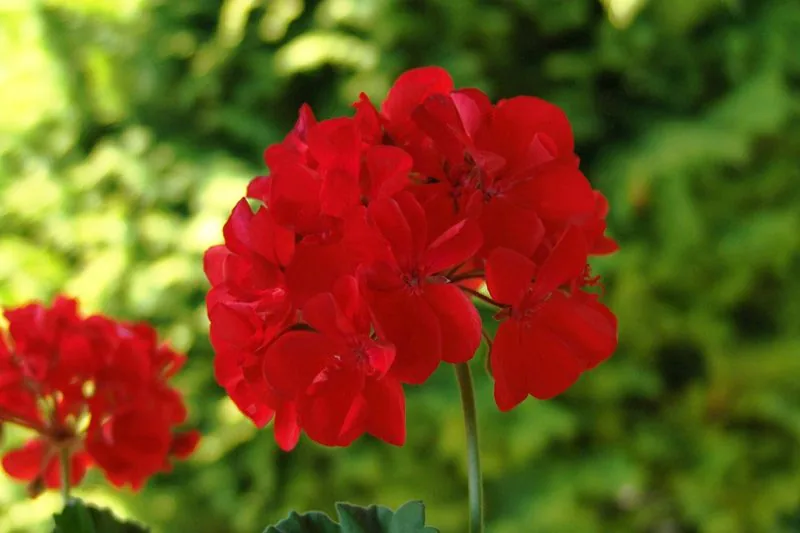
The geranium that fills European window boxes and balconies is not the hardy cottage-garden Geranium at all, but a South African Pelargonium bred for a long, hot summer of flower. It makes a bushy, upright plant to about 40–50cm, with rounded, slightly furry leaves that often carry a faint darker ring, and tight, rounded heads of flower in red, pink, salmon, white or bicolour held well clear of the foliage. It is a tender perennial grown almost everywhere as a summer annual, since it will not survive a European winter outdoors.
Full sun. At least 5–6 hours of direct sun a day for a plant that flowers freely; in shade it grows leggy and flowers poorly.
Water
Let the top 2–3cm of compost dry before watering again, then water well. It tolerates missed waterings far better than it tolerates sitting wet, which rots the stem base quickly.
Humidity
Average room or outdoor humidity is fine. Good air movement around the leaves matters more, since still, humid air is what lets grey mould take hold on crowded plants.
Soil
A free-draining, soil-based compost. Straight multi-purpose compost holds too much water for it on its own; adding a handful of grit or perlite per pot keeps the roots on the dry side they prefer.
Temperature
Not frost-hardy. Overwinter it cool and bright, at around 10-15°C.
Growth speed
Medium
!Toxic to pets
Toxic to cats and dogs if eaten.
Eating it can cause vomiting and an upset stomach.
If your pet has eaten some, contact your vet.
Source: ASPCA
Signature feature
Deadheading is what keeps it flowering. A spent head left on the plant stops the next one forming, so snapping or cutting the whole stalk off close to the leaves, rather than just pinching the dead flowers, is what turns a geranium that flowers in bursts into one that flowers continuously from May to the first frost.
Care by Season
Spring
Plant out or move outdoors only after the last frost. Pinch the growing tips of young plants once to encourage a bushier shape before the first flowers open.
Summer
Peak flowering. Deadhead every few days and feed every 1–2 weeks with a high-potash feed; a plant that is fed too much nitrogen makes lush leaves and few flowers.
Autumn
Flowering slows as light drops. Take cuttings or bring the whole plant under cover before the first frost; it will not survive being left outside.
Winter
Kept indoors, a cool bright spot and minimal water is enough to carry it through; warm, dark conditions make it etiolated and prone to rot.
Growing & Maintenance
Soil and pot
A free-draining, soil-based compost with added grit, in a pot with drainage holes.
Fertilising
A high-potash feed every 1-2 weeks during summer flowering.
Pruning
Pinch the growing tips of young plants once for a bushier shape. Remove each faded flower head with its whole stalk.
Propagation
Stem cuttings taken in July or August root easily on a sunny windowsill and carry the plant through winter.
Pests & Diseases
Common problems
Flowering stops in midsummer
Most likely cause: Faded flower heads left on the plant, or too little sun.
What to do: Remove every spent truss at its base and give the plant at least five to six hours of direct sun.
Leggy growth with few flowers
Most likely cause: Too little light.
What to do: Move it into full sun and pinch back the long shoots.
Yellow lower leaves and a soft stem base
Most likely cause: Overwatering. The plant copes with drought far better than wet compost.
What to do: Let the top 2-3cm dry before watering and make sure the pot drains freely.
Orange-brown pustules under the leaves
Most likely cause: Geranium rust.
What to do: Remove and destroy affected leaves as soon as you see them and give the plant more air.
Shabby, sparse plant in winter
Most likely cause: Normal for an overwintering plant kept cool and almost dry.
What to do: Leave it be. Cut it back and start watering again in spring.
Pests & Diseases
Geranium rust
Signs: Orange-brown powdery pustules on the underside of leaves, with yellow spotting visible from above.
Treatment: Remove and destroy affected leaves as soon as you see them, and avoid wetting the foliage when you water. Space plants so air moves between them, which slows the fungus considerably.
Whitefly
Signs: Tiny white insects that fly up in a cloud when the plant is disturbed, with sticky honeydew on the leaves beneath.
Treatment: Yellow sticky traps catch adults; a soap or horticultural oil spray on the leaf undersides deals with nymphs. Check new plants for whitefly before bringing them near others.
Caterpillars
Signs: Holes in the leaves and flower buds, with dark droppings on the leaves
Treatment: Pick them off by hand, checking in the evening when they feed.
FAQ
Why has my geranium stopped flowering in the middle of summer?
Two common causes, and neither is disease. Spent flower heads left on the plant are the usual one: remove every faded truss at its base and new buds follow within a couple of weeks. The other is a long hot spell with too little water, which stops flower production even though the leaves look fine; a geranium that has dried out hard and been revived often skips a flush before it resumes.
Can I keep the same plant through winter rather than buying new ones each year?
Yes, two ways. Bring the whole pot indoors before the first frost to a cool, bright spot around 10–15°C and water only enough to stop it wilting; it will look shabby but restart in spring. Or take 10cm tip cuttings in late summer, root them in gritty compost on a windowsill, and overwinter the small plants instead of the parent, which takes up far less space.
Are geraniums toxic to cats and dogs?
Yes, geraniums (Pelargonium) are toxic to cats and dogs. Eating the plant upsets the stomach. Keep pots out of reach of pets that chew.
How often should I water a geranium?
When the top 2-3cm of compost is dry, then water well. Once established it is drought-tolerant, and it suffers far more from wet compost than from a missed watering.
How do I take geranium cuttings?
Cut healthy, non-flowering shoots in July or August and root them in free-draining compost on a sunny windowsill. They give you young plants for the following year.
Why is my geranium leggy?
Because it is not getting enough light. In shade the stems stretch and flowering drops. Move it into full sun and pinch back the long shoots.