No results. Is a plant missing? Tell uscontact@wikiplant.net
Ghost plant
Graptopetalum paraguayense
Care level: Very easy
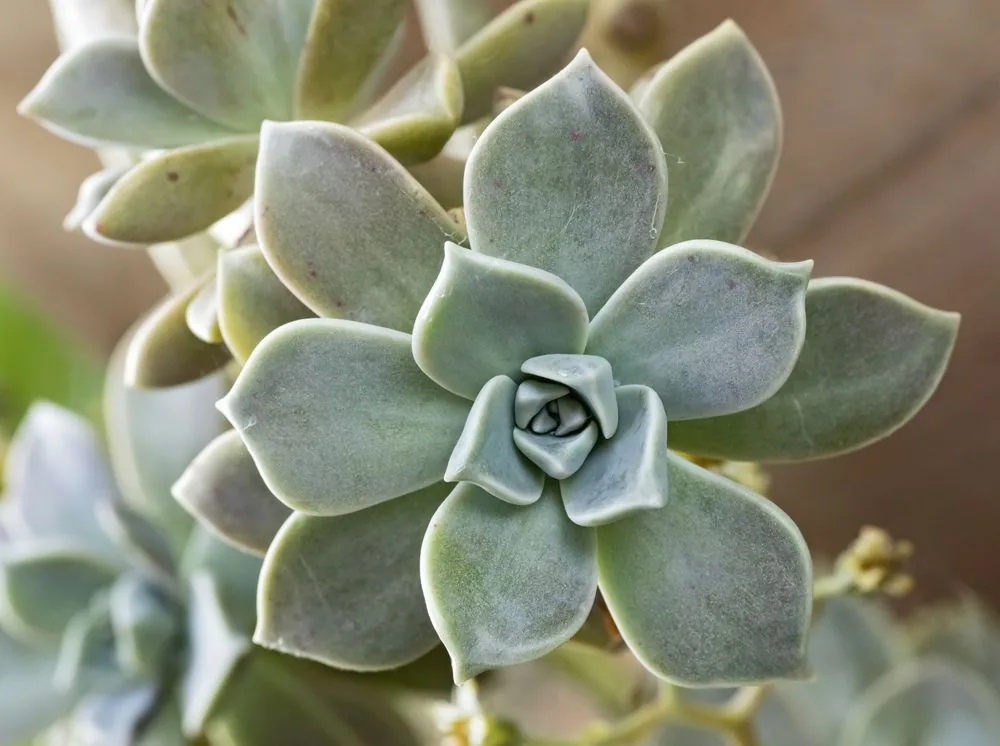
The ghost plant is a succulent from Mexico with loose rosettes of thick, pointed leaves in an unusual pearly grey, dusted with a pale, waxy bloom. The colour shifts with the conditions: pink-tinged in hot sun and drought, bluer in light shade. The stems lengthen and trail with age, carrying the rosettes at their tips, which makes it a good plant for a hanging pot or the edge of a shelf. In spring it bears small, star-shaped white flowers flecked with red. It is one of the easiest succulents to keep and to multiply.
As a precaution, keep it out of reach of children and pets.
Propagation tip
Every fallen leaf is a new plant. Leaves snap off at a touch, and a leaf left lying on dry compost grows roots and a tiny rosette at its base within a few weeks, with no help at all.
Care by Season
Spring
Growth resumes and flowers open. Water more, repot if needed and take cuttings.
Summer
Water when dry and feed monthly. It can stand outdoors in sun, sheltered from heavy rain.
Autumn
Reduce watering. Bring the pot in before the first frost.
Winter
Keep it bright, cool and barely moist.
Growing & Maintenance
Repotting
Repot every two or three years in spring, handling the plant by the pot or the root ball so that the leaves do not drop.
Fertilising
Feed monthly in spring and summer with a dilute, low-nitrogen fertiliser. Do not feed in autumn or winter.
Pruning
No pruning is needed. Cut back leggy stems in spring and root the tops.
Propagation
By leaf cuttings, stem cuttings or division, at any time in the growing season. Seed is possible but slow.
Pests & Diseases
Common problems
Long gaps between pale leaves
Most likely cause: Too little light.
What to do: Move it to a sunnier spot and re-root the tops.
Soft, translucent, yellowing leaves
Most likely cause: Overwatering.
What to do: Let the compost dry out fully and water less, above all in winter.
Wrinkled, limp leaves
Most likely cause: Thirst.
What to do: Water thoroughly; they plump up within days.
Leaves drop at a touch
Most likely cause: The plant's natural way of spreading.
What to do: Handle it gently and root the leaves.
Brown, dry patches
Most likely cause: Sunburn after a sudden move into strong sun.
What to do: Get it used to direct sun over a week or two.
Pests & Diseases
Mealybugs
Signs: White, woolly tufts between the leaves and in the heart of the rosettes.
Treatment: Dab them off with a cotton bud dipped in alcohol and repeat weekly. Check the undersides of the leaves and the crevices where the leaf stem meets the main stalk.
Aphids
Signs: Clusters of small insects on the flower stems in spring.
Treatment: Rinse them off or cut the flower stem away.
Vine weevil
Signs: Plants that wilt or come loose; cream, C-shaped grubs among the roots.
Treatment: Shake off the compost, remove the grubs and re-root the rosettes in fresh, gritty compost.
FAQ
How do I propagate a ghost plant?
Twist off a healthy leaf, leave it on top of dry, gritty compost in bright light and wait. Roots and a miniature rosette appear at the broken end in a few weeks; start watering lightly once they do. Stem tips also root readily after drying for a few days.
Why do the leaves fall off so easily?
It is how the plant spreads in nature. Handle it as little as possible, especially when repotting, and use the fallen leaves for new plants.
Why are the stems long and bare?
Old stems naturally lose their lower leaves and trail. Stems that stretch with wide gaps between pale leaves are short of light. Cut the rosettes off with a few centimetres of stem, let them dry and replant them; the bare stumps shoot again.
How often should I water it?
Freely in spring and summer, letting the compost dry between waterings, and keep it barely moist in autumn and winter. Wrinkled leaves mean thirst; soft, translucent leaves mean too much water.
Why is my plant turning pink?
Strong sun, cool nights or drought bring out pink and apricot tones. It is a sign of a well-lit plant, not a problem.
Should I wipe the leaves?
No. The powdery coating is a natural wax that protects the leaf and does not grow back where it is rubbed off. Fingerprints stay.