No results. Is a plant missing? Tell uscontact@wikiplant.net
Giant Taro
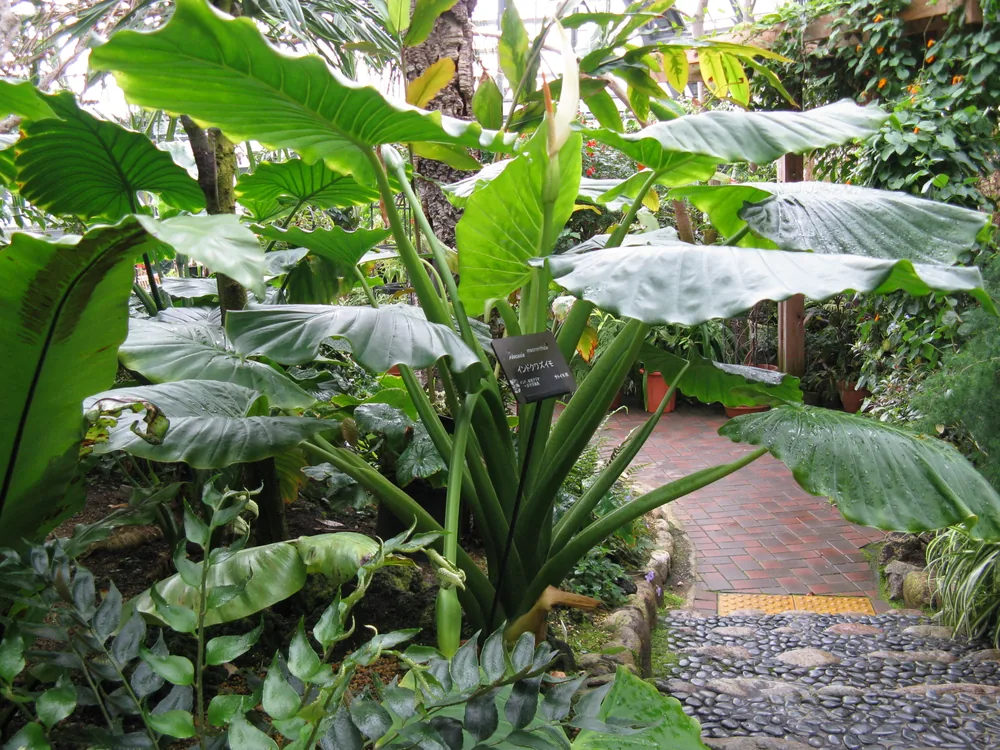
Alocasia macrorrhizos
Care level: Moderate
Alocasia macrorrhizos is one of the largest-leaved plants commonly grown indoors, capable of producing glossy leaves over a meter long in the right conditions, and in parts of the Pacific its starchy corm has been eaten as a staple food for centuries, but only after extensive cooking to neutralize compounds that are otherwise unsafe.
Bright, indirect light is best; some morning direct sun is tolerated outdoors, but harsh sun scorches leaves indoors.
Water
Keep soil consistently moist, watering when the top few centimeters dry out, typically weekly.
Humidity
Needs high humidity to support its huge leaves; dry air causes browning edges.
Soil
Rich, well-draining potting mix with added organic matter.
Best position
north / north-east-facing windowanywhere up to about 1 m from the window
east-facing windowabout 1 m from the window or further back
west-facing windowabout 2 m from the window or further back
Watch for strong direct sun at east / west windows.
See every window directionHide window directions
Best position
right by the window
about 1 m
about 2 m
about 4 m
4 m or more
north
works well✓
works well✓
too dark○
too dark○
too dark○
north-east
works well✓
works well✓
too dark○
too dark○
too dark○
east
just about~
works well✓
works well✓
too dark○
too dark○
south-east
too much direct sun☼
just about~
just about~
too dark○
too dark○
south
too much direct sun☼
too much direct sun☼
too much direct sun☼
too dark○
too dark○
south-west
too much direct sun☼
too much direct sun☼
just about~
too dark○
too dark○
west
too much direct sun☼
too much direct sun☼
works well✓
too dark○
too dark○
north-west
too much direct sun☼
just about~
too dark○
too dark○
too dark○
✓works well~just about○too dark☼too much direct sun
A rough guide based on window direction and typical daylight through the year. Window size, curtains and whatever stands outside matter just as much.
!Toxic to pets
Toxic to cats and dogs if eaten.
Chewing it can irritate the mouth, causing drooling and trouble swallowing.
If your pet has eaten some, contact your vet.
Source: ASPCA
Safety note
Every part of Giant Taro contains needle-like calcium oxalate crystals that cause immediate, intense irritation and burning to the mouth, tongue, and throat if chewed or eaten raw, and can also irritate skin on contact with sap, keep it away from pets and children, and wash hands after handling cut leaves or stems.
Care by Season
Spring
Resume regular watering and feeding as large new leaves begin to unfurl.
Summer
Water frequently and maintain high humidity for peak growth.
Autumn
Reduce feeding and slightly ease off watering as growth slows.
Winter
Water sparingly, keep warm and away from cold drafts; some dieback is normal in dormancy.
Growing & Maintenance
Soil and pot
A rich, well-draining potting mix with added organic matter, in a large, heavy pot.
Fertilising
Feed regularly in spring and summer, while the large new leaves unfurl. Reduce in autumn.
Pruning
Cut old, yellowing leaves off at the base of the stalk. Wear gloves: the sap irritates skin.
Propagation
By separating the offsets that form at the base when you repot.
Pests & Diseases
Common problems
Brown leaf edges
Most likely cause: Dry air.
What to do: Raise the humidity. The huge leaves lose a lot of water.
Scorched patches
Most likely cause: Harsh direct sun.
What to do: Give it bright, indirect light. Outdoors, morning sun is as much as it takes.
Leaves dying back in winter
Most likely cause: Normal dormancy.
What to do: Water sparingly and keep it warm. Growth returns in spring.
Yellow leaves and a soft base
Most likely cause: Overwatering, which leads to root rot.
What to do: Take it out of the wet compost, trim the rotten roots and rhizome and repot in fresh mix.
Drooping leaves
Most likely cause: Dry compost, or a cold draught.
What to do: Water when the top few centimetres are dry and keep it away from cold air.
Pests & Diseases
Spider mites
Signs: Fine webbing and stippled yellowing on leaves in dry air
Treatment: Increase humidity, rinse leaves, and apply insecticidal soap if needed. Check the undersides of the leaves and the crevices where the leaf stem meets the main stalk.
Mealybugs
Signs: White cottony clusters at leaf joints and stem bases
Treatment: Dab with rubbing-alcohol soaked cotton swab, repeating weekly. Check the undersides of the leaves and the crevices where the leaf stem meets the main stalk.
Root rot
Signs: Yellowing leaves and a mushy, foul-smelling stem base
Treatment: Remove from wet soil, trim rotten roots and rhizome, and repot in fresh, well-draining mix.
FAQ
Is Giant Taro poisonous to cats and dogs?
Yes, like other Alocasia species, its leaves and stems contain calcium oxalate crystals that cause painful irritation to the mouth and throat, drooling, and swelling if chewed by a pet, so it should be kept well out of reach.
I've heard taro is eaten as food, is that the same plant?
It's a close relative used similarly, but the corms of edible taro varieties must be thoroughly cooked to break down the calcium oxalate crystals before they're safe to eat; the houseplant form should never be treated as food, raw or cooked.
How often should I water a Giant Taro?
Typically once a week, when the top few centimetres of compost have dried. Keep it consistently moist in the growing season and water sparingly in winter.
How much light does a Giant Taro need?
It needs bright, indirect light. Some morning sun is tolerated outdoors, but harsh sun scorches the leaves.
How do I propagate a Giant Taro?
By division. Separate the offsets at the base when you repot and pot them up on their own. Wear gloves, as the sap is an irritant.
What happens to a Giant Taro in winter?
It slows down and may lose some leaves. That dieback is normal; keep the plant warm, water sparingly and it regrows in spring.