No results. Is a plant missing? Tell uscontact@wikiplant.net
Gloxinia
Sinningia speciosa
Care level: Moderate
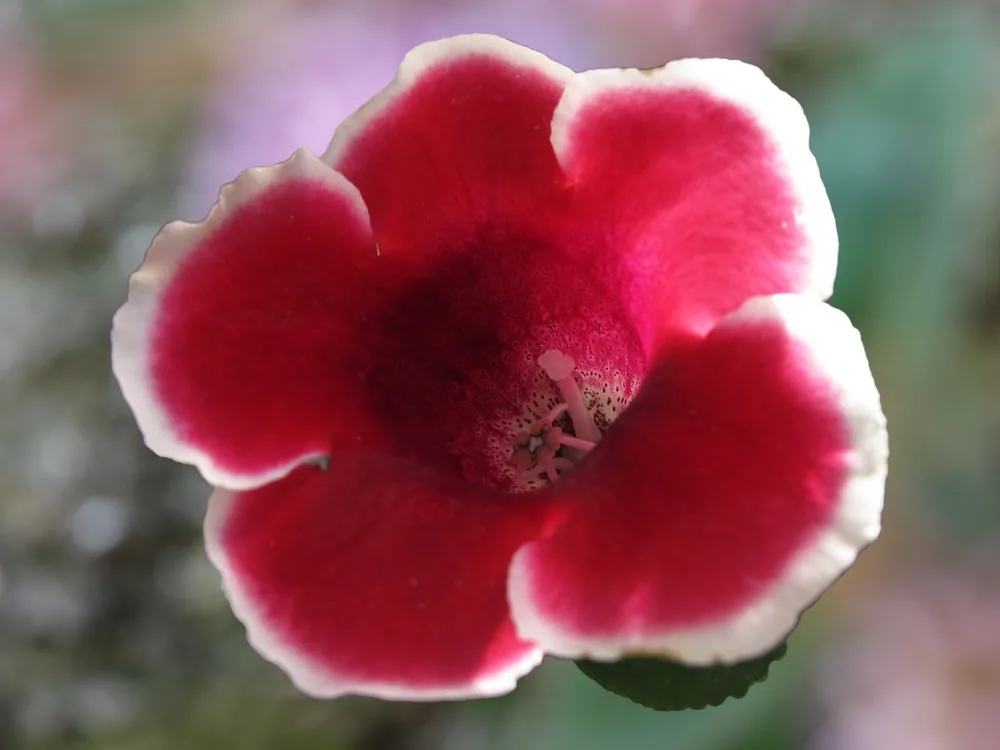
The gloxinia is a tuberous houseplant from Brazil and a relative of the African violet. From a flat, round tuber it makes a low rosette of large, oval, velvety leaves and, in spring and summer, a cluster of big, upright, bell-shaped flowers with a plush texture, in purple, red, pink or white, often edged in white or speckled in the throat. A well-grown plant carries a dozen or more flowers at once for several weeks. After flowering it dies back to the tuber and rests, and with the right care it returns the following year.
Water from below with lukewarm water when the surface begins to dry. Keep water off the leaves and out of the crown. Reduce watering after flowering and keep the resting tuber almost dry.
Humidity
Fairly high humidity. Stand the pot on a tray of damp pebbles; do not mist the hairy leaves.
Soil
Open, free-draining, peat-free houseplant compost with added perlite.
Temperature
Warm rooms while in growth, about 18-24°C, away from draughts. The resting tuber is kept cooler, at about 10-15°C.
Size
15-30cm tall and 15-30cm wide.
Growth speed
Medium
?Pet safety not confirmed
As a precaution, keep it out of reach of children and pets.
Did you know?
A gloxinia that collapses after flowering is not dead. The leaves yellow and wither because the plant is going dormant. Stop feeding, water less and less until the leaves have died, then keep the tuber almost dry in its pot in a cool place for two to four months before starting it again.
Care by Season
Spring
Start the tuber into growth, water sparingly at first and begin feeding once leaves have formed.
Summer
Flowers. Water from below, feed and remove faded flowers.
Autumn
The leaves yellow and die back. Reduce watering and stop feeding.
Winter
The tuber rests almost dry in a cool, frost-free place. Repot it in late winter.
Growing & Maintenance
Repotting
Repot the resting tuber into fresh compost in late winter, hollow side up, with the top of the tuber level with the surface, in a pot only a little wider than the tuber.
Fertilising
Feed every two weeks from the time buds form until flowering ends, with a liquid fertiliser high in potash.
Pruning
Remove faded flowers and their stalks at the base, and yellow leaves once they pull away easily.
Propagation
By leaf cuttings in summer, or by seed sown on the surface of the compost in warmth.
Pests & Diseases
Common problems
Leaves yellow and wither after flowering
Most likely cause: Natural dormancy.
What to do: Let the plant die back and rest the tuber.
Buds brown and drop
Most likely cause: Dry air, draughts or a move.
What to do: Keep it in one place with higher humidity.
Brown marks on the leaves
Most likely cause: Water on the foliage or direct sun.
What to do: Water from below and shade from midday sun.
Long leaf stalks and few flowers
Most likely cause: Too little light.
What to do: Move to brighter, indirect light.
Soft, rotting centre
Most likely cause: Water in the crown or waterlogged compost.
What to do: Water from below and let the surface dry between waterings.
The tuber does not reshoot
Most likely cause: It was kept too wet or too cold during its rest, or started too early.
What to do: Keep resting tubers almost dry and frost free, and start them in warmth.
Pests & Diseases
Grey mould
Signs: Fluffy grey mould on flowers, buds and leaf stalks, and a soft, rotting crown, in cool, damp, still air.
Treatment: Remove affected parts, water from below, keep water out of the crown and give more warmth and air.
Thrips
Signs: Silvery streaks on the leaves and pale flecks and distortion on the flowers.
Treatment: Remove damaged flowers, isolate the plant and use blue sticky traps.
Red spider mite
Signs: Leaves turn dull, speckled and brittle in hot, dry air, sometimes with fine webbing underneath.
Treatment: Raise the humidity around the plant and move it away from heat sources. Check the undersides of the leaves and the crevices where the leaf stem meets the main stalk.
FAQ
How do I water a gloxinia?
From below. Stand the pot in a saucer of lukewarm water for about twenty minutes, then pour away what is left. Water on the hairy leaves leaves brown marks, and water in the centre of the rosette rots the buds and the tuber. Let the surface of the compost dry slightly between waterings.
How do I start the tuber again after its rest?
In late winter or early spring, repot the tuber in fresh compost with its hollow side up and its top level with the surface. Put it in a warm, bright place and water very sparingly until shoots appear, then water normally.
Why do the buds turn brown and fail to open?
Dry air, dry compost, a cold draught or a move to a different spot while in bud. Keep the plant in one place, away from radiators and open windows, and raise the humidity around it without wetting the leaves.
How much light does it need?
Bright, indirect light, for example near an east- or west-facing window. Direct midday sun scorches the leaves; in too little light the leaf stalks stretch and few buds form.
Why are there brown spots on the leaves?
Usually cold water splashed on the leaves, or sun shining on wet foliage. Water from below with lukewarm water and remove damaged leaves.
How long does a gloxinia live?
The tuber can live and flower for several years if it gets its rest each year. Plants forced into bloom for sale are sometimes weaker in their second season.
How do I propagate it?
Take a healthy leaf with its stalk in summer and push the stalk into moist compost in a warm, humid, bright place. A small tuber forms at the base and makes a new plant. It can also be grown from its very fine seed.