No results. Is a plant missing? Tell uscontact@wikiplant.net
Grape Ivy
Cissus rhombifolia
Care level: Easy
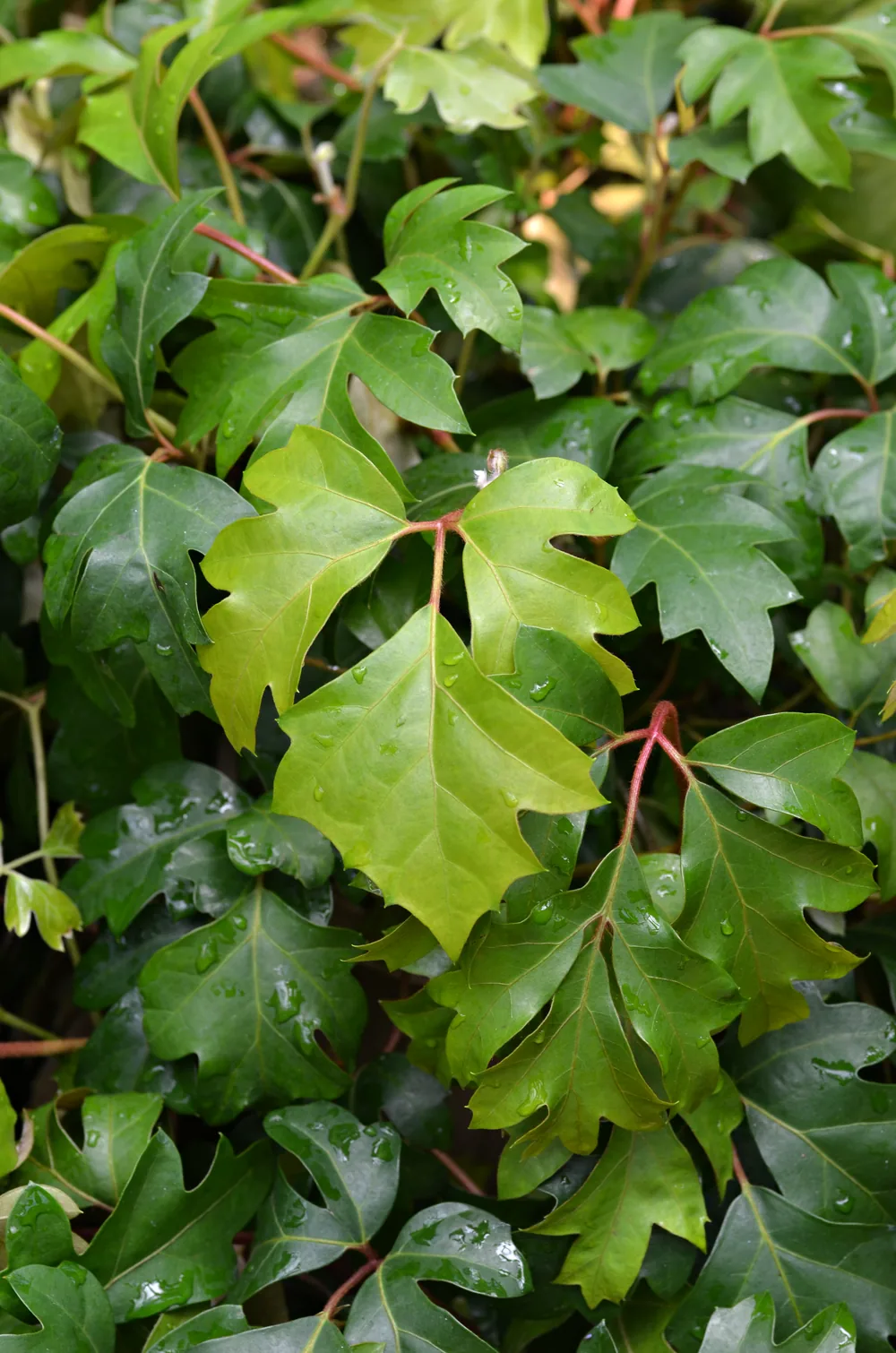
Grape ivy belongs to the same botanical family as the edible grapevine, and its glossy, three-part leaflets and coiling tendrils show the family resemblance, even though the small berries it occasionally produces indoors are not edible. It was a fixture of 1970s office buildings and hanging baskets thanks to its tolerance for the low light and dry air of interior spaces long before 'low maintenance houseplant' was a marketing term.
Medium to bright indirect light; tolerates lower light but grows fuller with more brightness.
Water
Water when the top 2-3cm of soil dries out, roughly every 7-10 days.
Humidity
Adapts well to average home humidity, no misting required.
Soil
Standard well-draining potting mix with some added perlite.
Temperature
Average to cool rooms. Do not let it drop below 10°C.
Size
Stems 1.2-3m long, spreading 0.9-1.8m.
Growth speed
Fast
Best position
east / south-east-facing windowanywhere up to about 2 m from the window
north / north-east / north-west-facing windowanywhere up to about 1 m from the window
south / west-facing windowabout 1 m from the window or further back
Watch for strong direct sun at south / west windows.
See every window directionHide window directions
Best position
right by the window
about 1 m
about 2 m
about 4 m
4 m or more
north
works well✓
works well✓
too dark○
too dark○
too dark○
north-east
works well✓
works well✓
too dark○
too dark○
too dark○
east
works well✓
works well✓
works well✓
too dark○
too dark○
south-east
works well✓
works well✓
works well✓
too dark○
too dark○
south
just about~
works well✓
works well✓
too dark○
too dark○
south-west
just about~
just about~
works well✓
too dark○
too dark○
west
just about~
works well✓
works well✓
too dark○
too dark○
north-west
works well✓
works well✓
too dark○
too dark○
too dark○
✓works well~just about○too dark☼too much direct sun
A rough guide based on window direction and typical daylight through the year. Window size, curtains and whatever stands outside matter just as much.
✓Non-toxic to pets
Considered non-toxic to cats and dogs.
Source: ASPCA
Propagation tip
Stem cuttings with a couple of leaf nodes root readily in water or moist soil within a few weeks, making grape ivy one of the easiest vining plants to multiply into new hanging baskets.
Care by Season
Spring
Resume regular watering and monthly feeding as vigorous new vine growth appears.
Summer
Water consistently and provide a trellis or support for actively climbing tendrils.
Autumn
Cut back on feeding and watering slightly as growth slows down.
Winter
Let soil dry more between waterings and keep away from cold drafts near windows.
Growing & Maintenance
Soil and pot
A well-drained, peaty potting mix with some added perlite, in a pot with drainage holes.
Fertilising
Feed regularly through the growing season. Cut back in autumn.
Pruning
Trim it at any time to shape it and keep it bushy.
Support
Give it a small trellis or moss pole for its tendrils, or let it trail from a hanging basket.
Propagation
From stem cuttings with a couple of leaf nodes, rooted in water or moist compost.
Pests & Diseases
Common problems
Brown, dry leaf edges
Most likely cause: Low humidity or underwatering.
What to do: Water when the top 2-3cm has dried and keep it away from heaters.
Leaves falling
Most likely cause: Compost that is too wet, or too dry.
What to do: Keep the moisture steady: let the top dry between waterings but never the whole pot.
Long, bare vines
Most likely cause: Too little light.
What to do: Move it to medium or bright indirect light and trim the vines.
Limp, damaged leaves after a cold night
Most likely cause: Temperatures below 10°C or a cold draught.
What to do: Move it away from cold windows.
Spots on the leaves
Most likely cause: A leaf spot disease, encouraged by wet foliage.
What to do: Remove the affected leaves and water the compost, not the leaves.
Pests & Diseases
Spider mites
Signs: Fine webbing and dry speckled patches on leaves in low humidity.
Treatment: Rinse foliage, raise humidity, and apply insecticidal soap if mites persist. Check the undersides of the leaves and the crevices where the leaf stem meets the main stalk.
Mealybugs
Signs: White cottony tufts along stems and leaf joints.
Treatment: Wipe off with alcohol-dipped cotton swabs and repeat weekly. Check the undersides of the leaves and the crevices where the leaf stem meets the main stalk.
Powdery mildew
Signs: White powdery coating on leaves in stagnant, humid air.
Treatment: Increase air circulation, avoid overhead watering, and remove badly affected leaves.
FAQ
Why are the leaves on my grape ivy turning brown and dry at the edges?
This is usually a sign of low humidity or underwatering rather than a pest problem; the plant tolerates average home humidity but crisps at the edges if it dries out too often between waterings.
Does grape ivy need a trellis or pole to climb?
It's not required since it also trails nicely from a hanging basket, but giving it a small trellis or moss pole lets the tendrils grip and produces a fuller, more upright plant.
Is grape ivy safe for cats and dogs?
Yes, grape ivy is not toxic to cats or dogs.
How often should I water grape ivy?
Roughly every 7-10 days, when the top 2-3cm of compost has dried. Keep it consistently moist from spring to autumn and water less in winter.
What temperature does grape ivy need?
Average to cool room temperatures suit it. Do not let it drop below 10°C, and keep it away from cold draughts near windows.
How do I propagate grape ivy?
From stem cuttings with a couple of leaf nodes. They root in water or moist compost within a few weeks.