No results. Is a plant missing? Tell uscontact@wikiplant.net
Hardy Banana
Musa basjoo
Care level: Moderate
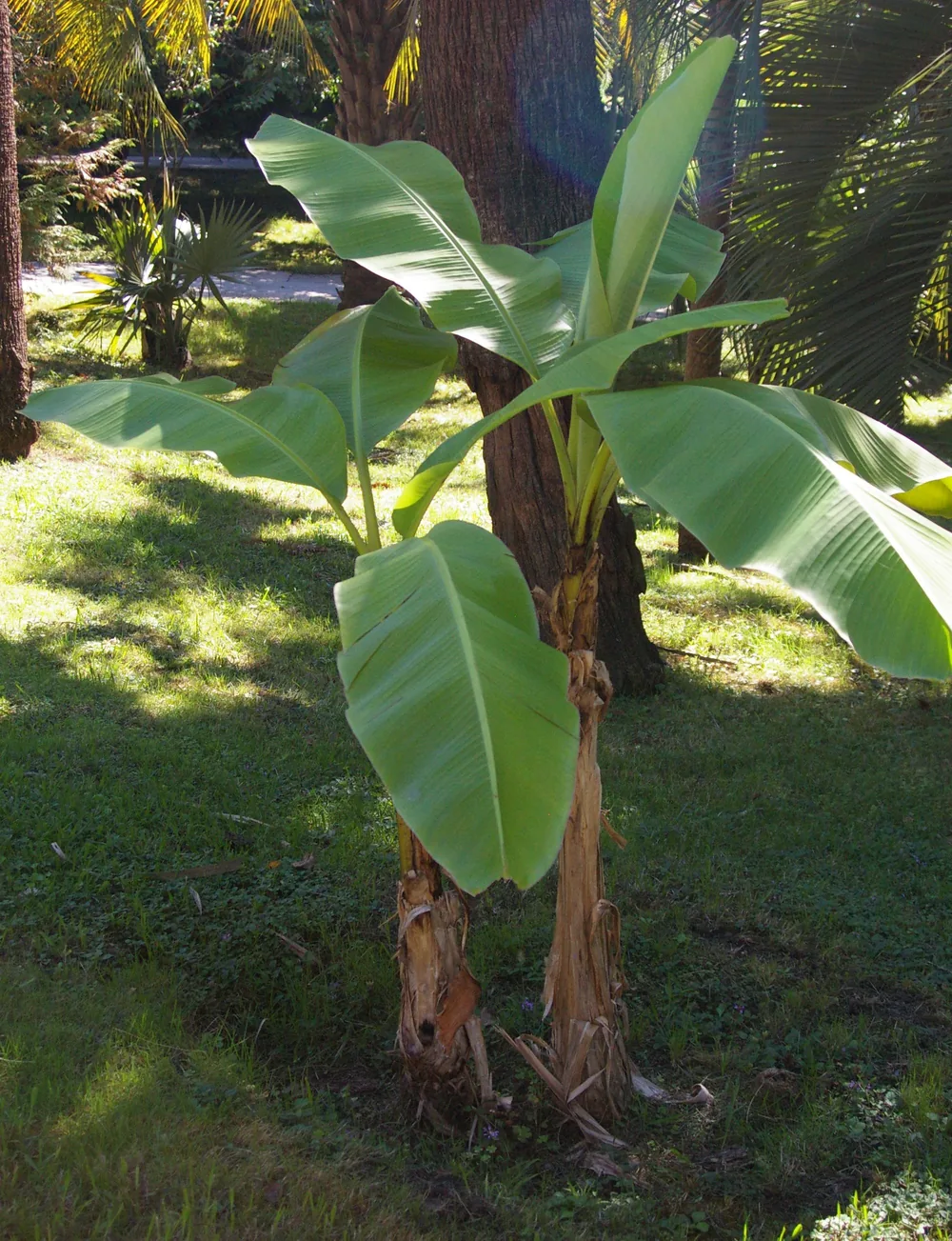
Musa basjoo is famous for something almost no other banana can claim: it survives outdoor winters well below freezing, dying back to the ground but resprouting from its hardy underground rhizome each spring, which is how gardeners as far north as the UK and USDA zone 5-6 grow genuine banana foliage outdoors year after year.
Needs full sun to part sun for best growth; too little light results in weak, pale leaves.
Water
Likes consistently moist soil; water generously, especially in summer, whenever the top layer starts to dry.
Humidity
Prefers moderate to high humidity, especially in active growth.
Soil
Rich, moisture-retentive soil with good drainage and added organic matter.
Temperature
The top dies back in frost. The rhizome survives to about -23°C when it is cut back and mulched.
Size
1.8-4.3m tall and wide.
Growth speed
Fast
Best position
south-east / south / south-west-facing windowanywhere up to about 1 m from the window
east / west-facing windowright by the window
See every window directionHide window directions
Best position
right by the window
about 1 m
about 2 m
about 4 m
4 m or more
north
too dark○
too dark○
too dark○
too dark○
too dark○
north-east
too dark○
too dark○
too dark○
too dark○
too dark○
east
works well✓
too dark○
too dark○
too dark○
too dark○
south-east
works well✓
works well✓
too dark○
too dark○
too dark○
south
works well✓
works well✓
too dark○
too dark○
too dark○
south-west
works well✓
works well✓
too dark○
too dark○
too dark○
west
works well✓
too dark○
too dark○
too dark○
too dark○
north-west
too dark○
too dark○
too dark○
too dark○
too dark○
✓works well~just about○too dark☼too much direct sun
A rough guide based on window direction and typical daylight through the year. Window size, curtains and whatever stands outside matter just as much.
?Pet safety not confirmed
As a precaution, keep it out of reach of children and pets.
Did you know?
The thick, trunk-like 'stem' of a banana plant isn't real wood at all, it's a pseudostem made of tightly rolled leaf sheaths, which is exactly why Hardy Banana can be cut back to the ground each winter and simply regrow a fresh pseudostem from its rhizome in spring.
Care by Season
Spring
Resume heavy watering and feeding as vigorous new leaves emerge.
Summer
Water frequently and feed regularly to support rapid growth in full sun.
Autumn
Reduce watering and feeding as growth slows with cooler weather.
Winter
Cut back the pseudostem and mulch heavily to protect the rhizome from frost outdoors, or keep dormant and cool if grown as a container plant.
Growing & Maintenance
Planting
Plant in full sun or part sun, in moist, humus-rich soil that drains, in a spot sheltered from wind. It must never dry out.
Repotting
Plants in containers need repotting every other year.
Fertilising
Feed regularly through the growing season to support its rapid growth.
Pruning
After the first hard frost, cut the pseudostem back and cover the base with a thick mulch.
Propagation
By division, about every five years, or from the shoots the roots send up.
Pests & Diseases
Common problems
Weak, pale leaves
Most likely cause: Too little light.
What to do: Move it into full sun or at least part sun.
Torn, shredded leaves
Most likely cause: Wind. Banana leaves tear easily.
What to do: Plant it in a sheltered spot. The tearing does not harm the plant.
Top growth blackened by frost
Most likely cause: Normal. The plant dies back to the ground in a cold winter.
What to do: Cut it back and mulch heavily. New shoots come up from the rhizome in spring.
Yellowing, wilting leaves in summer
Most likely cause: Dry soil.
What to do: Water generously whenever the top layer starts to dry.
No bananas
Most likely cause: Normal in a cool climate. Fruit needs a long, warm season, and is inedible anyway.
What to do: Grow it for its leaves.
A stem dies after flowering
Most likely cause: Normal. Each pseudostem flowers once and then dies.
What to do: Cut it out. The roots send up replacements.
Pests & Diseases
Banana aphids
Signs: Clusters of small insects on new leaves and sticky honeydew residue
Treatment: Rinse with water and apply insecticidal soap to affected areas.
Spider mites
Signs: Fine webbing and stippled discoloration in hot, dry conditions
Treatment: Increase humidity and rinse leaves; use insecticidal soap if severe. Check the undersides of the leaves and the crevices where the leaf stem meets the main stalk.
Root rot
Signs: Yellowing leaves and soft, blackened rhizome from poor drainage
Treatment: Improve soil drainage, remove rotten tissue, and reduce watering.
FAQ
Will my Hardy Banana actually produce edible bananas?
Rarely in cool climates, Musa basjoo needs a long, warm growing season to flower and fruit, and even when it does, the fruit is seedy and not palatable; it's grown almost entirely for its dramatic tropical foliage rather than for food.
Do I need to protect my Hardy Banana over winter?
In cold climates, cut the pseudostem down to about 30cm after the first hard frost and pile on a thick layer of mulch or straw over the rhizome, this insulates the underground growing point so new shoots emerge again once spring warms the soil.
How hardy is a Hardy Banana?
The leaves and stem are killed by frost, but the rhizome survives to about -23°C if the plant is cut back and well mulched. It regrows from the ground in spring.
How big does a Hardy Banana get?
Between 1.8 and 4.3m tall and wide in a season, given sun, water and feed. It is one of the fastest-growing plants for a garden.
How often should I water a Hardy Banana?
Generously, whenever the top layer of soil starts to dry, and especially in summer. The soil should never dry out.
How do I propagate a Hardy Banana?
By division. Split the clump about every five years, or detach the young shoots that come up around the base.