No results. Is a plant missing? Tell uscontact@wikiplant.net
Hellebore
Helleborus orientalis
Care level: Easy
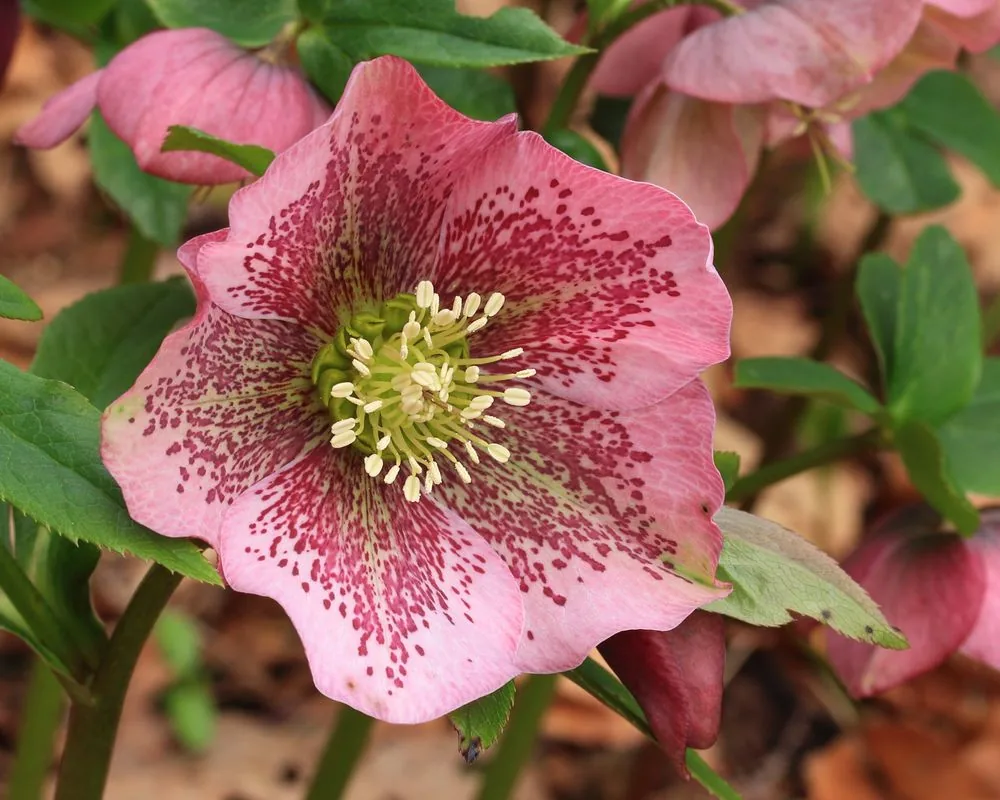
The Lenten rose is a clump-forming evergreen perennial that flowers when almost nothing else does, from late winter to early spring. Sturdy stems carry nodding, cup-shaped flowers in white, pink, plum, slate-purple or green, often freckled inside, above leathery, dark green leaves divided like the fingers of a hand. The coloured parts are sepals, not petals, so they stay on the plant for months, slowly turning green. Most plants sold are garden hybrids of this species. It is long-lived and easy in light shade and is one of the best plants for growing under deciduous trees and shrubs.
Can cause vomiting and diarrhoea, and more rarely affects heart rhythm.
If your pet has eaten some, contact your vet.
Source: NC State Extension, Pet Poison Helpline
Beginner tip
Cut off all the old leaves in early winter, before the flower buds push up. The leaves of the previous year lie flat, hide the flowers and carry the black spots of hellebore leaf spot over to the new growth. Removing them shows off the flowers and keeps the plant healthy; fresh leaves follow in spring.
Care by Season
Spring
Flowering ends and new leaves grow. Remove spent stems, or leave a few to seed.
Summer
Leafy and quiet. Water in long dry spells.
Autumn
Mulch with leaf mould or composted bark. Plant new hellebores.
Winter
Cut off the old leaves in early winter. Flowers open from late winter.
Growing & Maintenance
Planting
Plant in autumn or spring with the crown just at the surface, not buried, in soil improved with leaf mould or garden compost. Space plants 40-50cm apart.
Fertilising
Mulch every autumn with leaf mould, composted bark or garden compost. A general fertiliser in spring helps on poor soil.
Pruning
Cut all the old leaves off at the base in early winter, and remove faded flower stems in spring.
Propagation
By division of large clumps in early spring, or by transplanting self-sown seedlings, which take two to three years to flower.
Pests & Diseases
Common problems
Flowers hidden by leaves
Most likely cause: Old foliage left on.
What to do: Cut the old leaves off in early winter.
Few flowers
Most likely cause: Deep shade, dry soil or a plant recently moved.
What to do: Give lighter shade, mulch and leave it undisturbed.
Black blotches on the leaves
Most likely cause: Leaf spot.
What to do: Remove and bin affected leaves.
Stunted plant with black-streaked leaves
Most likely cause: Black death virus.
What to do: Remove and bin the plant.
Flower stems flop
Most likely cause: Frost.
What to do: Normal: the stems stand up again when it thaws.
Seedlings everywhere
Most likely cause: Self-seeding.
What to do: Cut off the flower stems before the pods open.
Pests & Diseases
Hellebore leaf spot
Signs: Round, brown or black blotches on the leaves, stems and flowers; affected leaves yellow and die.
Treatment: Cut off and bin all old leaves in early winter and remove spotted leaves whenever they appear.
Hellebore aphid
Signs: Dense colonies of whitish-green aphids on the flowers and under the leaves, with sticky honeydew.
Treatment: Squash or rinse them off; they also spread the black death virus.
Hellebore black death
Signs: Black streaks and rings along the veins of leaves and flowers, with stunted, distorted growth.
Treatment: No cure. Dig up and bin affected plants promptly.
Snails
Signs: Ragged holes in the flowers and young leaves.
Treatment: Hand-pick after dark and clear hiding places around the clumps.
Hellebore leaf miner
Signs: Brownish-black blotches inside the leaves of the stinking hellebore, made by tunnelling grubs.
Treatment: Pick off and bin affected leaves in winter.
FAQ
Where should I plant hellebores?
In light or dappled shade, in fertile soil rich in leaf mould that stays moist but drains well, sheltered from cold winds. Under deciduous trees and shrubs is ideal. They tolerate sun if the soil does not dry out, and they prefer neutral to alkaline soil.
Why do the flowers hang down?
Nodding flowers shed rain and snow and protect the pollen. To enjoy the freckled insides, plant hellebores on a bank or in a raised bed, or float a few cut flower heads in a bowl of water.
Why are the flowers turning green?
It is normal. Once a flower has been pollinated, the coloured sepals turn green and stay on while the seed pods swell. Cut the stems down then if you do not want seedlings.
Will the seedlings look like the parent?
Rarely. Hellebores cross freely and self-seed, and the seedlings come in a mix of colours, often muddier than the parent. Weed out those you do not want; keeping the best is how new forms arise.
Can I move or divide a hellebore?
Hellebores dislike disturbance and can sulk for a year afterwards. If needed, lift and divide large clumps in early spring after flowering, or in early autumn, keep the pieces large and water them well until established.
What are the black streaks on the leaves and flowers?
Black streaks along the veins with stunted, distorted growth point to hellebore black death, a virus spread by aphids. There is no cure. Dig up and bin the plant. Round, brown-black blotches are leaf spot, a fungus that is controlled by removing the old leaves.
Should I wear gloves?
Yes. The sap can irritate the skin, and all parts of the plant are harmful if eaten.