No results. Is a plant missing? Tell uscontact@wikiplant.net
Holly
Ilex aquifolium
Care level: Easy
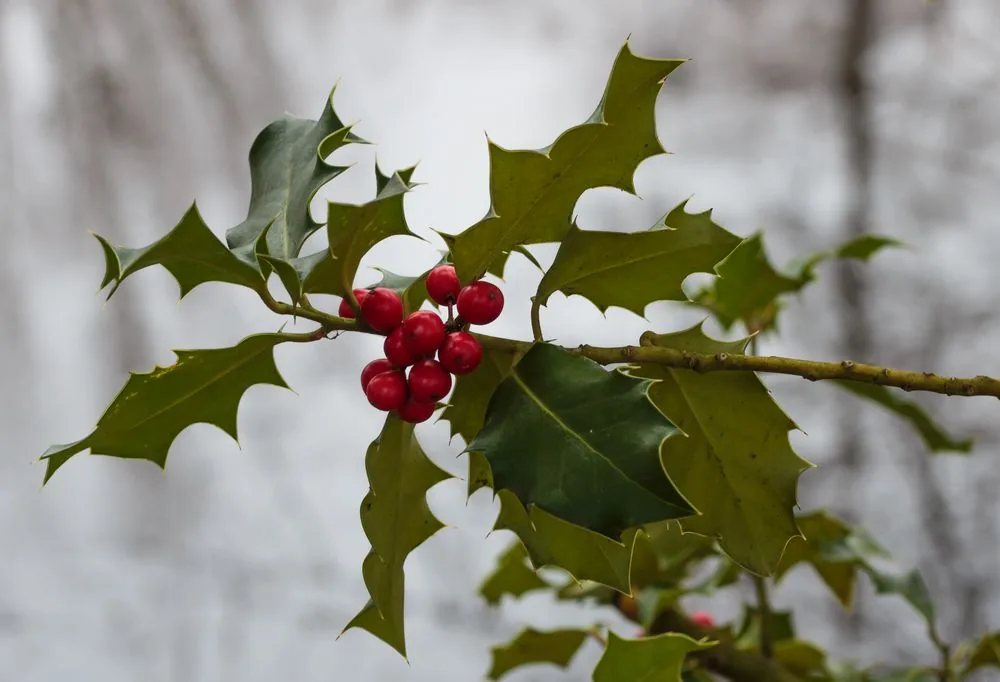
Holly is an evergreen tree or large shrub native to Europe, with dark, glossy, usually sharply spined leaves and, on female plants, bright red berries that last into winter. It grows slowly when young, lives for a very long time and eventually becomes a tree more than 12m tall, though it is just as often kept as a dense, stock-proof hedge or a clipped shape. It grows in sun or partial shade and is fully hardy.
Eating it can cause vomiting and an upset stomach.
If your pet has eaten some, contact your vet.
Source: RHS, Pet Poison Helpline
Did you know?
Holly plants are either male or female, and only females bear berries, and only when a male grows near enough for pollination. Cultivar names do not help: 'Golden Queen' is male and 'Silver Queen' is male too. Check the label for the sex before buying.
Care by Season
Spring
Trim hedges in early spring. Small white flowers open later in the season; this is when pollination happens.
Summer
Water recent plantings in dry weather. Take semi-ripe cuttings in late summer.
Autumn
The berries colour on female plants. A good time to plant.
Winter
The berries feed birds through the cold months. Cut branches for decoration sparingly, from the back of the plant.
Growing & Maintenance
Planting
Plant in autumn or spring in moist, well-drained soil, in sun or partial shade. For berries, plant a female with a male nearby, or a self-fertile variety. Holly dislikes being moved, so choose its place carefully.
Pruning
Trim hedges and shapes in early spring. Free-growing trees need only dead or awkward branches removed.
Propagation
By semi-ripe cuttings in late summer or early autumn. Seed is slow and the seedlings may be male or female.
Pests & Diseases
Common problems
No berries
Most likely cause: A male plant, or a female with no male nearby.
What to do: Plant a partner of the other sex, or a self-fertile variety.
Yellow leaves dropping in spring
Most likely cause: Old leaves being shed as new ones grow.
What to do: Nothing is needed if the new growth is healthy.
A plant sulking after a move
Most likely cause: Root disturbance, which holly resents.
What to do: Water it through the next summers and avoid moving established plants.
Pale blotches in the leaves
Most likely cause: Holly leaf miner.
What to do: Nothing is needed.
Thin growth and few berries
Most likely cause: Deep shade.
What to do: Give it more light, or thin the branches overhead.
Pests & Diseases
Holly leaf miner
Signs: Pale yellow or purplish blotches inside the leaves.
Treatment: The damage is only cosmetic. Pick off badly marked leaves on a small plant; no other treatment is needed.
Scale insects
Signs: Small, shell-like bumps under the leaves and on the stems, sometimes with black sooty mould.
Treatment: Prune out badly affected shoots; light infestations do little harm.
Holly leaf blight
Signs: Black blotches on the leaves, followed by heavy leaf fall and dying shoots, mostly in wet weather.
Treatment: Cut out affected growth in dry weather, clear fallen leaves, and thin dense plants to let air through.
Aphids
Signs: Clusters of small insects on soft young shoots in spring, which may curl.
Treatment: Leave them to predators; the growth hardens and the problem passes.
FAQ
Why does my holly have no berries?
Either it is a male plant, or it is a female with no male nearby to pollinate it. A young plant may also need several years before it flowers. Plant a male within sight of the female, or choose a self-fertile variety.
Are holly berries toxic to cats and dogs?
Yes. The berries and leaves contain saponins and cause nausea, vomiting and diarrhoea if eaten. The spiny leaves can also injure a pet's lips and gums. Keep cut holly used for decoration out of reach as well.
When should I trim a holly hedge?
In early spring, before growth starts, using secateurs or shears. Holly tolerates clipping well, though a hedge trimmed hard every year carries fewer berries.
How fast does holly grow?
Slowly, especially in the first years. A hedge takes patience, but it then lasts for generations and needs little attention.
Why are the upper leaves on my old holly smooth?
That is normal. The spines are densest on the lower branches, within reach of browsing animals. Leaves higher up a mature tree often have few spines or none.
Can holly be grown in shade?
Yes, partial shade suits it, and in the wild it grows under taller trees. In deep shade it becomes thinner and berries poorly. Variegated forms keep their colour best in sun.