No results. Is a plant missing? Tell uscontact@wikiplant.net
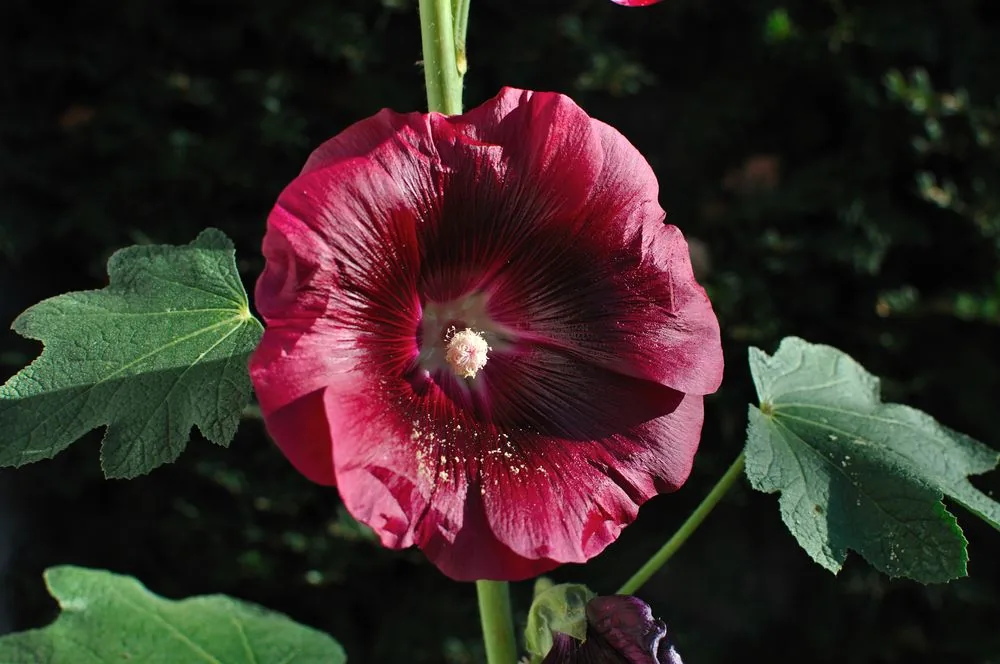
Hollyhock
Alcea rosea
Care level: Easy
The hollyhock is the tall spire of old cottage gardens: a robust biennial or short-lived perennial that sends up stems of 2m or more, lined with open, funnel-shaped flowers up to 10cm across in pink, red, purple, yellow, white or near-black. In its first year it makes a clump of large, rounded, rough leaves; in its second it flowers from midsummer into autumn. It loves the dry, sunny foot of a wall, seeds itself into paving cracks and asks for little, but almost every plant gets hollyhock rust sooner or later.
As a precaution, keep it out of reach of children and pets.
Beginner tip
Treat it as a biennial. Rust builds up on old plants, so the cleanest hollyhocks are young ones: sow every year, let the plants flower once in their second summer and then pull them out. Self-sown seedlings will do the replacing for you.
Care by Season
Spring
Sow outdoors. Remove any leaves showing rust on overwintered plants.
Summer
Second-year plants flower from midsummer. Stake in windy spots and collect ripe seed.
Autumn
Cut down or pull out plants that have flowered and clear all fallen leaves. Move seedlings.
Winter
First-year rosettes overwinter. Sow in pots in gentle heat in midwinter for early plants.
Growing & Maintenance
Planting
Plant young plants in autumn or spring, 45-60cm apart, in full sun and well-drained soil, with space around them for air to move.
Pruning
Cut the stems down after flowering, or pull the whole plant out, and remove and bin all the old foliage. Do not compost rusted leaves.
Support
Tie stems to a tall cane in exposed gardens.
Propagation
By seed, sown outdoors in spring or in gentle heat in midwinter. Plants self-sow, though named colours do not always come true.
Pests & Diseases
Common problems
Orange pustules and shrivelling lower leaves
Most likely cause: Hollyhock rust.
What to do: Pick off leaves, tidy thoroughly in autumn and replace old plants.
Leaves but no flower stem
Most likely cause: A first-year plant.
What to do: Wait; it flowers next summer.
Stems blown over
Most likely cause: Wind in an open position.
What to do: Stake, or grow against a wall or fence.
Plants die after two or three years
Most likely cause: The natural short life of the plant.
What to do: Sow every year or let them self-seed.
Seedlings of a different colour
Most likely cause: Cross-pollination between plants.
What to do: Buy seed for specific colours, or enjoy the mix.
Small holes all over the leaves
Most likely cause: Flea beetle or capsid bugs.
What to do: Usually cosmetic; keep plants watered and tidy up in winter.
Pests & Diseases
Hollyhock rust
Signs: Orange-brown pustules under the leaves and yellow spots above; leaves shrivel from the base of the plant up.
Treatment: Remove affected leaves at once, clear debris in autumn, space plants well and grow them as biennials.
Slugs and snails
Signs: Seedlings and young leaves eaten in spring.
Treatment: Protect young plants and pick slugs off in the evening.
Mallow flea beetle
Signs: Many small round holes in the leaves from tiny, jumping, dark beetles.
Treatment: Established plants tolerate it; keep young plants growing strongly with water.
Capsid bugs
Signs: Leaves at the shoot tips full of small ragged holes and distorted growth.
Treatment: No treatment is needed; clear plant debris in winter where the bugs shelter.
Aphids
Signs: Clusters of small insects on the flower buds and under the leaves.
Treatment: Rub them off or rinse them away.
FAQ
What are the orange spots under the leaves?
Hollyhock rust, a fungal disease. Raised orange-brown pustules cover the underside, with yellow spots above, and the lower leaves shrivel. Pick off affected leaves as soon as you see them, clear every scrap of debris in autumn and replace old plants with young ones.
Are hollyhocks perennial?
Short-lived at best. Most plants flower well once or twice and then decline, and rust shortens their life further. They are usually grown as biennials and kept going by seed.
When should I sow hollyhocks?
Sow outdoors where they are to flower in spring or early summer, or in pots in gentle heat in midwinter. Plants sown in spring flower the following year; an early indoor sowing can flower the same summer.
Why did my hollyhock not flower this year?
It is in its first year. Hollyhocks make only leaves in the season they are sown and flower the summer after.
Do they need staking?
At the foot of a wall or fence, usually not. In an open, windy position tie each stem loosely to a tall cane.
Which hollyhocks are best for bees?
Single-flowered ones, whose open centres give easy access to pollen and nectar. Fully double forms offer much less.
Can I move a hollyhock?
Only while it is small. Older plants have a long tap root and rarely recover. Move self-sown seedlings in their first autumn or spring with as much root as possible.