No results. Is a plant missing? Tell uscontact@wikiplant.net
Horse chestnut
Aesculus hippocastanum
Care level: Easy
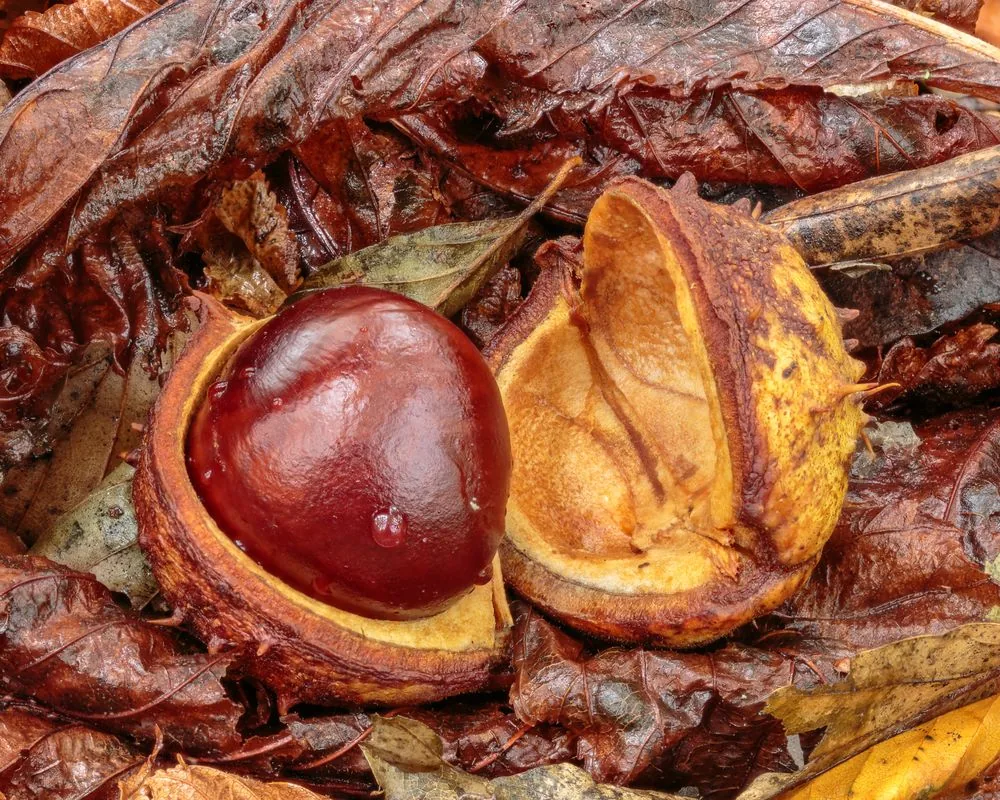
The horse chestnut is a very large deciduous tree from the Balkans, planted across Europe in parks, avenues and village greens. Its leaves are like open hands of five to seven broad leaflets, its upright spikes of white flowers stand on the branches like candles in late spring, and in autumn the spiny green husks split to drop glossy brown conkers. It is hardy and easy but grows far too large for most gardens, and in much of Europe its leaves now turn brown by late summer.
Eating it causes vomiting and diarrhoea, and in larger amounts staggering, tremors and seizures.
If your pet has eaten some, contact your vet.
Source: RHS, Pet Poison Helpline
Safety note
Conkers are not edible chestnuts. They are harmful to people, dogs and cats if eaten. Sweet chestnuts, the ones for roasting, come from a different tree and sit two or three together in a husk covered in fine, dense needles.
Care by Season
Spring
Sticky brown buds open into fresh leaves, followed by upright white flower spikes in late spring.
Summer
The tree is in full leaf. Brown blotches from leaf miner often appear from midsummer.
Autumn
Husks split and conkers fall. Rake up and remove the leaves.
Winter
The tree is dormant, with large sticky buds. Remove dead or damaged branches.
Growing & Maintenance
Planting
Plant between autumn and early spring in deep soil, with room for a crown 15m or more across and well away from buildings. Stake for the first two years.
Pruning
Little is needed. Remove dead, damaged or crossing branches in winter. Large limbs are heavy and best left to a tree surgeon.
Propagation
By fresh conkers sown in autumn. Named forms are grafted.
Pests & Diseases
Common problems
Leaves brown and crisp by late summer
Most likely cause: Leaf miner or leaf blotch.
What to do: Clear the fallen leaves; the tree recovers each spring.
Dark liquid on the trunk
Most likely cause: Bleeding canker.
What to do: Watch the crown and call a tree surgeon if branches die.
Leaves falling early
Most likely cause: Leaf miner, often with drought.
What to do: Water a young tree; nothing is needed for an established one.
No conkers
Most likely cause: A young tree, or a double-flowered form such as 'Baumannii'.
What to do: Trees start to fruit after some years; double forms never do.
White waxy patches on the bark
Most likely cause: Horse chestnut scale.
What to do: Leave it; the tree is not harmed.
Pests & Diseases
Horse chestnut leaf miner
Signs: Pale then brown elongated blotches between the veins from early summer; the leaves look scorched and fall early.
Treatment: Collect and remove fallen leaves in autumn to reduce the overwintering pupae.
Bleeding canker
Signs: Dark, sticky liquid oozing from patches on the trunk and main branches; the bark later cracks and the crown may thin.
Treatment: There is no cure. Keep the tree in good health and have dead or unsafe branches removed by a professional.
Leaf blotch
Signs: Reddish-brown blotches with a yellow margin, mostly at the tips and edges of the leaflets, from midsummer.
Treatment: Rake up fallen leaves. The tree's health is not affected.
Horse chestnut scale
Signs: White, waxy egg masses with a brown scale on the trunk and larger branches in early summer.
Treatment: It looks unsightly but does little harm; no treatment is needed.
FAQ
Can you eat conkers?
No. Conkers are harmful if eaten and taste very bitter. The chestnuts sold for roasting are sweet chestnuts, from Castanea sativa, an unrelated tree.
Are conkers dangerous for dogs?
Yes. Eating them causes vomiting and diarrhoea, and larger amounts can affect the nervous system. A whole conker can also block the gut. Do not let a dog play with or chew them.
Why do the leaves turn brown in summer?
Usually the horse chestnut leaf-mining moth, whose larvae tunnel inside the leaflets and leave pale then brown blotches between the veins. A fungal leaf blotch gives similar marks with a yellow edge. Both look alarming but the tree leafs out normally the next spring.
Can I do anything about the leaf miner?
Collect and remove the fallen leaves in autumn, as the pupae overwinter in them. This lowers the numbers the next year but does not stop the moth arriving from other trees.
Is it suitable for a garden?
Only a very large one. It reaches 15-25m with a broad, heavy crown, casts deep shade and drops flowers, husks, conkers and large leaves.
How do I grow one from a conker?
Plant a fresh conker in autumn, about 5cm deep in a pot or in the ground, and leave it outside over winter. Conkers that have dried out do not germinate.
What is the dark liquid running down the trunk?
It can be bleeding canker, a bacterial disease. Dark, sticky fluid oozes from patches of bark, which later crack. Many trees live with it for years; have a large tree checked if the crown thins or branches die.