No results. Is a plant missing? Tell uscontact@wikiplant.net
Hyacinth
Hyacinthus orientalis
Care level: Easy
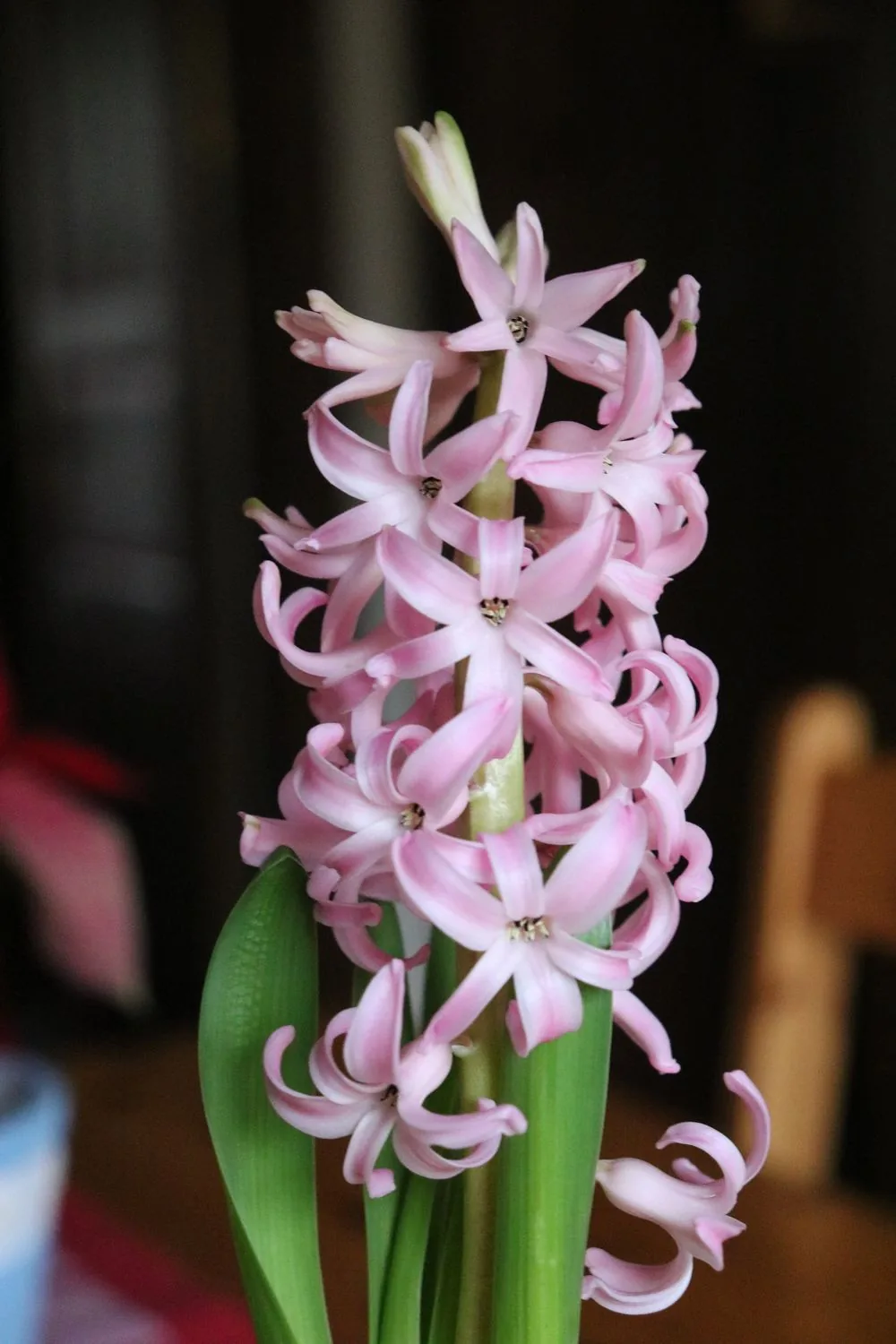
Hyacinth is the intensely fragrant spring bulb that produces a single dense, columnar spike packed with dozens of small, star-shaped florets, in colours from white and pale pink through to deep blue and purple. It is grown both outdoors as a reliable, if gradually looser-flowering, garden perennial bulb and indoors as a forced bulb, brought into bloom in a bowl or glass well ahead of its natural season for scent and colour in late winter. A single flower spike can fill a room with fragrance, which is the main reason most people grow it at all.
Hyacinthus orientalis 'Delft Blue'Hyacinthus orientalis 'City of Haarlem'Hyacinthus orientalis 'Woodstock'
Light
Full sun to light shade outdoors. Forced bulbs grown indoors want bright light once shoots appear, after an initial cold, dark rooting period.
Water
Water in after planting and during active growth if the soil is dry. A forced bulb in a bowl needs its water level kept just below the bulb's base, not touching it, to avoid rot.
Humidity
Not a significant factor outdoors; indoors, average household humidity is fine for a forced bulb in bloom.
Soil
Free-draining and moderately fertile for garden planting. A forced bulb in bowl fibre or a hyacinth glass needs no soil at all, just the cold rooting period and then water.
Eating it can cause vomiting and an upset stomach.
If your pet has eaten some, contact your vet.
Source: ASPCA
Signature feature
The tightly packed, formal flower spike seen in shops and forced bulb displays is largely a first-year effect. A hyacinth bulb planted in the garden and left to its own devices produces a looser, more relaxed spike with fewer, more widely spaced florets in its second and later years, which is a natural change rather than a sign the bulb is failing; gardeners who want the dense display every year tend to treat garden hyacinths as a bulb to supplement or replace periodically.
Care by Season
Spring
Flowering outdoors, typically March to April; indoors, a forced bulb planted in early autumn flowers from midwinter onward depending on when forcing began.
Summer
The bulb is dormant underground by early summer once outdoor foliage has died back. A forced bulb destined for the garden is planted out now or in autumn once its own leaves have browned.
Autumn
The main planting season for garden bulbs. Bulbs intended for indoor forcing are potted or set in a hyacinth glass now and given 8-10 weeks of cold, dark conditions to root before being brought into warmth and light.
Winter
Garden bulbs are dormant and hardy through a normal European winter. Forced bulbs brought in from their cold period are what provide colour and scent through the darkest months indoors.
Growing & Maintenance
Planting
Plant garden bulbs in autumn, in free-draining, moderately fertile soil in sun or light shade, and water them in. Wear gloves, as the bulbs can irritate skin.
Pruning
Cut off the spent flower spike, but leave the leaves until they have died back.
Propagation
By separating the offsets from the bulb.
Pests & Diseases
Common problems
Soft, rotting bulb
Most likely cause: Poorly drained soil.
What to do: Discard the bulb and plant new ones in free-draining soil.
Grey, fuzzy mould on the flowers or leaves
Most likely cause: Grey mould.
What to do: Remove the affected parts promptly and give the plant more air.
Looser, smaller flower spikes in later years
Most likely cause: Normal. The tightly packed spike is largely a first-year effect.
What to do: Nothing to do. The lighter spikes are how the bulb flowers in the garden.
No flowers the following year
Most likely cause: The leaves were removed before they had died back.
What to do: Leave the foliage until it has yellowed.
Itchy skin after handling the bulbs
Most likely cause: Irritant crystals in the outer skin of the bulb.
What to do: Wear gloves when planting.
Pests & Diseases
Bulb rot
Signs: A soft, discoloured, foul-smelling bulb, either found when lifting or shown by a shoot that emerges weak and then collapses.
Treatment: Discard any soft or damaged bulb rather than planting or forcing it, and avoid waterlogged soil or letting a forced bulb's base sit in standing water. There is no cure once a bulb has rotted.
Grey mould (Botrytis)
Signs: Fuzzy grey mould on flowers or foliage, usually in damp, still conditions, whether outdoors in a wet spring or on an overcrowded indoor display.
Treatment: Remove affected flowers or leaves promptly and improve air movement around the plant. Avoid overcrowding bulbs in a bowl or border, which keeps air from circulating between them.
Narcissus bulb fly
Signs: A soft bulb that fails to grow, with a grub inside
Treatment: Dig up and destroy the affected bulb. There is no treatment.
FAQ
Can I plant a hyacinth bulb outdoors after forcing it to flower indoors?
Yes, and it is worth doing rather than discarding the bulb. Let the foliage die back naturally indoors after flowering, feed it with a liquid fertiliser while the leaves are still green, then plant it out in the garden in autumn at normal bulb depth. It will not flower as densely the first year or two outdoors as it did when forced, but it generally recovers and settles into normal garden flowering after that.
Why does handling hyacinth bulbs sometimes irritate my skin?
Hyacinth bulbs contain calcium oxalate crystals and other irritant compounds in the outer skin, which can cause a mild, itchy rash on contact, sometimes called 'hyacinth itch' or 'daffodil pickers' rash' when it affects bulb handlers generally. Wearing gloves when planting or handling a number of bulbs avoids this; a single well-handled bulb rarely causes a problem, but repeated contact, especially with damaged or bruised bulbs, increases the risk.
Are Hyacinths toxic to cats and dogs?
Yes, Hyacinths are toxic to cats and dogs. Eating the plant, and above all the bulb, can cause stomach upset, so keep bulbs out of reach.
When should I plant Hyacinth bulbs?
In autumn, which is the main planting season for garden bulbs. Bulbs for indoor flowering are also potted up in early autumn.
When do Hyacinths flower?
Outdoors, usually in March to April. The fragrant spikes last two to three weeks.
How hardy are Hyacinths?
They are hardy to about -10°C. Garden bulbs stay dormant in the ground through a normal European winter.