No results. Is a plant missing? Tell uscontact@wikiplant.net
Hydrangea
Hydrangea macrophylla
Care level: Easy
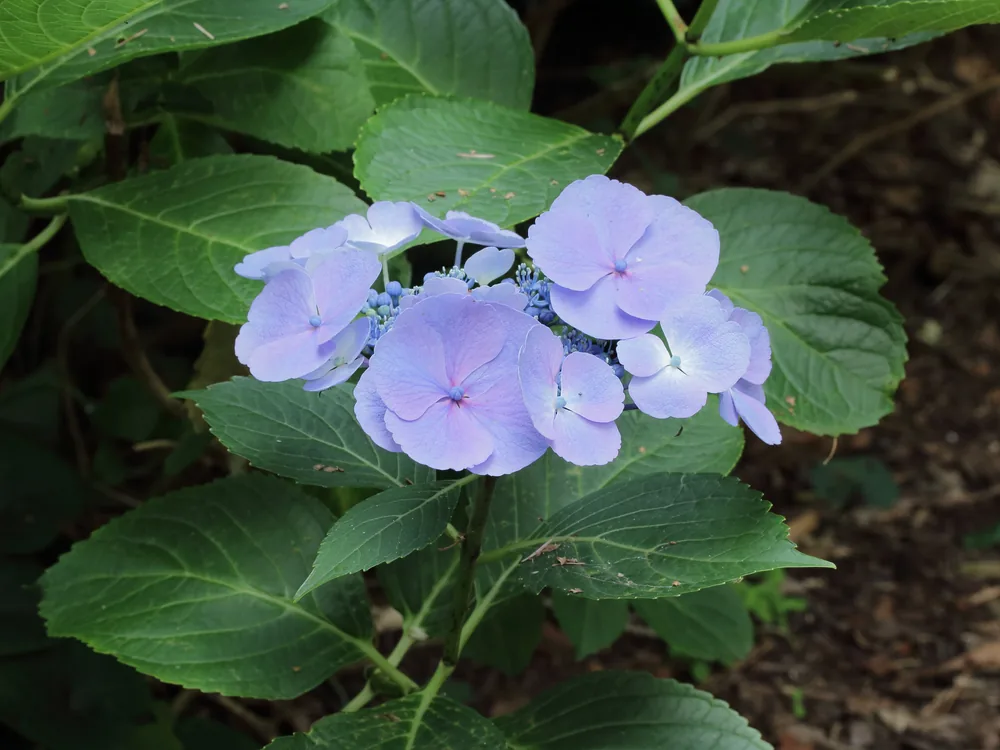
Hydrangea is the garden shrub behind those huge summer flower heads, in blue, pink, white or lime green depending on variety and soil. The two most planted types behave quite differently: Hydrangea macrophylla, the mophead and lacecap type, flowers on stems grown the previous year, while Hydrangea paniculata carries cone-shaped heads on the current year's growth. That single difference decides when you can prune without losing a season of flowers.
Morning sun with shade through the afternoon is ideal for macrophylla; paniculata takes considerably more sun. In full midday sun the big leaves wilt even when the soil is wet.
Water
The thirstiest common garden shrub: the name comes from the Greek for water vessel. Water deeply in dry spells, especially in a pot or near a wall, and mulch in spring to hold moisture.
Humidity
Not a factor you control outdoors, though a sheltered spot away from drying wind keeps the leaves from scorching at the edges.
Soil
Moist but well-drained soil with plenty of organic matter. Soil pH does not affect health, only the flower colour of macrophylla.
Temperature
Hardy to about -15°C. A late frost can damage the new buds.
Eating it can cause vomiting and an upset stomach.
If your pet has eaten some, contact your vet.
Source: ASPCA, which lists Hydrangea arborescens, a related species rather than this one.
Signature feature
On Hydrangea macrophylla the flower colour responds to soil chemistry: acidic soil below about pH 5.5 makes aluminium available to the plant and turns the heads blue, while limey soil locks that aluminium away and the same plant flowers pink. White varieties stay white whatever you do, and Hydrangea paniculata does not change colour either.
Care by Season
Spring
Once hard frost has passed, cut macrophylla stems back only to the first strong pair of buds and remove any dead wood; paniculata can be cut back much harder now. Mulch and feed as growth starts.
Summer
Flowering season, and the season the plant needs water most. Check pots daily in hot weather; a wilting hydrangea in the afternoon usually recovers overnight but repeated wilting costs you flowers.
Autumn
Leave the faded heads in place rather than tidying them away: they protect next year's buds underneath through winter and look good under frost.
Winter
Fully hardy in most of western Europe, roughly to -15°C for macrophylla, though a late frost after the buds swell is the real risk. Plants in pots need their roots protected, as a pot freezes through in a way open ground does not.
Growing & Maintenance
Planting
In moist but well-drained soil with plenty of organic matter, in morning sun with afternoon shade, sheltered from drying wind.
Pruning
Once hard frost has passed, cut the stems back only to the first strong pair of buds below the old flower head. Leave the faded heads on through winter.
Propagation
From stem cuttings, or by layering.
Pests & Diseases
Common problems
No flowers
Most likely cause: Pruning at the wrong moment, or a late frost that killed the buds.
What to do: Cut back only to the first strong pair of buds in spring and protect the buds from late frost.
Wilting in the afternoon
Most likely cause: Thirst. It is the thirstiest common garden shrub.
What to do: Water deeply in dry spells and check pots daily in hot weather.
Brown, scorched leaf edges
Most likely cause: Hot afternoon sun or drying wind.
What to do: Give it afternoon shade and a sheltered spot.
Pink flowers on a blue variety
Most likely cause: The soil is not acidic enough.
What to do: Grow it in acid soil or ericaceous compost. Only pink or purple macrophylla types can turn blue.
White, powdery coating on the leaves
Most likely cause: Powdery mildew.
What to do: Thin out congested stems to improve the airflow.
Pests & Diseases
Aphids
Signs: Clusters of small green or black insects on soft new shoots and flower stalks, with sticky honeydew on the leaves below.
Treatment: Rinse off with a strong spray of water or use insecticidal soap; most outdoor infestations are cleared by ladybirds if left alone.
Powdery mildew
Signs: A dusty white coating on leaves, worst on plants crowded against a wall with little air movement.
Treatment: Thin out congested stems to improve airflow, water the soil rather than the foliage, and remove badly affected leaves.
Vine weevil
Signs: Notches bitten out of leaf edges by the adults; the grubs eat the roots, so a potted plant collapses suddenly despite moist compost.
Treatment: Most serious in containers. Drench the compost with nematodes in late summer, and check the rootball of any plant that wilts without reason.
FAQ
Why did my hydrangea not flower this year?
Nine times out of ten it was pruned at the wrong moment. Hydrangea macrophylla forms next summer's buds on stems made the year before, so cutting it back hard in autumn or spring removes the flowers before they open. Leave the old heads on over winter, then cut back only to the first fat pair of buds once the frosts are over. A late frost after the buds swell can also take a season's flowers, with nothing done wrong.
How do I turn my hydrangea flowers blue?
Only a pink or purple Hydrangea macrophylla can be turned blue, and only by making the soil acidic enough for the plant to take up aluminium. Growing it in a pot of ericaceous compost is far more reliable than trying to acidify open garden soil, which drifts back to its natural pH. A white variety will never turn blue, and no amount of treatment changes a paniculata.
Are Hydrangeas toxic to cats and dogs?
Yes, Hydrangeas are toxic to cats and dogs. Eating the leaves or flowers can cause stomach upset, so keep pets from chewing them.
How often should I water a Hydrangea?
Deeply whenever the soil starts to dry, and daily for a pot in hot weather. A wilting plant usually recovers once it is watered.
How big does a Hydrangea get?
Hydrangea macrophylla reaches 0.9-1.8m tall and wide. It grows fast in moist soil.
Where should I plant a Hydrangea?
Where it gets morning sun and afternoon shade, out of drying wind. The soil should be moist but well-drained, with plenty of organic matter.