No results. Is a plant missing? Tell uscontact@wikiplant.net
Impatiens
Impatiens walleriana
Care level: Easy
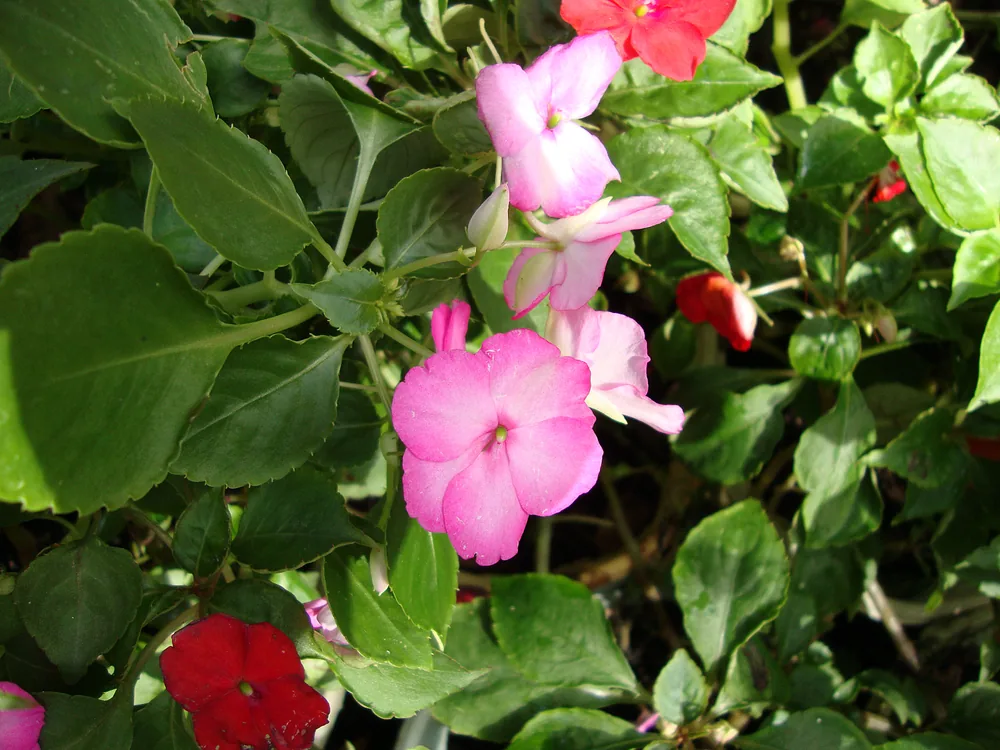
Impatiens, long sold as busy Lizzie, is the classic shade bedding plant: flat five-petalled flowers in pink, red, orange, white and lilac, produced continuously on a soft succulent stem from May until frost. It is the plant that fills the shaded balcony, the north-facing window box and the dark corner under a tree where nothing else will flower. It is also the only common bedding plant that genuinely prefers shade rather than merely tolerating it.
New Guinea impatiens (Impatiens hawkeri)'Beacon' series'SunPatiens'Impatiens balsamina
Light
Part shade to full shade. Direct midday sun scorches the thin leaves and makes the plant wilt within hours; only the SunPatiens and New Guinea types handle it.
Water
Thirsty. The stems are almost entirely water and the plant wilts dramatically when dry, then recovers within an hour of watering. Never let a container dry out completely.
Humidity
Prefers humid air, which is part of why it does so well in a sheltered shaded courtyard. Indoors it is happy in a bathroom or kitchen.
Soil
Moisture-retentive but free-draining compost. In hanging baskets add water-retaining granules, because the plant will not tolerate repeated drying out.
Temperature
Not hardy: frost kills it. Indoors it stays evergreen at 15-20°C.
Size
15-60cm tall and wide.
Growth speed
Fast
Best position
east / south-east-facing windowanywhere up to about 2 m from the window
north / north-east / north-west-facing windowanywhere up to about 1 m from the window
south / west-facing windowabout 1 m from the window or further back
Watch for strong direct sun at south / west windows.
See every window directionHide window directions
Best position
right by the window
about 1 m
about 2 m
about 4 m
4 m or more
north
works well✓
works well✓
too dark○
too dark○
too dark○
north-east
works well✓
works well✓
too dark○
too dark○
too dark○
east
works well✓
works well✓
works well✓
too dark○
too dark○
south-east
works well✓
works well✓
works well✓
too dark○
too dark○
south
just about~
works well✓
works well✓
too dark○
too dark○
south-west
just about~
just about~
works well✓
too dark○
too dark○
west
just about~
works well✓
works well✓
too dark○
too dark○
north-west
works well✓
works well✓
too dark○
too dark○
too dark○
✓works well~just about○too dark☼too much direct sun
A rough guide based on window direction and typical daylight through the year. Window size, curtains and whatever stands outside matter just as much.
✓Non-toxic to pets
Considered non-toxic to cats and dogs.
Source: ASPCA
Signature feature
The Latin name means impatient, and it refers to the seed pods. When ripe they are under tension, and the lightest touch makes them split and fling their seed several metres. Children discover this within minutes of meeting the plant, and it is why the related wild species is called touch-me-not.
Care by Season
Spring
Plant out after the last frost, usually mid-May, in shade or part shade. Space 25 cm apart. Pinch the tips once at planting for a bushier plant.
Summer
Water daily in hot weather, especially in baskets and window boxes. Feed fortnightly with a balanced liquid feed. Deadheading is unnecessary; flowers drop cleanly.
Autumn
Take cuttings in early September if you want to keep a plant. Flowering continues until the first frost, which blackens the whole plant overnight.
Winter
Not hardy and killed outright by frost. Indoors at 15 to 20°C in bright indirect light it stays evergreen and flowers intermittently; water less and do not feed.
Growing & Maintenance
Planting
Plant out after the last frost, in shade or part shade, about 25cm apart.
Soil and pot
Moisture-retentive but free-draining compost with plenty of organic matter. Baskets dry out fastest.
Fertilising
Feed every two weeks in summer with a balanced liquid feed.
Pruning
Pinch the tips of young plants. In late summer, trim the top third to bring on fresh flowers.
Propagation
From stem cuttings taken in early September, which root in a glass of water, or from seed sown indoors in late winter.
Pests & Diseases
Common problems
Dramatic wilting
Most likely cause: Thirst. The stems are almost entirely water.
What to do: Water at once; the plant recovers within hours. In hot weather, water every day.
Scorched leaves and wilting at midday
Most likely cause: Direct midday sun on the thin leaves.
What to do: Move it into shade or part shade.
Leggy plants late in the season
Most likely cause: Normal after a long summer of growth.
What to do: Trim the top third in late summer.
Stems rotting at the base
Most likely cause: Overwatering in poorly drained compost.
What to do: Keep the compost moist, not waterlogged, and make sure the pot drains.
Plants turned to mush overnight
Most likely cause: Frost.
What to do: Plant out only after the last frost and bring pots in before the first one.
Pests & Diseases
Impatiens downy mildew
Signs: A white felt-like growth on the undersides of leaves, yellowing, then sudden and total leaf drop leaving bare green stems standing.
Treatment: There is no cure. Remove and bin the plants, including roots, and do not compost them. Avoid replanting Impatiens walleriana in the same soil, and choose a resistant series or New Guinea impatiens.
Red spider mite
Signs: Fine pale stippling on the leaves and faint webbing between stems, in hot dry positions or indoors in winter.
Treatment: Raise humidity and water more consistently; mites thrive on plants that keep drying out. Rinse the foliage and improve air movement. Check the undersides of the leaves and the crevices where the leaf stem meets the main stalk.
Aphids
Signs: Clusters on the soft growing tips, with sticky residue and distorted new leaves.
Treatment: Rub them off or rinse with water. The soft growth is very attractive to them but the plant grows fast enough to outpace light infestations.
FAQ
My busy Lizzies collapsed suddenly with white mould under the leaves. What happened?
That is impatiens downy mildew, a disease that swept through Europe from around 2011 and made the plant briefly disappear from garden centres. It shows as a white felt on the leaf undersides, then sudden leaf drop leaving bare stems. It cannot be cured, the spores survive in the soil for years, and it only attacks Impatiens walleriana. Bin affected plants rather than composting them, do not replant walleriana in that soil, and use New Guinea impatiens or the resistant modern series instead.
Can I keep it going through the winter?
Yes, and it is worth doing because impatiens roots so readily. Take stem cuttings in early September, stand them in a glass of water on a windowsill, and they will have roots within two weeks. Potted up and kept above 12°C in decent light they will flower on and off all winter and give you a head start in spring. The parent plant outdoors will be killed by the first frost.
Is impatiens safe for cats and dogs?
Yes, impatiens is not toxic to cats or dogs.
How often should I water impatiens?
Every day in hot weather, especially in baskets and window boxes. It is a thirsty plant that wilts as soon as it dries, but waterlogged compost rots it.
Does impatiens grow in sun or shade?
In part shade to full shade. Direct midday sun scorches the thin leaves and makes the plant wilt within hours.
How do I propagate impatiens?
From stem cuttings, which root readily in a glass of water. Seed sown indoors in late winter works too.