No results. Is a plant missing? Tell uscontact@wikiplant.net
Pink Jasmine
Jasminum polyanthum
Care level: Moderate
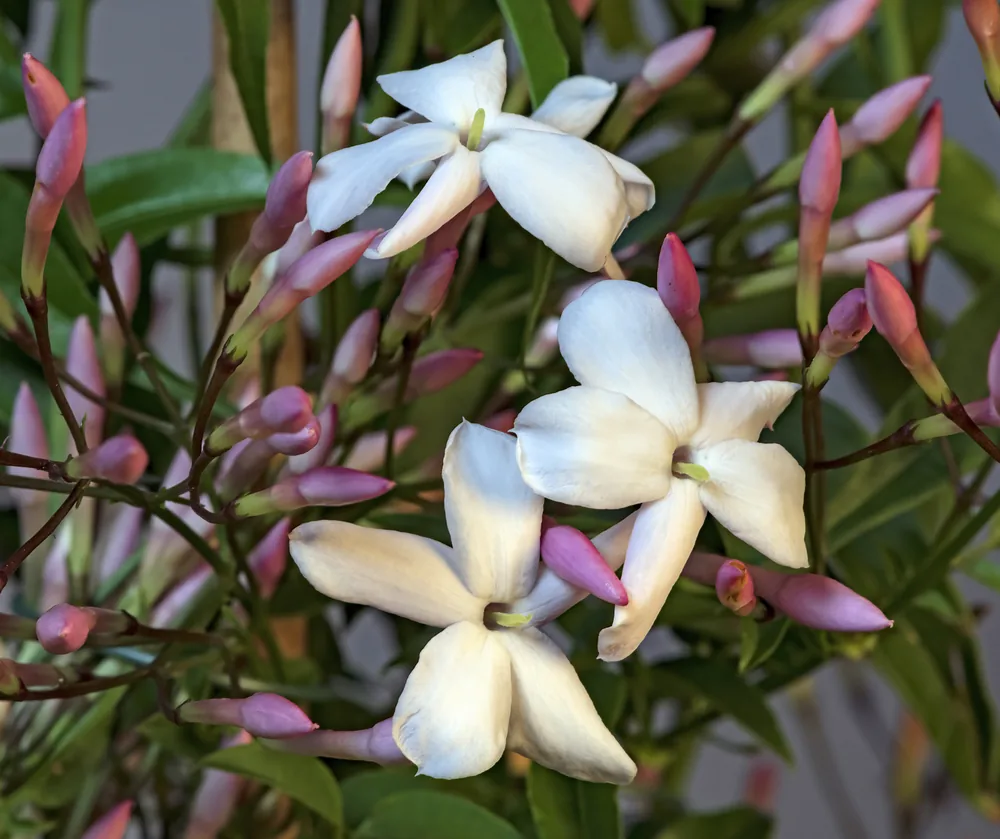
Jasminum polyanthum produces such an intensely sweet fragrance from clusters of pink-budded, white star-shaped flowers that a single vigorously blooming vine can perfume an entire room, which is exactly why this Chinese native became a favorite for training around windows, doorways, and trellises where its scent can be enjoyed daily.
Needs bright light with several hours of direct sun to flower well.
Water
Keep soil evenly moist during growth, watering when the top layer dries slightly, typically weekly.
Humidity
Prefers moderate humidity and good air circulation.
Soil
Rich, well-draining potting mix.
Temperature
Normal room temperatures in growth. In winter it needs a cool rest at about 7-13°C to flower.
Best position
south-east / south / south-west-facing windowanywhere up to about 1 m from the window
east / west-facing windowright by the window
See every window directionHide window directions
Best position
right by the window
about 1 m
about 2 m
about 4 m
4 m or more
north
too dark○
too dark○
too dark○
too dark○
too dark○
north-east
too dark○
too dark○
too dark○
too dark○
too dark○
east
works well✓
too dark○
too dark○
too dark○
too dark○
south-east
works well✓
works well✓
too dark○
too dark○
too dark○
south
works well✓
works well✓
too dark○
too dark○
too dark○
south-west
works well✓
works well✓
too dark○
too dark○
too dark○
west
works well✓
too dark○
too dark○
too dark○
too dark○
north-west
too dark○
too dark○
too dark○
too dark○
too dark○
✓works well~just about○too dark☼too much direct sun
A rough guide based on window direction and typical daylight through the year. Window size, curtains and whatever stands outside matter just as much.
✓Non-toxic to pets
Considered non-toxic to cats and dogs.
Source: ASPCA
Common mistake
A common reason Pink Jasmine refuses to flower is skipping its winter rest, this species needs several weeks of cool temperatures, around 7-13C, with reduced watering in winter to trigger the following spring's flush of fragrant blooms, and a warm year-round spot alone often leads to lots of leaves but few flowers.
Care by Season
Spring
Water regularly and feed every few weeks as it produces its main flush of fragrant flowers.
Summer
Keep soil consistently moist and provide bright light to support vigorous vining growth.
Autumn
Reduce feeding as growth slows and flowering finishes.
Winter
Give a cool rest period around 7-13°C with reduced watering to encourage strong spring flowering.
Growing & Maintenance
Soil and pot
A rich, well-draining potting mix with plenty of organic matter, in a pot with drainage holes.
Fertilising
Feed every few weeks in spring, while it flowers and grows. Reduce once flowering has finished.
Pruning
Prune after the flowers fade. It responds well to hard pruning, which keeps the vigorous stems in check indoors.
Support
Give the twining stems a trellis or hoop and tie young growth in loosely.
Pests & Diseases
Common problems
No flowers on a healthy plant
Most likely cause: No cool winter rest.
What to do: Give it several weeks at about 7-13°C in winter, with reduced watering.
Few flowers
Most likely cause: Too little light.
What to do: Give it bright light with several hours of direct sun.
Long, tangled stems
Most likely cause: Vigorous growth without pruning.
What to do: Prune hard after flowering and train the new stems onto a support.
Yellow leaves and wet compost
Most likely cause: Overwatering.
What to do: Let the top layer dry slightly before watering again and make sure the pot drains.
Dry, crisp leaves
Most likely cause: The compost has dried out.
What to do: Water thoroughly and keep it evenly moist while the plant is growing.
Pests & Diseases
Aphids
Signs: Small clustered insects on flower buds and soft new growth
Treatment: Rinse with water and apply insecticidal soap to affected areas.
Spider mites
Signs: Fine webbing and speckled leaves in warm, dry conditions
Treatment: Increase humidity, rinse foliage, and treat with insecticidal soap if needed. Check the undersides of the leaves and the crevices where the leaf stem meets the main stalk.
Scale insects
Signs: Small brown bumps on stems and leaf undersides
Treatment: Scrape off gently and wipe with rubbing alcohol; apply horticultural oil for larger infestations.
FAQ
Why won't my Pink Jasmine flower even though it looks healthy?
The most common cause is missing its required winter chill, this species needs a cool rest period of roughly 7-13C with lighter watering for several weeks in winter to set flower buds for spring; without it, the plant often just grows leaves and vines.
How do I train Pink Jasmine to climb a trellis?
Its twining stems naturally wrap around any thin support they touch, so loosely tie young growth to a trellis, hoop, or string trellis early on, and it will continue climbing on its own from there with minimal ongoing guidance.
Is Pink Jasmine safe for cats and dogs?
Yes, Pink Jasmine is not toxic to cats or dogs.
How often should I water Pink Jasmine?
Typically once a week, when the top layer of compost has dried slightly. Keep it evenly moist in growth and water less during the cool winter rest.
When should I prune Pink Jasmine?
Right after the flowers fade. It takes hard pruning well, and cutting it back keeps the fast-growing stems manageable indoors.
What does Pink Jasmine need in winter?
A cool, bright place at about 7-13°C, with less water. Without that rest it grows leaves but does not flower.