No results. Is a plant missing? Tell uscontact@wikiplant.net
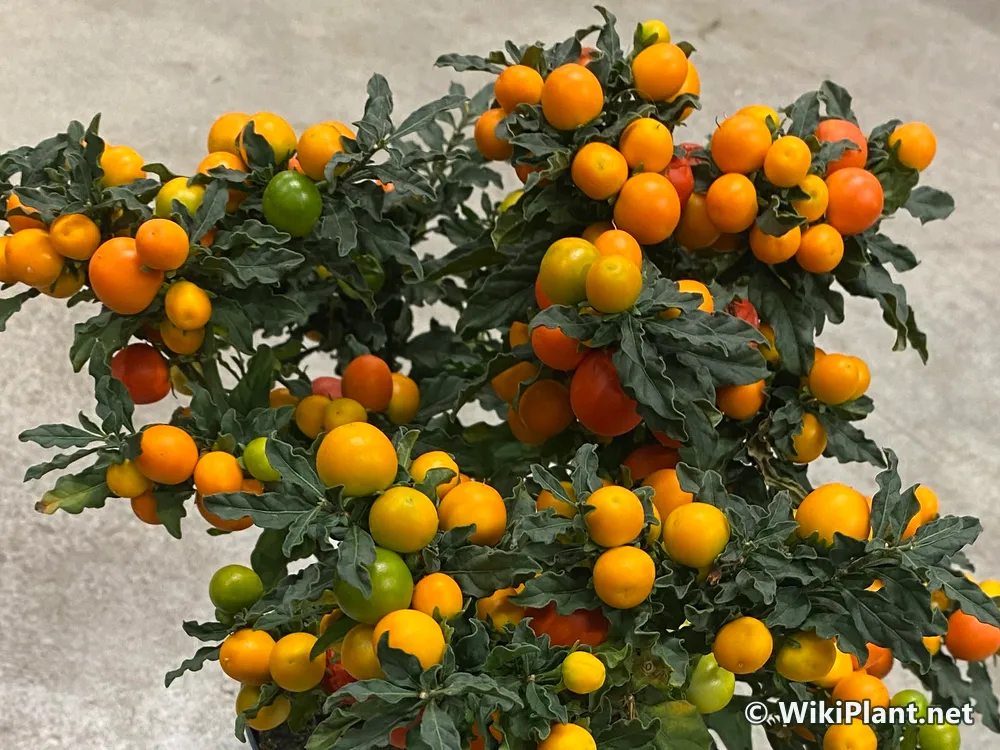
The Jerusalem cherry is bought for the one thing it does superbly: it carries round berries in green, yellow, orange and red all at the same time, and holds them for months through the darkest part of the year. It is a small evergreen shrub of 30 to 50cm, a relative of the tomato and the potato, and 'Supreme' is a compact strain grown for heavy fruiting. Those berries are the reason for the plant and the reason to be careful with it: they are poisonous, and they look exactly like something to eat.
I have this plantSign in to add this plant to your library
Toxic to cats and dogs if eaten.
The berries contain solanine. Eating them causes vomiting and diarrhoea, and in quantity can bring on seizures, slowed breathing and collapse.
If your pet has eaten some, contact your vet.
Source: ASPCA
Every part is poisonous and the berries most of all. The ASPCA lists the principle as solanine and the signs as gastrointestinal upset, possible ulceration, seizures, respiratory depression and shock; the RHS says harmful if eaten and advises gloves when handling it. A cherry-sized orange berry at toddler height is the worst possible combination of attractive and harmful, so this is a plant for a household with no small children and no pets that chew, or for a shelf that neither can reach.
Usually dry air, a dry rootball, or too much warmth. It wants a bright, cool room, around 12 to 16°C, and steady moisture; a hot living room with the heating on dries the air and the berries fall. Draughts and a sudden move from the shop to a warm house do the same.
Yes, though most people treat it as a one-season plant. After the berries finish, cut it back by about half, keep it cool and nearly dry through late winter, then repot and start watering in spring. Put it outside for the summer once frosts are over: it needs insects to set a new crop of fruit.
They are genuinely poisonous. Two independent sources say so: the ASPCA for pets, the RHS for people. Serious cases are rare because the berries taste bitter and are usually spat out, but a child or a dog that swallows several needs medical advice, not watchful waiting. Keep the plant out of reach and pick up any berries that drop.
Often enough to keep the compost evenly moist while it is in fruit. Never let it dry out, which makes the berries drop, but do not leave it standing in water either.
The flowers have to be pollinated. Put the plant outdoors in summer, or pollinate the small white flowers indoors with a soft brush.
From seed taken from a ripe berry, or from stem cuttings. Wear gloves and wash your hands afterwards, because every part of the plant is poisonous.
Up to 90cm tall and wide, though plants sold for winter are much smaller. It grows fast once it is cut back and repotted in spring.